
Tag: Guest contributor

  • Lisa Chase: The “Fit for 55” Convergence of Energy Efficiency and Corporate Reporting Rules

    Lisa Chase: The “Fit for 55” Convergence of Energy Efficiency and Corporate Reporting Rules

    Upcoming revisions to the Energy Performance of Buildings Directive (EPBD) were a popular topic at the C4E conference. It seems likely that the EPBD will increase building energy performance requirements and potentially introduce energy reporting mandates to strengthen the Energy Performance Certificate system. Correlating EPBD compliance to measurable energy efficiency improvements will be critical to meeting the European Climate Law’s “Fit for 55” goal of reducing greenhouse gases 55 percent by 2030. New corporate and financial reporting rules will be powerful complementary tools to increase the EPBD’s effectiveness in achieving the Climate Law’s targets.

    Recent research at King’s College London shows that the portfolio of corporate accountability rules, which will effectively mandate Environmental, Social and Governance (ESG) reporting, are important motivators for energy efficiency measurement and reporting. The research reveals that real estate companies are already assessing and reporting energy use in anticipation of the corporate disclosure requirements, underscoring how these policies can improve the EPBD’s effectiveness. It also illustrates the opportunities for CEE projects, particularly renovations of inefficient post-war structures, to develop technical expertise and attract financing.

    Corporate and Financial Disclosure Rules

    The Sustainable Finance Disclosure Regulation (SFDR), implemented in March 2021, obligates all financial advisers, large entities (over 500 employees) that manage financial funds, and financial products with a sustainable investment objective to disclose sustainability risks and impacts. It applies to asset managers raising money in the EU, regardless of where they are based, and investment managers outside of the EU who market their products to EU clients. The SFDR requires product level reporting on how investments inside and outside of the EU may be negatively impacting the environment, such as by polluting water, damaging biodiversity or contributing to global climate change. This means that real estate projects in EU candidate states, financed by EU investors, would be required to assess and report energy and environmental impacts to the investment firm.

    Investors will likely be evaluating projects for their ability to report on environmental impacts. Developers in the CEE region, including EU candidate states, can attract financing by demonstrating that their projects can comply with SFDR requirements. Western Balkans projects, for example, can secure regionally dedicated EU funding of 9 billion euro in grants and 20 billion euro in loans. Because much of this funding will flow through local banks, CEE financial institutions that are already evaluating environmental factors can help projects adopt the technical skills for SFDR compliance.

    The Directive on Mandatory Human Rights, Environmental and Good Governance Due Diligence (Due Diligence Directive) is scheduled for a December release. It would require companies to develop and publicly communicate a strategy for good governance and for preventing potential negative human rights and environmental impacts throughout their supply chains. The Due Diligence Directive would apply to any business operating or selling in the EU with more than 250 employees, more than 50 million euro in annual revenues or a balance larger than 43 million euro. It would also apply to publicly listed companies and some small and medium sized enterprises (less than 250 employees). Certain C4E Forum attendees, including building material producers, could be required to collect and report environmental impact data from their worldwide supply chains. Penalties for non-compliance could include large fines, exclusion from public procurement or state aid, and EU import bans.

    The proposed Corporate Sustainability Reporting Directive (CSRD) will amend the Directive on Non-Financial Reporting (NFRD), which requires publicly listed large corporations (over 500 employees) operating in the EU to report on their environmental and social impacts. The CSRD would extend the NFRD scope to companies with at least 250 employees and a balance sheet of 20 million euro and/or 40 million in annual revenues. Beginning in fiscal year 2023, the CSRD would require detailed audited reporting, such as the energy use of buildings managed by a real estate company. Nearly 50 thousand EU companies would be subject to the CSRD, compared to 11 thousand required to comply with the NFRD, including CEE companies not subject to the Due Diligence Directive.

    In July 2022 the European Commission is scheduled to release the Taxonomy Regulation, which will provide definitions for companies and investors to measure and report their environmental impacts. The Taxonomy will apply directly to the SFDR and could potentially be applied to the CSRD and Due Diligence Directive.

    Summary

    Prior to the SFDR implementation, a survey of architects, real estate owners, developers, managers and investors in all 27 EU States and the UK found that 60 percent of respondents measured energy performance for the buildings under their ownership or management. These organisations were not required to assess building energy use, but indicated that they measured and reported energy performance because their investors required it or because they anticipated being subject to the SFDR or the Due Diligence Directive.

    Significantly, some investors reported mandating energy performance reporting for their real estate projects in the CEE region, including EU candidate states. While the research isn’t representative of the entire European real estate and construction industries, it clearly indicates why the portfolio of new corporate disclosure rules are a potential game-changer for improving building energy performance. These trends represent opportunities for the CEE region, and the entire EU real estate sector, to meet the “Fit for 55” challenge.

    Portrait of Lisa A. Chase.

    About the author:

    Lisa A. Chase has researched and written extensively on sustainable design and development for Harvard Graduate School of Design, Harvard University’s Real Estate Academic Initiative and Harvard Business School. She has co-authored publications on social entrepreneurship and corporate social responsibility in Stanford Social Innovation Review, Harvard Business Review and Harvard Business School Working Knowledge. Lisa has presented to academic and industry audiences, including Yale University, Fordham University and the C4E Forum, on design strategies and financing mechanisms for environmental and social welfare solutions. She is a Master of Laws candidate in European Union Law at King’s College London, researching the effectiveness of European Union energy efficiency requirements for buildings. Lisa‘s consultancy, Lucky Fish Communications, specializes in policy research and content development for urban design and the built environment.
  • C4E Forum: Piercing the “bubbles” since 2016

    C4E Forum: Piercing the “bubbles” since 2016

    As the world slowly seems to be coming to grips with the Covid-19 pandemic, we are getting ready for C4E Forum 2021. This time in a beautiful location in Romanian Transylvanian mountains near Poiana Brasov on 21-24 September.

    It will be a great opportunity to pierce some proverbial bubbles, which is always needed, but has perhaps never been so strong as now after one and half year of pandemic, which relegated us behind the screens without personal contact and thus only helped strengthen our silos and echo chambers.

    What is C4E?

    C4E stands for Central and Eastern European Energy Efficiency and it takes different forms, but always trying to “pierce bubbles”. Of course the most notable is the C4E Forum, a bi-annual event which took place for the first time in 2016 in Balchik, Bulgaria and then in 2018 in Serock, Poland.

    2020 edition had to be postponed but it is now finally happening! And as before, it will bring together all kinds of stakeholders from governments, NGOs, businesses, think-tanks, finance world and trade associations from across the CEE region but also from EU to meet and discuss policies, programs and projects in energy efficiency area.

    C4E also took a form of webinar few times. In October 2020 we discussed the freshly unveiled Renovation Wave with Commissioner Kadri Simson and officials of several national governments.

    In June 2021 we focused on how to make Renovation Wave reality given all the funding earmarked for this. The last webinar brought some interesting polls and I would like to look at them a bit more closely in the spirit of “piercing bubbles”.

    CEE and EU bubbles

    We asked participants two poll questions and after the event we were able to compare the answers by people from the CEE region on one hand and from EU and “the West” on the other hand. (Both questions allowed multiple answers, so the total is higher than 100%.)

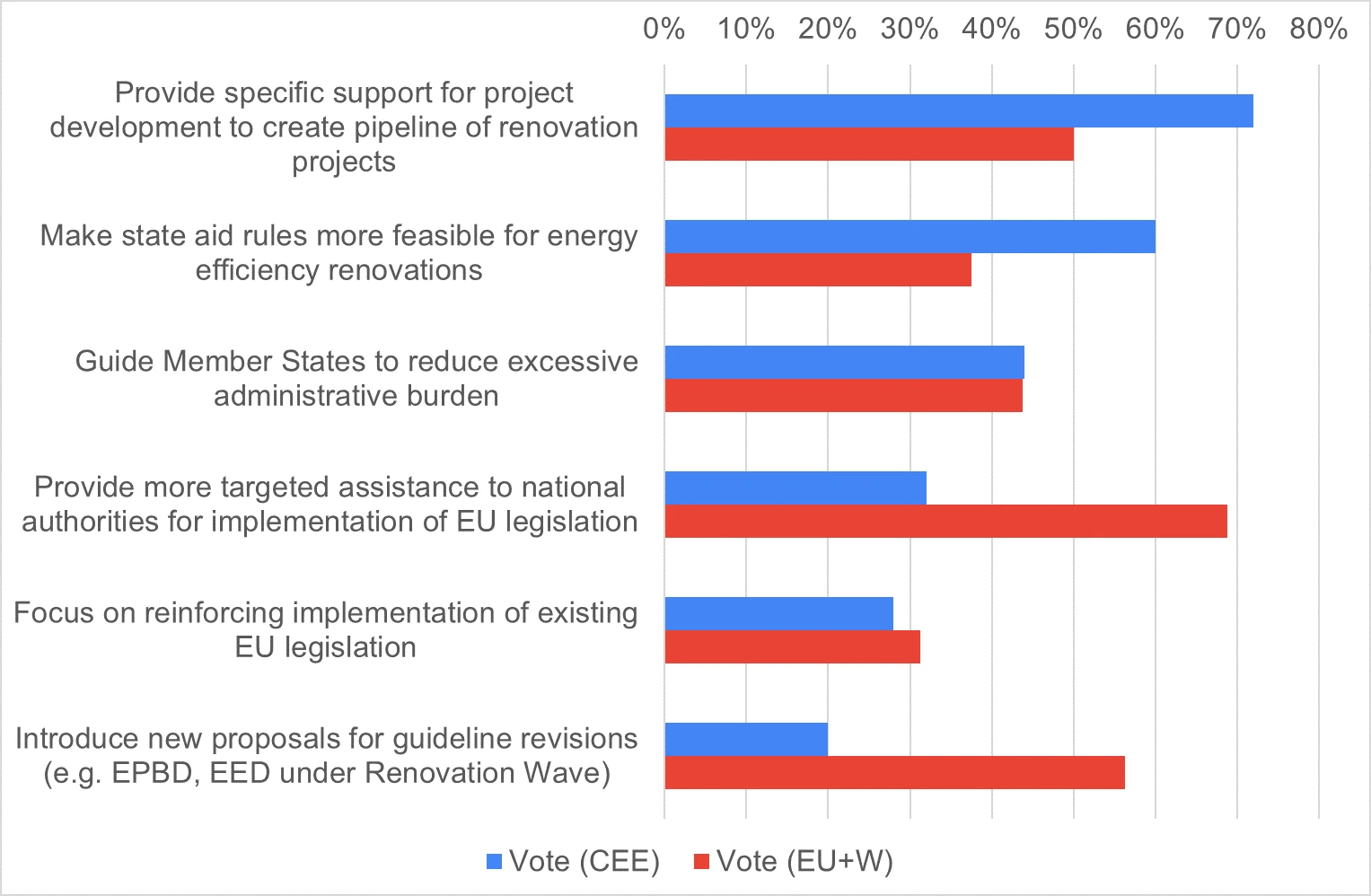
    In the first question we asked: How could the European Commission support Member States in delivering higher rate and depth of renovation?

    The results were interesting:

    Poll results comparing CEE and EU/West views on European Commission renovation support.

    On some issues of medium importance like reinforcing implementation of existing regulation or reduction of administrative burden we see relative agreement.

    But our two “bubbles” seemed to have very different opinions about the key issues. The “EU/West bubble” perhaps unsurprisingly put a lot of emphasis on the role of EU: targeted assistance to national authorities in implementation and also policy revisions at EU level rank very high.

    On the contrary, the “CEE bubble” wanted to prioritize specific support for project development and solving the state aid issues.

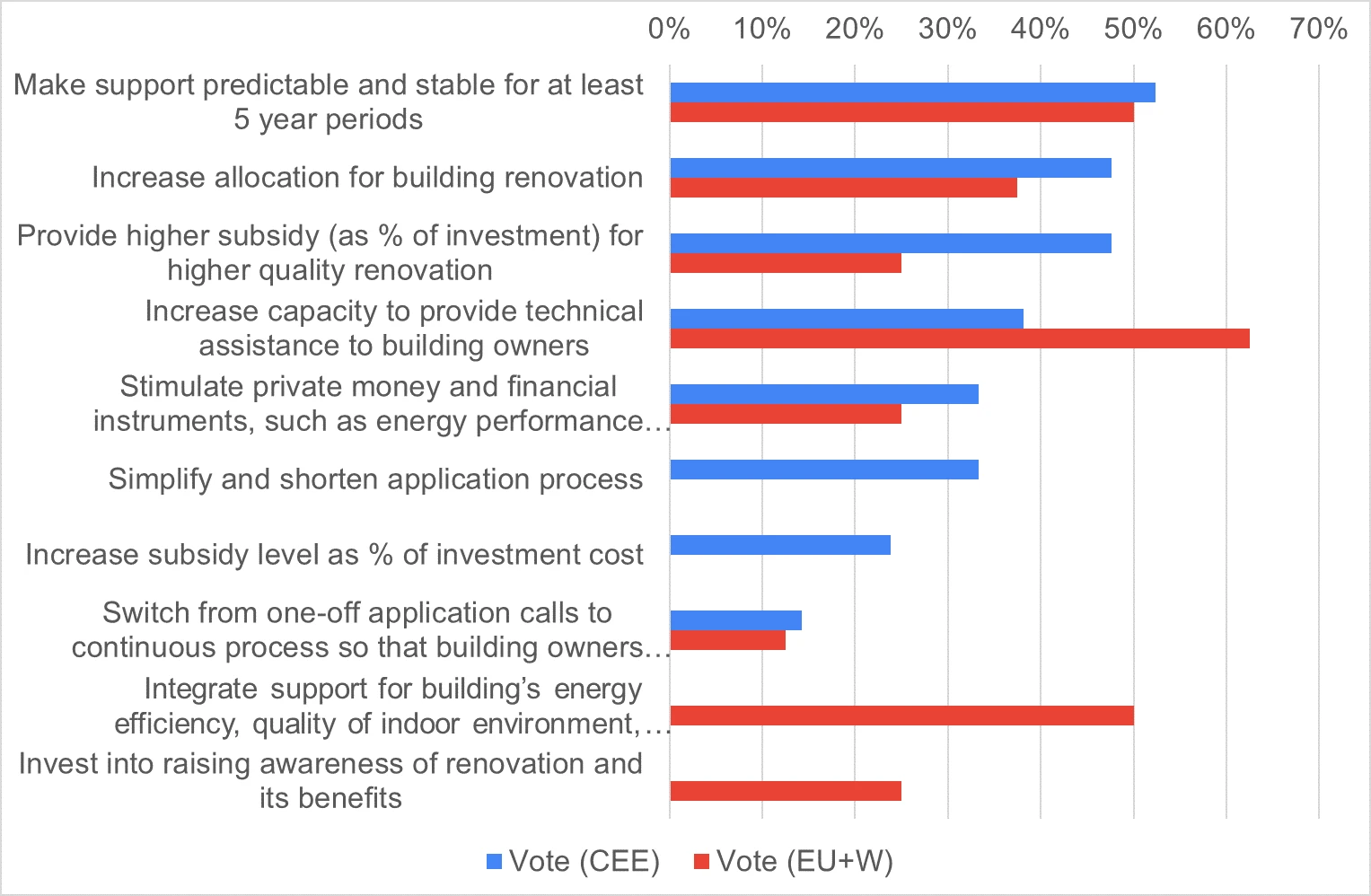
    The second question was: What should national governments do with Recovery Plan and Cohesion funds to increase speed and depth of renovation?

    Poll results comparing CEE and EU/West views on renovation funding priorities.

    There was robust agreement on the necessity of long-term stability of programs. Both groups also emphasised increased allocation of funds for renovation and stimulating private money.

    “CEE bubble” put a much higher priority on progressive subsidy, i.e. the deeper the renovation, the higher the subsidy. “EU bubble” emphasised much more technical assistance capacity, which CEE colleagues surprisingly didn’t rank that high, despite prioritizing project development support in the previous question. Presumably, different interpretation of different terms could play a role here.

    On some questions we can see almost complete disconnect. CEE participants voted for example for simplification of application process and increased subsidy levels, which EU participants didn’t find compelling. Conversely, EU participants emphasised integrating broader sustainability and quality aspects into renovation program and raising awareness.

    Conclusion

    Of course, we have to take these polls with a big grain of salt. The numbers are not representative and voting during the webinar doesn’t allow for full and deep reflection.

    But I do believe the polls indicate the differences that emerge if we stay too closed in our own silos and forget to look beyond them. There is never enough of talking with one another across different borders–geographical ones as well as cultural and mental ones.

    This year, we hope to contribute to breaking the silos and piercing the bubbles a little bit at the C4E Forum 2021. See you there! We have an especially beautiful location this time. It takes a bit of time to get there, but it’s 100% worth it!

    Ondrej Sramek

    Member of organizing committee

  • Tomas Trubacik: Using EU-ETS revenues to fund building renovations – a Czech example

    Tomas Trubacik: Using EU-ETS revenues to fund building renovations – a Czech example

    Back in 2009, inspired by German KfW support scheme, the then Czech government launched its own support scheme for single family houses energy renovations. Since then, tens thousands of households have used the opportunity to improve their home. In 2020, under the covid-19 pandemic, the programme registered almost 17 thousand unique applications asking for more than EUR 142m (CZK 3,7bn) in subsidy support – a record year for the programme so far. The success was not granted though. The programme has survived governmental changes as well as several calls (start/stop system) with more applications than available funding. But the quite unique funding is part of the success story.

    Since beginning, the programme has been funded by emission revenues. In 2009, the programme started with EUR 0,8bn injection from one-off sale of Kyoto emissions oversupply by the Czech government. The then call ended up in 2010 with an oversupply of projects creating a pressure on politicians to ensure more stable and long-term funding. In 2012 a legal basis was provided [1]. This implementing act of EU-ETS scheme into Czech legislation made Czech EU-ETS revenues up to EUR 153m (CZK 4bn) annually assigned by law to the State Environmental Fund – a managing authority of the programme. It took another year to re-launch the support scheme and another year to finally launch the current New Green Savings.

    In 2015 an important step was taken. The start-stop system was abandoned and continuous call with an end in 2021 was established. This was a huge step as applicants could prepare their renovation projects according to their time needs. Since then, more than 60 thousand families took their chance to renovate their house, install solar panels, change their heat source, or even build new house in passive energy standard with a greenroof.

    This trading period is over. The new is on and so are the preparations for the new programme called New Green Savings 2030 to be launched this fall. The transition should be smooth – it will be an evolution, not a revolution, as representatives of the Fund says. Amended law [2] made no changes to the mandatory assignment of revenues to the State Environmental Fund, making it clear, that with the current EU-ETS price, there will be EUR 1,53bn (CZK 40bn) available for the period 2021-2030. The New Green Savings programme is a Czech renovation flagship, important for the fulfilment of national targets in energy efficiency, emissions as well as renewable energy.

    The problem is that even with this stable funding the programme will need more. As of the new scheme is launched, it will newly support also the renovation of apartment buildings outside the Prague region which were supported with EU structural funds in 2014-2020 period. The programme will thus unify whole residential sector support under one scheme, under one authority – clearly a step forward. Last year was a record not only for SFH renovation but for the MFH as well and this high numbers unfortunately mean also high financial needs which combined exceed EUR 269m (CZK 7bn). This is more than currently available. Knowing this, the National Recovery Plan under the Recovery and Resilience Facility counts with additional EUR 730m (CZK 19bn) for building renovation and air quality improvements. A half should support building renovation in the New Green Savings 2030 programme and the rest should be used for also popular domestic coal heat-sources replacement subsidies. Until 2023 the funding thus seems to be ensured and the programme will once again help with the post-crisis recovery as in 2009/2010.

    It is obviously needed to start to think how to ensure funding later-on. There is an ongoing debate on loans and more sustainable funding scheme in the future. With the “Fit-for-55” package coming and a need to increase a renovation rate in all sectors to meet climate targets, we will need that. Hopefully, the popularity of the New Green Savings programme might once again help politicians to find additional sources.

    Looking around CEE region, the Czech scheme is unfortunately still quite unique. And it is definitely not because of some unique circumstances in the Czech Republic. The scheme can be replicated elsewhere. And main lessons learned?

    • Stability of funding (EU-ETS revenues might be even more attractive with high CO2 price)
    • Stability of support (continuous call – no start-stop system)
    • Stability of conditions (rather mild level of support motivating into deeper renovations)

    And maybe most important – patience. It took several years to get to this point and the political support was not always granted.

    This case has inspired other in the CEE region and stakeholders in Slovakia, Poland, Romania and other countries are now looking at this option. We look ahead with hope that such funding opportunity will prove to be replicable with success in other countries in the region.

    [1] Act No. 383/2012 Coll., on Emissions Trading

    [2] Act No. 1/2020 Coll. amending the Act No. 383/2012 Coll.

    About the Author:

    Tomas is still an idealist trying to create a better world. For last 6 years he has been advocating for energy efficiency and favourable energy, climate and construction legislation at Chance for Buildings. He is a boy scout leader, beekeeper, rail and public transport enthusiast. He is quite into biking, swimming, Moravian folklore and wine.

    Tomas Trubacik – Linkedin

  • Louise Sunderland: Getting the most out of forthcoming minimum energy performance standards

    Louise Sunderland: Getting the most out of forthcoming minimum energy performance standards

    How can minimum energy performance standards be designed to bring maximum benefits to the central and eastern European regions?

    This decade must be a decade of building renovation. To meet the new European climate target of a 55% emissions reduction by 2030 our buildings must go further faster, reducing emissions by 60%.

    But we are at an almost standing start. It is a well-worn statistic that only 1% of European buildings undergo energy renovations each year. It’s less well known that renovations currently save very little energy – on average just 9% in homes and 16% in commercial buildings. Deep renovations that attain energy savings of 60% or more occur in a tiny 0.2%-0.3% of the stock. Without increasing the rate of deep renovation, we need to raise the general renovation rate by 10 to 15 times to decarbonise the stock.

    These European statistics mask national variations. Countries in central and eastern Europe have achieved some of the highest renovation rates, particularly for homes. Even so, these higher rates result largely from lighter renovations – deep renovations of homes happen at half of the European average rate. The challenge for these countries is to push not only for more, but for more ambitious renovations.

    Responding to this challenge of massively increasing both the rate and depth of renovation, the European Commission announced it will introduce mandatory minimum energy performance standards (MEPS) into the Buildings Directive this year as part of its renovation wave strategy.

    What are MEPS?

    MEPS require existing buildings to meet a minimum performance standard by a given date or at a chosen trigger point in the building lifecycle. By setting a standard, or a trajectory of rising standards, MEPS can drive the desired depth of renovation. By setting out which buildings must be improved by when, they can also boost the renovation rate.

    When introduced, MEPS are embedded in a framework of financial and practical support for building owners and occupiers undertaking renovations, ensuring the standard is both effective and fair.

    The minimum standards approach is not entirely new in European buildings policy. Standards already feature in a number of forms – for new buildings we have the nearly zero energy buildings standard and for major renovations we have minimum performance standards.

    What is the impact of MEPS?

    Evidence from existing examples of national MEPS indicates that they can be a powerful tool to deliver the significant, multiple benefits of renovation.

    These standards tackle the worst performing buildings first. In doing so, the most wasteful, energy-intensive buildings and the homes of the energy poor – who disproportionately live in the worst performing homes – move to the front of the queue.

    The Netherlands has seen perhaps the greatest impact from this policy tool. The government’s agreement with the social housing sector to reach an ambitious energy performance certificate (EPC) B in 2020 is on track to be met this year, 2021. This success, covering 30% of Dutch homes, illustrates the potential for MEPS and the surrounding framework to significantly improve housing for the most vulnerable. In doing so, these standards deliver health and productivity benefits and reduce energy poverty, which is particularly high in central and south eastern European countries.

    In eastern Europe, where owner-occupied housing and multi-family housing in towns and cities dominate the residential building stock, MEPS can overcome barriers to renovation. Multi‑stakeholder collaboration and consent, for example, has hindered works to date. A standard applying to all building units, underpinned by practical and financial support, can help align numerous stakeholders and overcome impediments.

    A second standard in the Netherlands requires all offices to meet EPC C by 2023. Despite only having been introduced in 2018, it has already led leading banks to align their lending strategies to promote compliance and to encourage building owners to go further to achieve higher energy ratings.

    The importance of this early action cannot be overstated. The best strategy we have to deliver economic recovery and jobs post-COVID is to spur renovation early in this decade. A MEPS announced in the early 2020s, as the Commission proposes, can do just this.

    The potential in the eastern European region is greater than any other. A recent Joint Research Centre report found that countries in this region – specifically Poland, the Czech Republic and Romania – offered the highest value renovation potential for economic expenditure. Regionally tailored renovation, driven by a smartly designed MEPS could be the centre piece of an effective economic recovery strategy.

    The way forward – piecing together the puzzle

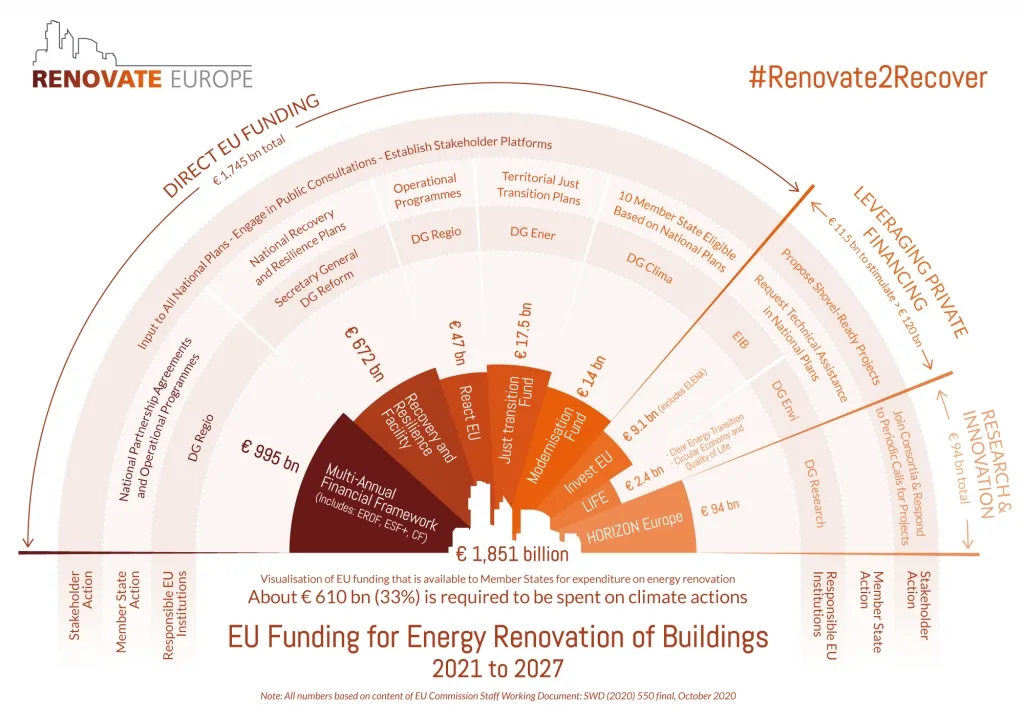
    MEPS are only one piece of the puzzle. The standards must be coupled with extended technical and practical support schemes like the Czech New Green Savings Programme. MEPS are reliant on effective programmes but they also support these programmes, increasing their impact and efficiency. To this end, the European Commission clarified the existing and new financial and technical support available for building renovation, including mechanisms targeted specifically for the central and eastern Europe region. (Infographic by Renovate Europe).

    Tasked with designing a locally relevant MEPS, embedded in strengthened support frameworks, national building sector stakeholders can deliver maximum benefits to each region.

    Renovate Europe infographic on EU funding for energy renovation of buildings from 2021 to 2027.

    The European Climate Foundation, in cooperation with Chance for Buildings and supported by the Regulatory Assistance Project, is planning a series of roundtables to discuss MEPS in several central and eastern European countries. Stay tuned for your national workshop.

    About the Author:

    Louise Sunderland is a researcher and policy advisor working on energy and buildings, with a special focus on consumers. Louise is a Senior Advisor at the Regulatory Assistance Project (RAP)®. RAP is an independent, non-partisan, non-governmental organization dedicated to accelerating the transition to a clean, reliable, and efficient energy future.

  • Katarzyna Wardal: Addressing the building renovation challenge in Visegrad countries

    Katarzyna Wardal: Addressing the building renovation challenge in Visegrad countries

    How effective renovation programmes can maximise the impact of the next generation of European Union Structural and Investment Funds

    A new report reveals how European Union Structural and Investment Funds (ESIF) can be leveraged for maximum impact to create future-proof renovation programmes across Eastern Europe.

    The report was presented to the European Union by policy experts from Visegrad (V4) countries [1] and is a key contribution to the debate on the next round of ESIF under the new European Commission as well as the delivery of 2030 energy and climate targets.

    The report — More Effective Use Of The 2021-2027 Cohesion Funds For Energy Security of the Visegrad — was accompanied by a comparative study — Buildings For The Visegrad Future —supported by the International Visegrad Fund.

    High impact of energy bills on low income families

    The study provides an overview of existing public policies that promote building energy efficiency and renovation in individual Visegrad countries.

    The need for action is clear. Residential buildings in V4 share many similarities and are extremely energy inefficient with around two-thirds requiring renovation for the first time since being built.

    Making the situation even more challenging is the fact that 15 million people — 20% of the Visegrad population — are classified as low income. V4 countries rank among the six EU nations with the highest share of income spent on housing energy bills.

    Unfortunately, the study reveals that none of the existing programmes in the region helps vulnerable groups to improve their housing conditions in a systematic way.

    Learning from the success of existing programmes

    But there is also some good news. Across the region positive examples of renovation programmes have been identified.

    For example, the New Green Savings programme from Czechia, remains the flagship subsidy initiative in the Central and Eastern European region, effectively driving energy efficiency investments mainly in the single family home market.

    What factors contribute to its success?

    1. Investment in promotion pays off. The target group of future aid recipients must be aware that they can apply for subsidies. New Green Savings proves campaigns can pay dividends.
    2. Continuous call. Instead of short timeframes to apply for subsidy, a continuous call enables home-owners to invest when it is suitable for them. This allows them time to prepare their application and the assurance that this time will not be wasted because they missed a deadline.
    3. Long-term commitment. Ring-fencing EU funds for the long-term is a political commitment that gives home owners certainty and enables them to plan investments. Some people need years to save up final outstanding amounts or to buy their home and then renovate it. Governments should respect the natural renovation cycle.
    4. Implementation capacities. Effective administrative teams need to be in place to handle not only incoming applications on time, but also to provide homeowners with consultations and advice.

    Redefining renovation success

    ESIF are already a major source of funding for the renovation of neglected and energy inefficient building stock in V4 countries. However, the current level of investment is insufficient in terms of the number of buildings renovated or the quality of the work.

    The report authors suggest that the success of programmes should be based on the final impact of projects — rather than on the absorption of funding — an approach that would support more efficient spending.

    Other recommendations include making state aid rules more feasible for energy efficiency projects and helping Member States reduce the administrative burden on applicants and recipients of EU funds.

    Unlocking more financial resources

    Achieving the climate and energy targets of the European Union by 2030 requires significant support for the buildings sector and must be reflected in budget allocations.

    Governments should focus on securing ESIF support for building renovation in combination with other national policies and incentive programmes to generate the funding needed to renovate 3% of all buildings annually.

    Any operations under ESIF should deliver on the measures and objectives laid out in the National Energy and Climate Plans of EU Member States.

    It is vital that residential buildings are not forgotten, says the report, as they represent the sector with the greatest potential to save energy, improve energy security, reduce air pollution and improve living conditions across Europe.

    [1] Project consortium includes Buildings for the Future (Slovakia), Chance for Buildings (Czechia), Energiaklub in cooperation with the Hungarian Energy Efficiency Institute (Hungary) and National Energy Conservation Agency (Poland).

    Portrait of Katarzyna Wardal.

    About the author:

    Katarzyna Wardal is a public affairs professional with several years of experience in energy and climate policies. Since 2017 Katarzyna works as EU Public Affairs Manager at Knauf Insulation. In 2018 she was nominated a Chairwoman of the Advocacy Working Group in the European Alliance to Save Energy (EU-ASE).

  • Kristina Klimovich-Accelerating Home Renovation

    Kristina Klimovich-Accelerating Home Renovation

    People-centric support and attractive financing

    Home renovation is complex, time consuming, sometimes uncertain and rarely fun. At the same time, energy inefficient, damp, poorly lit and ventilated homes and apartment buildings are impacting our health and wellbeing[1] and result in €200 billion[2] in direct and indirect costs. Plus, in order to reach the 2050 decarbonisation targets, 97% of buildings need to be upgraded.[3] We have a tremendous challenge in front of us, but it is also an opportunity for the eco-system of home renovation stakeholders to come together and design effective home renovation solution(s) with people at the centre of this eco-system.

    The IPSOS survey[4] conducted in Bulgaria, France, Germany, Poland and Spain showed that people are willing to renovate their homes to improve thermal comfort, quality of life and decrease energy bills. In our own survey conducted in the City of Olot, Spain, 70% of all respondents reported that lack of financing and of technical knowledge about the complexity of the works prevented them from renovating their homes. Listening directly to Europeans’ concerns and motivations, we need home renovation programs that make the process simpler, people-centric and offer affordable financing.

    Last year, I attended the second edition of the C4E Forum in Serock, Poland where I spoke about an innovative financing tool for energy efficiency home renovations. EuroPACE is designed to make home renovation simple, affordable and reliable for all Europeans by combining affordable financing with people-centric technical assistance. EuroPACE offers 100% up-front financing that can be repaid over a long term of up to 20 years. The innovation lies in the collection and repayment mechanism; financing is attached to the property and is repaid regularly with charges linked to a property, thus making EuroPACE a “home-based financing.” Homeowners are offered logistical and technical support throughout the process and access to trained and qualified contractors. Thus, EuroPACE overcomes the main barriers to home renovation — lack of financing, technical knowledge and complexity of the works. The concept of EuroPACE is inspired by the success of a financing model called PACE or Property Assessed Clean Energy, launched in California in 2008.

    The first EuroPACE pilot is launching in Q4 2019 in Olot, Spain. The “EuroPACE Olot” program will be managed by a non-profit foundation, created for this purpose. The goal is to develop a program that can grow and develop in a sustainable way over time, with its own resources and avoiding any consolidation in the public debt, which is one of the main concerns of municipal and regional administrations around Europe. The main goal of EuroPACE Olot is to spur home renovation demand by transforming a stressful, expensive, complex and multi-stakeholder renovation process into a simpler, high quality and a more straightforward process, with tailored support along the way. The program rests on two pillars: people-centric assistance throughout the renovation journey and affordable financing options.

    The challenge of EuroPACE implementation lies in attaching the financing to a property – the so-called “home-based financing.” In order to put this mechanism in place, the public administration must recognise that sustainable and energy-efficient home renovation is in the public benefit and put in place administrative collection and security mechanisms for loan repayment. This feature is critical to enable low-risk, long-term financing and make it attractive to private investors. Our research showed that most of EU countries use some form of administrative collection mechanisms, thus making the potential adoption of the EuroPACE viable. At the same time, our research highlighted that enabling this mechanism for home renovation often requires a legal amendment either at national or regional level, as we found out for our pilot in Spain.

    The above-mentioned barrier represents an unmissable opportunity for the EU and Member States. EuroPACE enabling policies can be adopted at national level making of the home-based/EuroPACE mechanism a powerful new instrument for energy transition resulting in economic, environmental and social benefits for all Europeans.

    Our preliminary legal and fiscal assessment of the EU-28 members showed that the following countries have the most suitable legal framework to adopt EuroPACE: Austria, Belgium, The Netherlands, Italy, Poland, Portugal, and Spain.

    Based on this research conducted by CASE, (EuroPACE project coordinator and research leader), Poland demonstrated a strong need for energy efficiency home renovation and broader decarbonisation. One of the highest home ownership rates across the EU (84.2% of dwellings in Poland were privately owned in 2017) is a positive factor which needs to be considered when assessing the market demand for such a type of financial mechanism. This high rate is additionally enhanced by the fact that 68% of Poles consider environmental mitigation important and renovation costs are some of the lowest across the continent. Additionally, the overall energy consumption of the residential sector which is projected to grow together with households’ energy prices (politicians have been warning of this) coupled with ageing housing stock makes it an interesting case. Synergies between the “Clean Air” programme and EuroPACE can be further explored.

    When it comes to Romania, several trends have emerged: the country has one of the lowest per household incomes in the EU, one of the highest home ownership rates (97% – far above EU average), and EE measures are seen as a solution which can lower heating bills – a critical issue for Romania given its large share of energy poor households and insufficient heating aids. Plus, lack of affordable financing is often cited as a barrier alongside with the lack of skilled energy services contractors and the overall low quality of rehabilitation works due to ineffective audit procedures. These challenges underscore the need for a strong public-private partnership to design successful and scalable home renovation programmes.

    In the subsequent phase of the EuroPACE project, four leader cities or regions will be selected to set up EuroPACE platforms. We are looking for expressions of interest from cities, regions and local stakeholders who can function as project originators. Let’s accelerate home renovation together!

    [1] https://www.velux.com/article/2017/unhealthy-buildings-and-their-cost-to-society [2] https://www.euractiv.com/section/energy/news/building-a-better-business-case-for-healthy-buildings/ [3] http://bpie.eu/publication/97-of-buildings-in-the-eu-need-to-be-upgraded/ [4] https://europeanclimate.org/new-ipsos-study-european-citizens-willing-to-renovate-their-home-but-held-back-by-investments-to-be-made/

    To learn more about the research conducted in CEE, please visit the WARSAW SUSTAINABILITY LEADERS’ FORUM on May 31st – June 1st to meet with CASE experts.

    We are also inviting you to join the EuroPACE Summit entitled “Investing 4 Cities: Opportunities and Solutions to finance home renovation in Europe” taking place on June 19th in Brussels, alongside the European Sustainable Energy Week.

    Portrait of Kristina Klimovich.

    About the author:

    Kristina Klimovich is Head of communications and marketing at GNE Finance

  • Helene Sibileau-building renovation

    Helene Sibileau-building renovation

    Building Renovation: act now to improve lives and make our 2050 vision a reality

    Why would you talk about 2050 to people currently living in damp, mouldy and leaky buildings, unable to adequately heat their homes and suffering from poor health? Well, there might be a link between what we strive for in the long-term and how we can improve the lives of millions in the short term. The link? Energy efficient building renovation.

    At the C4E Forum last year, I moderated a panel on energy poverty and how to alleviate it through building renovation – and I learnt a lot. At EU level in 2016, almost 9% of households were unable to keep their home adequately warm.[i] In the CEE countries, the picture gets even worse. 10 to 20% of households are at risk of energy poverty in Slovakia[ii], 40% in Bulgaria[iii]. In Poland, it is a daily reality for more than 4 million persons[iv]. Not only is energy poverty a hardship for people who are experiencing it, but it is also hampering society at large. In the Visegrad countries (Czechia, Hungary, Poland, Slovakia) for instance, between €5 and €11 billion are spent every year on healthcare costs, due to the poor quality of housing.[v] Energy poverty, which is mainly due to the poor energy performance of housing, and disproportionately touches people with low income, is a European issue, and CEE countries are particularly affected.

    In the past few years, energy poverty has been part of the discussions in Brussels regarding the revisions of EU legislation on energy performance of buildings. The issue is now part of the Long-term Renovation Strategy (LTRS) that each Member State shall establish in accordance with the amended Energy Performance of Buildings Directive (EPBD). More specifically, Member States must give an overview of policies and actions targeting the worst performing segment of their building stock and outlining relevant national actions that contribute to the alleviation of energy poverty. But the LTRS is not only about energy poverty and some segments of the building stock – it serves a bigger purpose. And here it comes: the strategies shall support the renovation of the stock into a highly energy efficient and decarbonized building stock by 2050. We have a vision for how our buildings in Europe should be in 31 years’ time.

    The amended EPBD has recognized that energy efficient building renovation is the solution linking what we want to achieve in the long-term, on one side, and what we can do to rapidly improve the lives of millions in the short-term, on the other side. If we have an ambitious vision for 2050, it will give a sense of direction to all of us, it will boost confidence in the market, spark actions immediately and make a difference to people’s lives now. Inversely, tackling buildings with the worst energy performance, where energy poverty is most prevalent, as soon as possible, will put us on the right track for our long-term objective. The perfect match. We have witnessed these past months some debates in Europe about possible clashing interests between sustainability and social justice. But with the right policies in place, such as programmes for energy renovating our worst performing buildings, we can achieve both: social improvements in the short term AND sustainability in the long-term.

    So what do we do? “A little less conversation, a little more action please”. Or three little words: transposition, implementation, action. Member States have until 10th March 2020 to transpose the amended EPBD, and make both the 2050 vision and measures to alleviate energy poverty, a reality. It is quite a task for Member States, but they don’t start from scratch. In fact, establishing an LTRS is a provision stemming originally from the Energy Efficiency Directive, and two versions were already developed (2014 and 2017). Member States should not be shy but build on existing work to bring the ambition level higher. They should also rely on stakeholders, which they should now consult when drafting the strategy, to ensure that the right solutions are developed, that there is co-ownership of the strategy, therefore ensuring a proper rollout. To help in this process, EuroACE has developed its own Guide to EPBD Implementation

    (available online) to help Member States in thoroughly transposing EU provisions.

    Inspiration can also be drawn directly from the national level, including in CEE countries, where some good projects and policies are in place and deliver benefits. In Bulgaria for example, programmes were put in place with the aim of improving air quality and fighting energy poverty – since 2015, around 200,000 apartments were renovated. In Croatia, thanks to the use of Energy Performance Contracting, hospitals and more than 200 public buildings were renovated to achieve high energy performance. In Czechia, revenues from the ETS fund are used for building renovation. In Poland, a Clean Air Programme has recently been put in place – it promised €25 billion to renovate four million homes over the next ten years![vi] Even though much still needs to be done, all these examples show that putting in place policies to trigger energy renovation of buildings (and deliver energy savings), is feasible and that it comes with many great benefits!

    While the official deadline for submitting the LTRS is 10th March 2020, it would be more coherent to do it by 31st December 2019, in an integrated way with the National Energy & Climate Plans. This would ensure that the contribution of building renovation towards the longer term decarbonisation targets, which should deliver climate neutrality by 2050, is appropriately considered. And it would naturally make sense to strive for this, considering the EPBD objective of a “highly energy efficient and decarbonized building stock” by 2050. However, we have seen from the Draft NECPs that energy efficiency is not given the role it deserves.

    When young climate activists take to the streets every week for months on end, they’re asking us to act now, in order to protect their future. Acting now means putting in place the right policies and appropriate financing for energy renovation of our buildings. Acting now means transposing the EPBD swiftly and focusing on things that matter – improving the life of millions who live in bad buildings. Acting now means getting ready for the new European Parliament and Commission, starting their mandates later this year. Acting now, to make the path towards our 2050 vision a reality.

    [i] Alleviating energy poverty by building renovation, presentation at C4E Forum 2018 by Hanna SZEMZO, Metropolitan Research Institute [ii] Smog, low income and housing, presentation at C4E Forum 2018 by Petr ROBL, Buildings for the Future [iii] Alleviating energy poverty by building renovation, presentation at C4E Forum 2018 by Hanna SZEMZO, Metropolitan Research Institute [iv] Poland’s clean air programme: pathway to climate neutrality?, eceee column by Brook RILEY, ROCKWOOL International [v] Smog, low income and housing, presentation at C4E Forum 2018 by Petr ROBL, Buildings for the Future [vi] Poland’s clean air programme: pathway to climate neutrality?, eceee column by Brook RILEY, ROCKWOOL International

    Portrait of Helene Sibileau.

    Hélène SIBILEAU is Senior EU Affairs Manager at EuroACE, the European Alliance of Companies for Energy Efficiency in Buildings, where she works on EU policy and communication issues related to energy efficient buildings. She is also an External Lecturer at Sciences Po Strasbourg. A graduate of the College of Europe, where she wrote her Thesis on the EED, Hélène has worked in the European Commission on the EPBD.

  • Susanne Dyrbøl: Financing renovation of public buildings

    Susanne Dyrbøl: Financing renovation of public buildings

    The renovation challenge in Europe is massive. More than 75% of our buildings will still be standing and in use in 2050 [1]. At the same time the energy standard of the existing buildings is far from today’s standard – in fact less than 3% of our existing buildings live up to the best energy class. It is well known that cold and leaky buildings have serious consequences for the climate, for people’s health, well-being and productivity. In 2019 more than 10% of the citizens are still not able to heat their homes in winter and 20% not able to cool their homes in summer with serious consequences for people’s health.

    In EU the public sector owns and operates a large share of our buildings – e.g. 20% of residential housing in EU is publicly owned [1]. Hospitals, schools and offices account for nearly half of the total floor area of non-residential buildings.

    The large portfolio of public buildings provides many opportunities for economies of scale. Leadership by governments and cities renovating their own buildings would have a significant impact and lead the way for upscaling actions on energy renovation.

    Even though energy renovation delivers multiple-benefits far outweighing the investment cost, the public sector is constantly challenged to find the upfront investments for renovation. One of the solutions is to create large-scale renovation projects and blend public funding with private funding in projects where private investors have a business case. In this way, a larger share of public funding can be allocated to renovation of publicly owned residential housing.

    Using energy performance contracting (EPC) is one way of attracting private investments into renovation of public buildings. EPC is a mechanism for organising the financing linked to guaranteed energy savings in a project. The EPC often involves an Energy Service Company (ESCO). The ESCO will typically manage the total project including financing and the measurement and verification process for the energy savings in the repayment period. At present ESCO and EPC are predominantly and increasingly found in the public sector and to a lesser extent in the industrial and commercial building sectors.

    The ESCO model is attractive for the public sector as it can help free public money to be spent on projects which have a higher economic return measured on social and environmental benefits. Several cities are already using EPC for renovation of municipal buildings and the number of innovative financing schemes to fund locally-owned projects is growing – the Covenant of Mayors has recently published a summary booklet with lessons learned by cities and regions across Europe [2].

    Inspiration from Croatia – how to use ESCO contracts for renovation of public buildings

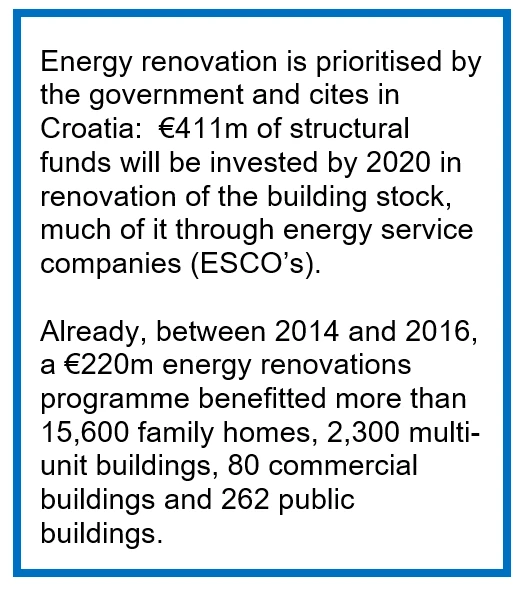
    Text graphic about Croatian energy renovation funding and public-building investments.

    Croatia is one of the countries which has taken a strategic approach to work with ESCO contracts aimed at maximising the benefits for the public sector.

    The government in Croatia has actively supported the use of ESCO contracts for renovation of public buildings by creating public-private partnerships for large renovation projects. Some of the large hospital renovations in Croatia were done with ESCO companies providing 60% of the funding from private investors while the remaining 40% came from the Croatian Energy Efficiency Fund [3].

    Lessons learned & recommendations

    • To reduce the perceived risk – it is important to have transparent rules and ensure a “fair” deal for the local or national authorities in the contract. The Croatian government has created a contract template which in a transparent way defines all obligations, risks and rights to prevent disagreements during the contract period, which is very important for the accounting of public debt.
    • Public buildings like hospitals which are in use 24-7-365 have proven to be the most attractive investments for ESCO companies when there is a request for deep renovation [4].
    • The business case for deep renovation is more challenging for ESCOs in buildings with a shorter “occupancy time” and/or mixed use such as schools and kindergartens as the guaranteed energy savings will be lower.
    • ESCO contracts for public buildings in Croatia must guarantee at least 50% energy savings and have a contract period of maximum 14 years.
    • To maximise the total savings delivered in projects, the government can co-fund projects.
    • Renovation of public buildings should always be evaluated on the “triple bottom-line” – environment, social and economic benefits. NB! energy renovations will deliver a positive impact on all parameters. The economic benefit is the main parameter for ESCO companies; however, the public sector is expected also to deliver on the social and environmental agenda.

    Croatia has demonstrated an interesting path for organising the energy efficiency funding for renovating of public buildings securing the public sector benefit from the contract. Using ESCO contracts on clearly defined conditions specifying high ambitions helps to free public money for other projects such as residential buildings or schools which have a higher return on social and environmental parameters.

    [1] https://www.rockwoolgroup.com/our-thinking/energy-efficiency/upscaling-renovation-on-the-global-agenda/

    [2] http://nws.eurocities.eu/MediaShell/media/Innovatove_financing_schemes_-_EUCoM__1_.pdf

    [3] https://www.youtube.com/watch?v=NS2gYLBpJ-8 and https://www.euractiv.com/section/energy/opinion/croatias-renovation-projects-can-teach-us-as-much-as-their-football/

    [4] https://c4eforum.org/panel-sessions (panel session #4)

    Portrait of Susanne Dyrbol.

    Susanne Dyrbøl, Public Affairs Director at the ROCKWOOL Group:

    Experienced public affairs professional within energy efficiency and climate policies. Susanne Dyrbøl is vice-chair in the Renovate Europe campaign and board member in Euroace and eceee.

    http://www.rockwoolgroup.com/

  • Marta Bromboszcz: Towards better air quality

    Marta Bromboszcz: Towards better air quality

    Towards better air quality. How energy efficiency is helping to reduce smog in Poland’s Malopolska Region.

    During the second edition of the Central and Eastern European Energy Efficiency Forum (C4E Forum) which took place in Serock, Poland, last June 2018, the representatives of private sector, public institutions, government and non-governmental organizations gathered to discuss the ways to accelerate energy efficiency reforms in Central and Eastern Europe. During one of the sessions devoted to local action to improve the quality of life, the LIFE Integrated Project[1] in Poland was discussed as a pilot initiative to improve air quality in cities through energy efficiency measures. Does reducing air pollution with energy efficiency really work and is it worthy of investment? Here are some conclusions from the project and discussions held during the panel session in Serock.

    In Europe and particularly in Southern Poland, air pollution is a major issue. The problem is visible in big cities or regions located in proximity of highly industrialized zones. Who of us hasn’t read, especially in this period of the year, about the deadly smog levels reported in big European cities like Paris or London? Whereas this news is worrisome to say the least, it’s actually Poland which is home to the most polluted cities in Europe (to be precise 33 out of Europe’s 50 most polluted cities) according to the report published by the World Health Organization (WHO)[2]. This infamous ranking shows the scale of a problem inhabitants of Polish cities are struggling with on an everyday basis. The air pollution is caused mainly by coal-fired power plants and residents burning cheap coal, wood and waste in their old home stoves. Although the Polish government may underestimate the gravity of this issue by saying that Poland is a “country where the climate is consistently improving”[3] and that “coal is the foundation of our energy sector and we cannot and do not want to abandon it”[4][5], local governments, under the pressure of residents, are taking serious steps to tackle the air pollution in cities.

    The LIFE project in Poland was born as a response to raising concerns about air quality. Energy efficiency stands in the center of the action. The knowledge on untapping the potential of energy efficiency is disseminated among residents by a network of eco-managers who provide advice and assistance on energy efficiency investments to households, raise awareness about smog and air pollution in local schools and distribute educational materials. This bottom-up approach and close cooperation with local communities does not only lead to improvement of the quality of life for locals but also sets examples for the rest of the region and the country itself in efficiency delivery.

    As stemmed from the side discussions during the panel session on local action to improve the quality of life, eco-managers target schools, among other communities, to disseminate information on the causes of smog. Interestingly enough and as reported by one of the eco-managers, the majority of children and teachers in Malopolska region are not actually aware of the air pollution problem. Having lived in one place for their entire life and having no possibility of comparison between breathing a clean vs polluted air, makes people consider smog as part of their every-day lives. For this reason, raising awareness about air pollution among inhabitants and pupils as well as outlining possible solutions to tackle the problem, is of great importance for changing the mindset.

    Eco-managers also target single family households as main contributors to air pollution. By encouraging citizens to replace old boilers with environmentally friendly energy sources, promoting thermal modernization of their houses and providing professional advisory by carrying out thermographic measurements of buildings, eco-managers promote the uptake of energy efficient solutions as means to improve the air quality. In other words, if the generation of energy creates air pollution, then one of the best ways to reduce air pollution is to improve energy efficiency. If homeowners have access to reliable information on benefits stemming from energy efficiency investments, they are more likely to conduct them. Eco-managers play thus an important role in this process as their technical background and expertise can directly contribute to boosting energy efficiency and reducing environmental footprint of the properties.

    As concluded during the session, reducing air pollution with energy efficiency works, although results are not immediate and visible mainly in the long-term. As the example of LIFE project in Poland shows, it is beneficial to pursue energy efficiency by linking it to other key topics, like for instance air pollution. Since smog currently more prominently features in Polish minds, it creates a perfect momentum to advance energy efficiency policies. Raising awareness and broadly communicating the benefits and opportunities stemming from energy efficiency investments among residents is of paramount importance. After all, small behavioral changes can potentially trigger large changes in energy use[6]!

    Portrait of Marta Bromboszcz.

    Marta Bromboszcz

    Marta Bromboszcz is currently supporting the implementation of the EU4Energy Governance Project at the Energy Community Secretariat in Vienna, Austria. She is experienced in project and programme management, due to her work in international development. In her career, Marta worked on energy issues at the European Commission (DG Energy), European Climate Foundation and private sector.

    https://www.energy-community.org/

    Footnotes:

    [1] “Implementation of Air Quality Plan for Małopolska Region – Małopolska in a healthy atmosphere”, available at https://powietrze.malopolska.pl/en/life-project/ , accessed on 02.12.2018

    [2] World Health Organization (2017) “WHO Global Urban Ambient Air Pollution Database (update 2016)”, available at http://www.who.int/phe/health_topics/outdoorair/databases/cities/en/

    [3] Polish Ministry of Foreign Affairs, “Changing Together”, available at https://twitter.com/PolandMFA/status/1065224200435187712 accessed on 17.12.2018,

    [4] Phrase by Mateusz Morawiecki, Polish Prime Minister

    [5] The Economist, “Why 33 out of 50 most-polluted towns in the Europe are in Poland?”, available at https://www.economist.com/europe/2018/01/18/why-33-of-the-50-most-polluted-towns-in-europe-are-in-poland, accessed on 10.12.2018

    [6] IPEEC, “Behaviour Change for Energy Efficiency: Opportunities for International Cooperation in the G20 and Beyond”, available at https://ipeec.org/upload/publication_related_language/pdf/856.pdf , accessed on 12.09.2018

  • Peter Robl: Forgotten human misery of our neglected buildings

    Peter Robl: Forgotten human misery of our neglected buildings

    The crumbling legacy of misguided 20th century housing policies casts a towering shadow over every major town in the Visegrád Four.

    Town after town. City after city. Country after country. Despite the economic growth observed in many CEE countries during the last decade, the vast majority of residential buildings in this part of Europe is in desperate need of renovation.

    We simply take neglect for granted and forget that there are millions of lives trapped behind all that cheap concrete and peeling paint.

    We forget the sickening misery of freezing apartments in winter and suffocating rooms in summer. We forget the distress of no money to pay bills and the despair of low-income poor health.

    That is the reason why more than 25 experts from Visegrád countries joined forces at the recent Central and Eastern Energy Efficiency Forum (C4E) to demand immediate and concerted action from their governments.

    The human cost of poor housing is clear from official statistics. In Slovakia, for example, people pay the highest energy bills per income in the European Union and there are 3,000 premature deaths annually due to air pollution caused by heating with solid fuels1. Those living in unsatisfactory housing conditions suffer from up to 2.9 times more frequent health issues than others in their country2.

    Across Visegrád, two-thirds of residential buildings need renovating. And for those who consider lives in financial terms — those buildings are costing society up to €11.2 billion in health care every year 3.

    Yet, Visegrád Governments have an historic opportunity to create housing renovation policies that really deliver.

    At the C4E, experts from Buildings for the Future in Slovakia, the Hungarian Energy Efficiency Institute, Chance for Buildings in the Czech Republic and Poland’s National Energy Efficiency Agency called on governments to maximise the opportunities for change presented by negotiations surrounding the new multiannual European Union budget and the implementation of revised EU directives promoting energy efficiency.

    All Member States must transpose the Energy Efficiency Directive and Energy Performance of Buildings Directive and reveal how they will achieve national energy savings targets. Improving buildings to make them energy efficient will accelerate progress to achieve these targets and help the most vulnerable in society.

    The Visegrád experts agree the broad strokes are these:

    • There is a lack of a comprehensive and effective policy framework for buildings across the Visegrád region. An ambitious transposition of the EU’s directives driven by renovation will make an historic difference. Work on this needs to start now. Visegrád countries must work together to leverage their expertise and experience and draft the comprehensive policy frameworks needed to drive renovation and new build quality. The Czech Republic can offer their long-term experience with developing successful subsidy programs, Slovakia could share how 20 years of soft-loans offer helped deliver unprecedented renovation rate of apartment buildings, Hungary would possibly speak about Energy Performance Certificates, while Poland has some unique learnings from trying to break free from air pollution caused by coal firing. The point here is that neither of the Visegrad country has nor can afford staff to address the many facets and complexity of policies related to renovation and construction quality and, therefore, sharing their capacity and experience is a way forward.
    • Renovation is impossible without finance. It is vital that money is unlocked in line with a renovation strategy that is robust enough to show a return on investment through energy savings. And that means regulating quality work, simplifying processes and guaranteeing accountability. There are good examples of directing money into quality renovation. The Czech “New Green Savings” program effectively changes the way single-family homes are renovated. The Slovak Investment Holding shows much more sophisticated and sustainable use of the European Cohesion funding. And there are opportunities: the new Eurostat rules open up renovation of public buildings to private money, while the negotiations of new Partnership Agreements starting in 2019 will define how effectively the Visegrád countries will be able to attract those private funds in the period of 2021 – 2027.
    • Enforcing regulation related to Energy Performance Certificates, simplifying their processes and insisting on publicly accessible energy classes for buildings will force a change for the better and incentivise renovation. Not much money or effort is required to achieve a substantial change here. Making sure that no building receives construction nor occupancy permit without meeting minimum requirements is a change of process at the construction authority. Having 3 % of all issued certificates properly checked every year to put off manipulators requires personnel cost in the range of hundred thousands of EUR; not a sum that would break any state budget and a necessary investment to make certificates work (not to speak: make country actually comply with EU legislation).
    • Specific low income housing policies are needed to address the vicious social cycle of low income, disgraceful housing, poor health and miserable job prospects that trap 20% of the Visegrád population for generations. Issues, such as air pollution from solid fuel heating, need to be addressed as a national priority. Social energy tariffs, nor boiler subsidies work – they reduce emissions ever so slightly, if at all, and do not address the housing quality. New approaches must be developed, including one-stop shops for owners, capacity at municipal level to actively work with home-owners and aggregate single projects into bigger groups ready for financing and of course, state-level subsidies.

    We can no longer afford to ignore the misery of people caged in appalling housing. Every time we pass another collective of blocks must be a reminder that we can do better. Must do better. Together.

    Portrait of Peter Robl.

    Peter Robl, November 2018

    As Public Affairs Manager for Knauf Insulation in Slovakia, Peter advocates for public policies promoting energy efficient and sustainable buildings. Peter initiated the Building for the Future alliance back in 2013 and has since developed it into the leading voice of the construction industry in the public debate, representing more than 150 companies with aggregated Net Sales of EUR 1.7 bn.

    http://www.knaufinsulation.sk/en

    Sources:

    1. European Environmental Agency
    2. Healthy Home Barometer
    3. Calculations based on Copenhagen Economics´ Multiple Benefits Of Investing In Energy Efficient Renovation Of Buildings