C4E Forum 2025
Pre-conference events
Tuesday 20 May 2025
2 parallel events
Bobara & Šipun rooms
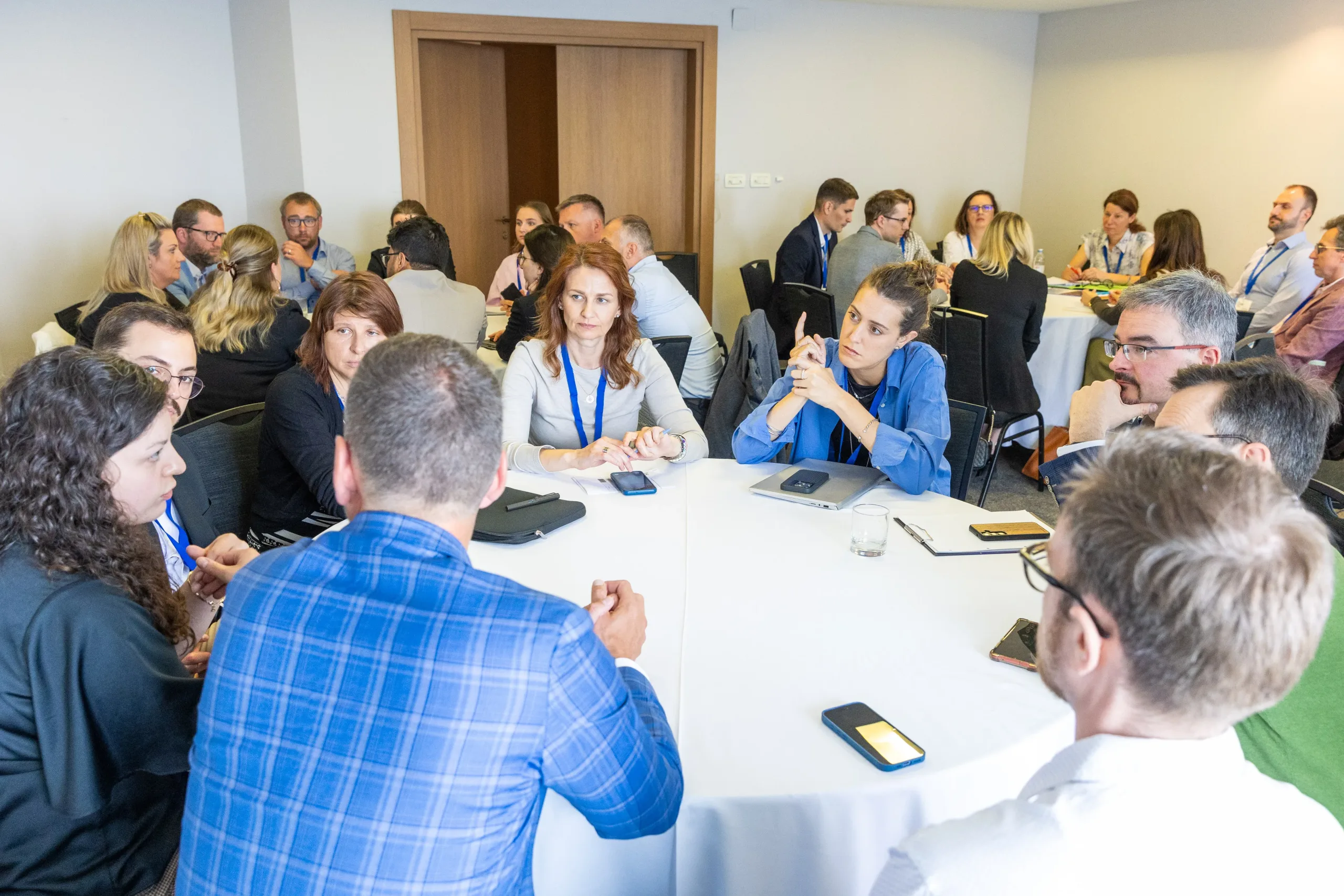
The main programme started on 20 May at 17:30 with a welcome coffee (see the programme outline). Participants who arrived earlier could join one of the two pre-conference events below.
20 May 2025 · 15:00–17:30 · Conference room Bobara
Turning the new Energy Efficiency Directive into an opportunity
Energy efficiency as a resource for affordable energy, security and competitiveness
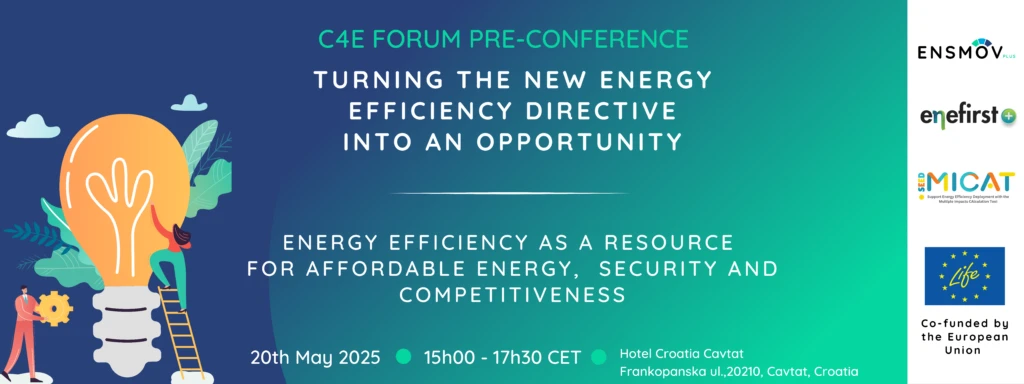
This C4E pre-conference on 20 May brought together key European-funded projects focusing on energy efficiency: ENSMOV plus, Enefirst Plus and SEED MICAT.
The session highlighted the key challenges and issues raised by the new Energy Efficiency Directive, and why addressing them is essential not only to achieve energy efficiency targets, but also to contribute to multiple objectives. Participants got a tour of publicly available resources, including project platforms and tools related to energy policies, the energy savings obligation and the Energy Efficiency First principle.
Participants also benefited from experience sharing by Croatian and Polish experts, as well as discussions around policy recommendations in the context of the new EED — helping to further develop knowledge on implementing Article 8 EED and the Energy Efficiency First principle.
20 May 2025 · 16:00–17:30 · Conference room Šipun
CoolLIFE Tool & Knowledge Hub Training
Driving a sustainable future in space cooling
The CoolLIFE project tackles Europe’s growing demand for sustainable space cooling by equipping decision-makers with essential tools and knowledge.
This session provided hands-on training on the CoolLIFE Tool & Knowledge Hub, helping participants integrate low-carbon cooling strategies into energy planning.
What the training covered:
- CoolLIFE Tool: analyse space-cooling demand (local to EU-wide), assess demand-response measures, and explore green cooling technologies under economic, regulatory and policy conditions.
- Knowledge Hub: access quality-controlled FAIR (Findable, Accessible, Interoperable, Reusable) data, EU-27 funding schemes, and insights into user behaviour for effective cooling planning.
- Explore nature-based, passive and free cooling solutions.
- Integrate sustainable space-cooling strategies into NECPs, Comprehensive Assessments and municipal heat planning.
- Engage in interactive exercises to apply the CoolLIFE tools effectively.