
Tag: Guest contributor

  • When Good Intentions Miss the Mark: Reforming Bulgaria’s €3+ Billion Social Climate Plan

    When Good Intentions Miss the Mark: Reforming Bulgaria’s €3+ Billion Social Climate Plan

    A once-in-a-generation opportunity put at risk
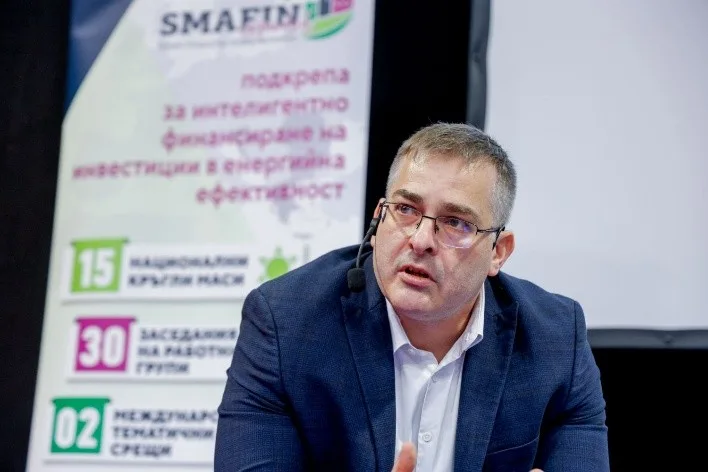
    Portrait of Dragomir Tzanev.

    With over €3 billion set aside under Bulgaria’s Social Climate Plan (SCP) for the period 2026-2032, the country has a historic opportunity to reduce energy poverty and accelerate energy-efficient building renovation. But the current draft of the plan risks squandering this opportunity by clinging to outdated, centralised models of grant financing – models that have already proven inefficient and inequitable.

    The biggest concern? Despite the sheer volume of funding, there is no guarantee that it will reach those who need it most. Without urgent reform, the SCP may become yet another example of a well-intentioned initiative derailed by poor targeting, lack of transparency, and institutional inertia.

    No targeting, no fairness

    The plan fails to introduce any objective mechanism for identifying vulnerable households. Bulgaria still lacks a national system to define and verify energy poverty. This means that there is no fair, consistent way to ensure that the funding reaches those who cannot afford to renovate their homes on their own.

    In its current form, the plan risks enabling better-off households – simply because they happen to live in the “selected” buildings – to access full public subsidies. Vulnerable groups, on the other hand, may once again be left behind.

    A united call for change

    This alarming scenario has led 15 Bulgarian organisations – representing civil society, academia, the energy efficiency sector, and the social field – to submit a joint position paper calling for fundamental reforms in the plan. Their message: a Social Climate Plan must be social in both design and impact. They presented the position at a recent press conference, warning that the current model repeats mistakes of the past and fails to offer a sustainable, inclusive pathway for scaling up renovation. This joint voice was not unheard – the media event resulted in more than 50 topical publications, many of which in key TV and radio broadcasts.

    Three measures, three systemic failures

    The SCP includes three key building-related measures – yet all are underpinned by flawed logic:

    Multifamily building renovation: 100% public grants are granted to all owners in the selected buildings, regardless of income level. No need to return anything, not a single cent – the state pays, and the municipality does it all for you. Logically, the resource suffices for a limited number of buildings, and only a fraction of vulnerable households are expected to benefit – less than 3% of the estimated energy-poor population.

    Single-family houses: Formally targeted at recipients of heating aid, but without the selection mechanism – municipalities decide who deserves more. Large and energy-hungry homes may be renovated for free, while many truly vulnerable households could remain excluded. No technical consultancy for the owners, too – municipalities decide which measures are suitable (and safe). But hold on: about half of the municipalities have never executed a project in residential building so far.

    Energy communities: An ambitious rollout is proposed – over 3,200 projects – but without addressing Bulgaria’s regulatory barriers or building real citizen participation. Municipalities are once more given the central role, despite lacking the expertise, and no funding is foreseen for external technical support. There are currently 3 active energy communities, with 2 municipalities involved – doesn’t it look as a small issue with local capacity, again?

    What has been achieved so far? Not enough.

    The scale of the challenge is well illustrated by the following data from national renovation programmes since 2015 until now, all implemented at 100% grant rate, blowing away more than 1,3 billion Euro of public resource:

    Table showing national renovation programme results since 2015.

    The NRRP renovation programme, coupled with another state financing totaling over 2 billion Euro and operating under the same principle, aim to fund the following modest expansion over the next seven years:

    Table showing the planned renovation programme expansion over seven years.

    Cold numbers don’t lie – we have clear data for a historically significant period of time that 100% grants lead to exactly nowhere. Still, we aim the same with the SCP. Is that fair? Inclusive? Result-oriented? Is nobody left behind?

    The way forward: make renovation work for people

    The coalition proposes a tri-component financial model that makes public support more equitable and sustainable. Under this approach:

    • Vulnerable households would receive full grants.
    • Middle-income households would benefit from partial grants, covering about half the cost.
    • The remaining amount would be financed through accessible, soft loans.

    This model introduces shared responsibility and enables more households to benefit without draining public resources. It also integrates the growing network of one-stop shops (OSS) across Bulgaria set by SHEERenov+ and other ongoing projects, offering tailored technical and administrative support and reducing the pressure on municipal authorities.

    Crucially, the model relies on the involvement of private consultancy services and market intermediaries, ensuring that renovation becomes a scalable, investable, and citizen-driven process – not just another bureaucratic programme.

    A fair and functional system is within reach

    The current SCP is not beyond repair. The tools, expertise, and institutional infrastructure already exist – many of them piloted successfully through EU-funded projects. What is needed now is the political will to embrace reform, break from past habits, and make real use of the opportunity that the Social Climate Fund offers.

    Scaling up building renovation cannot depend on sporadic grant campaigns every 10 or 20 years. If we continue at the current pace, it will take two centuries to renovate the existing stock.

    Bulgaria must act now – to protect the vulnerable, to spend wisely, and to lead the region by example as the other members from the CEE region are also now in the phase of finalizing their projects of the SCPs.

    About the author:

    Dragomir Tzanev is Executive Director of Center for Energy Efficiency EnEffect and official representative of Municipal Energy Efficiency Network EcoEnergy – Bulgaria. Coordinator and team leader for EnEffect in more than 30 international cooperation projects. Member of the Advisory Board of the International Passive House Conference and the UNECE Group of Experts on Energy Efficiency. Author of a series of publications and lecturer at numerous international conferences in the field of sustainable energy development, education and training on energy efficiency and RES in buildings, principles of passive and nearly zero-energy buildings, and municipal energy planning.

  • C4E Forum – an ideal platform to bring the topic of energy efficient renovation to the forefront

    C4E Forum – an ideal platform to bring the topic of energy efficient renovation to the forefront

    Since the last C4E edition in 2023, the recast of the Energy Performance of Buildings Directive was officially adopted by the EU Institutions in April 2024.

    With these regulations now fully in place and 2030 rapidly approaching, the focus must shift to on-the-ground implementation to achieve the EU’s climate neutrality goals. Member States must now prioritise the delivery of the Energy Performance of Buildings and Energy Efficiency Directives, underscoring the critical role of energy efficiency in reducing energy costs, enhancing living conditions, strengthening energy security, and boosting competitiveness.

    Achieving an energy renovated building stock can be motivated by factors other than energy issues. For example, the terrible earthquakes in Croatia in 2020 motivated the government to introduce a programme of joint seismic and energy renovations across the affected areas. This has significantly stimulated renovation activities in that country.

    Another approach can be to select a segment of the building stock for priority attention. For example, Romania chose its university buildings to be the subject of a programme that is co-funded by the European Investment Bank (EIB) worth a total of €200m. It is well known that studying in properly renovated buildings boosts learning ability and reduces absenteeism in the student population.

    The Central and Eastern European Energy Efficiency Forum (C4E Forum) serves as an ideal platform to bring the topic of energy efficient renovation to the forefront, convening key governmental and industry stakeholders, exploring strategies to accelerate national implementation, and sharing best practices. Be sure to join us in Croatia, from the 20th to the 23rd of May 2025!

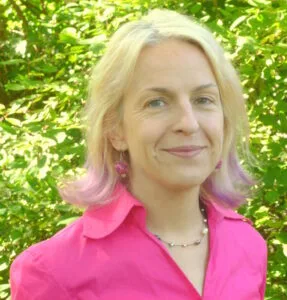
    Portrait of Adrian Joyce.

    About the author:

    Adrian Joyce is Secretary General of Efficient Buildings Europe, the leading European industry association dedicated to advancing energy efficiency in European buildings.

    He is also Director of the Renovate Europe Campaign, which has 49 48 partners from all segments of the construction sector and which has been the main organiser of the biennial Central and Eastern European Energy Efficiency Forum (C4E Forum) since the 2023 edition.

    An architect by training with 18 years practice before taking up policy work in Brussels, he is a part-time Professor of Architecture at Louvain-le-Neuve, Belgium.

    Among other roles, between 2017 and 2020 he was Chair of the Coalition for Energy Savings which, through its members, represents around 15 million EU citizens.

  • Blog post by Igor Kemenović

    Blog post by Igor Kemenović

    The Importance of the next C4E Forum in Croatia: Addressing Building Renovation Challenges in Central and Eastern Europe

    Next May, Croatia will host the Central and Eastern Europe Energy Efficiency Forum (C4E Forum), a pivotal event bringing together experts, policymakers and stakeholders from across the region to discuss the pressing challenges related to energy efficiency and building renovations. This gathering is not just a routine conference; it represents a significant opportunity for Central and Eastern European countries to collaborate, share knowledge, and develop strategies to tackle the unique issues they face. One of the focus areas of this edition will be the implementation of the Energy Performance of Buildings Directive, which EU countries will be aiming to transpose into national law over the next two years.

    Addressing regional specificities

    Central and Eastern Europe (CEE) have distinct characteristics that set them apart from other regions in Europe. Many buildings in this area were constructed during the socialist era, often with traditional and outdated materials and techniques that do not meet current energy efficiency standards. The C4E Forum provides a platform to address these specific challenges, enabling countries to share their experiences and solutions tailored to their unique contexts.

    Fostering regional cooperation

    The C4E Forum, under the umbrella of the Renovate Europe Campaign, is a unique opportunity for countries in the region to foster cooperation and build strong networks. By working together, countries with similar construction style can share resources, expertise, and best practices, creating a collaborative environment that benefits all participants. This regional cooperation is crucial for addressing common challenges and achieving our energy efficiency goals.

    16 countries, exploring multiple themes of energy efficiency

    The C4E Forum in Croatia next May is a critical event for Central and Eastern European countries. It will offer to stakeholders from 16 countries a platform to address the unique challenges of building renovations and EPBD implementation, promote energy efficiency, stimulate economic growth, enhance the quality of life, foster regional cooperation, and access essential funding. By coming together, countries in the region can develop effective strategies and solutions that will have a lasting positive impact on their buildings, economies, and citizens. The Forum represents a significant step towards a more sustainable and prosperous future for Central and Eastern Europe. You will be able to discover soon which are the topics which we will focus on during presentations, discussions and workshops.

    Why Croatia as the venue?

    It is a good question, but on the other side why should it even be a question! After Bulgaria, Romania, Poland and Slovakia, it is a privilege for us to host this biannual pivotal event in Cavtat in Croatia. It is also a kind of recognition for Croatia for everything it has done in comprehensive renovation, which has connected earthquake recovery that increases seismic resistance with energy renovation.

    The role of HUPFAS for the success of the C4E Forum 2025

    HUPFAS is the Croatian association of thermal facade system manufacturers and our members are 19 renowned companies with 1.600 employees in Croatia. We are crucial for achieving national climate policy goals and the decarbonisation of the economy. Also, HUPFAS is one of the key associations that continuously invest in raising awareness and standards of energy efficiency.

    Therefore, we were chosen as the national partner of this conference to be held in Croatia in 2025 and have the privilege and responsibility of being an active stakeholder in making this conference a success together with the Renovate Europe Campaign

    Portrait of Igor Kemenović.

    About the author:

    Igor Kemenović (since 2022) is the President of HUPFAS-the Croatian Association of Thermal Facade Systems Manufacturers, based in Zagreb. Since 2013 Igor is also (together with his brother Marko) a CEO of a family company Kemenović d.o.o. which is Expanded PolyStyrene (EPS) producing company and member of HUPFAS as well. Igor is responsible for factory production control, production organization and special products and has been working in the company since graduation from the Faculty of civil engineering in 2001.

  • Challenges Croatia is facing ahead of the C4E Forum 2025

    Challenges Croatia is facing ahead of the C4E Forum 2025

    Portrait of Irena Kriz-Selendic.

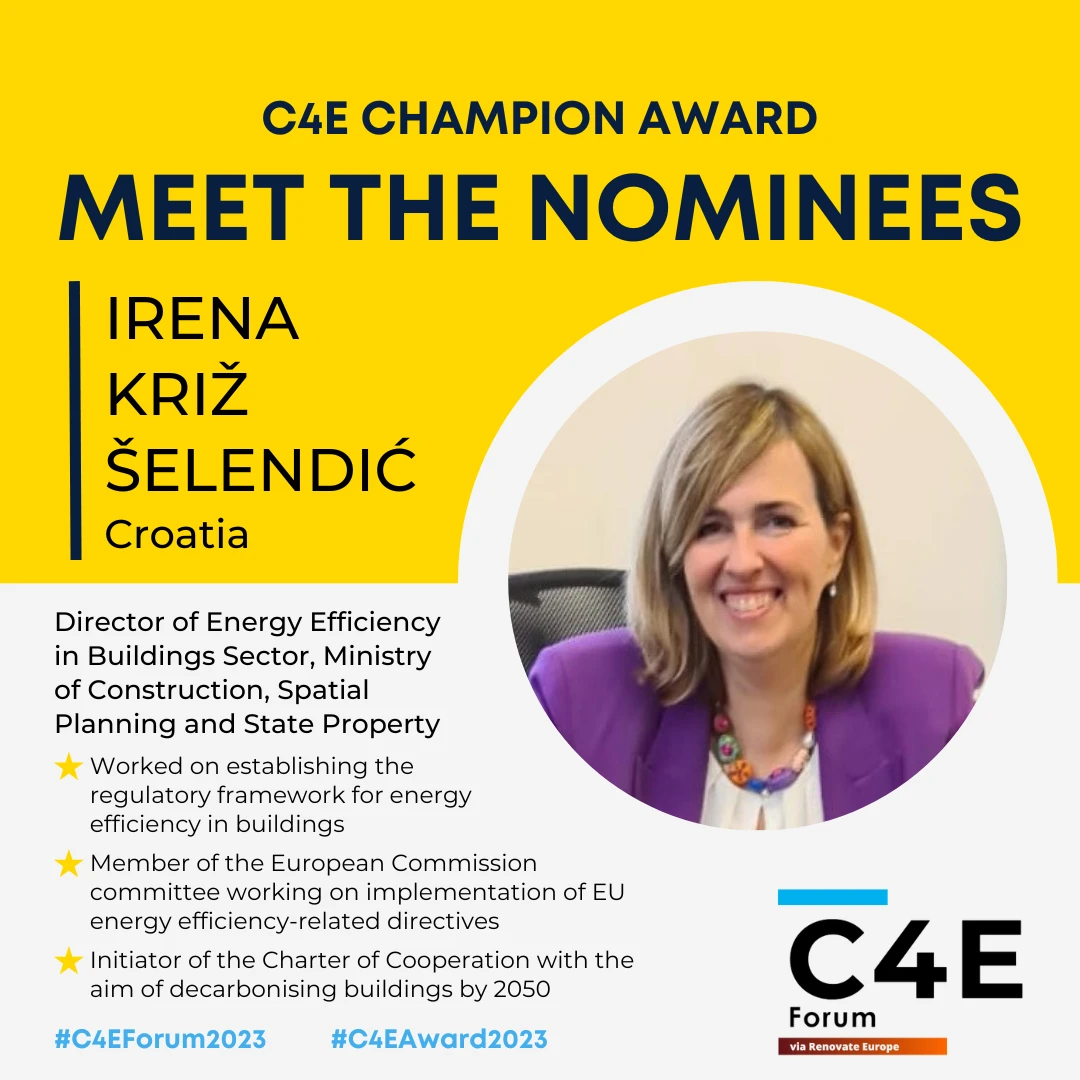
    After the announcement that the C4E Forum will be held in Croatia in 2025, we asked the Croatian nominee for the C4E Champion Award 2023 about her reaction to this news and about real challenges that Croatia is facing.

    A short interview with more details below:

    How did you react when you found out that the C4E forum will be held in Croatia next year?

    Of course, my colleagues and I, who work on building renovations, were thrilled.

    We have been participating in this forum for several years, and it is certainly an honor for us to host colleagues from neighboring countries in Croatia.

    It is also a kind of recognition for Croatia for everything it has done in the field of energy renovation and comprehensive renovation, which has connected earthquake recovery that increases seismic resistance with energy renovation.

    Why do you think it is good that such conferences are held at the level of Central and Eastern Europe?

    It is certainly good. We support and welcome such conferences.

    These countries, which are members, are also neighbouring countries, they share part of a common history, have a similar way of building, similar architectural heritage, and have a lot to share. There is great potential for renovation in the countries of Central and Eastern Europe, for both public and private buildings.

    There are also great challenges for all of us until 2050. It is necessary to establish new financial mechanisms so that we can renovate all buildings, and therefore the exchange of experiences and best practices from our countries is very important.

    What do you think is the biggest challenge this year and next year in the construction and legislation sector? Is it MEPS or the creation of National Building Rehabilitation Plans? or both? Or something else?

    We are already on a wave of renovations, and in Croatia, one of our biggest challenges in the next two years will be the lack of qualified labor, which we have already encountered. This is something we need to work on systematically, and within the framework of the National Recovery and Resilience Plan, we have several reforms addressing this issue. We are educating both domestic workers and workers from third countries, and we are also developing new study programs, so we are working on many fronts.

    Additionally, in the next two years, member states will have to transpose the Directive on the Energy Performance of Buildings into their legislation, and this part will be less challenging than the implementation. Given that for the first time we have a mandatory renovation obligation that we did not have prescribed in this way, and considering that this will engage very large financial resources and a very large number of workers, it will be a huge challenge to transfer and achieve everything in the coming period. Therefore, we all need to work together. We must not lose sight of the “energy efficiency first” principle because if the renovation is reduced to some cheaper and shallow measures that are short-term profitable or just to fulfill the renovation on paper, it will be counterproductive to all our goals.

    About the interviewee:

    Irena Kriz-Selendic is currently Director of Sector, Energy Efficiency in Buildings in Croatian Ministry of Construction, Spatial Planning and State Property. Worked on the establishment of the entire regulatory framework for energy efficiency in buildings in Croatia, including Long term renovation strategy and on the development of national energy renovation programs for multi-apartment buildings, family houses, public sector buildings, cultural heritage buildings and energy poverty reduction programs. She participated in numerous EU projects (IPA 2012 “Strengthening Energy Efficiency in Buildings in Croatia”, Concerted Action for EPBD, Concerted Action for EED, CEI, BUILD UPON, BUILD-UP SKILLS project (COSKILLSS) and is a member of the committee at the European Commission that works on the implementation of EU directives in the field of energy efficiency. Irena received the annual award in 2019 for Person of the Year for Green construction and sustainable development, awarded by the Croatian Council for Green Construction and HUPFAS (Croatian Association of Thermal Facade Systems Manufacturers) and HUEC (Croatian Association of Energy Certifiers) for a special contribution to the promotion of green construction and sustainable development in Croatia.

  • It’s all Šamorín’s fault!

    It’s all Šamorín’s fault!

    It’s really all the fault of last year’s C4E event in Šamorin, Slovakia. First, the organisers more than surprised me already in the spring with a nomination for the C4E Champion 2023 award.

    Apreciation leads to encouragement

    Government officials are not used to being praised and singled out for their work. My job at the ministry is to take care of the system of spatial and construction legislation and the preparation of technical regulations. For an outside observer, this is not an attractive job. The results of my work are published in the official gazette of Slovenia, not in some prestigious scientific magazine, at some art event or sports venue. Regulations imply restriction and rules that wave to be obeyed, so they are not popular, even if they improve the standard of living. That’s why no one is patting us on the back. But the organisers of C4E did just that. Uau!

    Among the tasks that I have been performing at the Ministry of Natural Resources and Spatial Planning for well over twenty years is the preparation of building regulations in the field of efficient use of energy in buildings. Slovenia (and formerly Yugoslavia) has a long experience with this. The first standard was prepared around 1975, and my first regulation in this area is from 2002. Since then, several were published, and each time the requirements for energy savings became more strict. What is more, the requirements that buildings must provide part of the energy themselves and that these sources must be renewable are increasingly stricter. The last, currently valid regulation is from 2022. Continuity of work on the energy efficiency of buildings and commitment to sustainable construction earned me a nomination for C4E Champion 2023. The certificate for this proudly hangs in my office.

    From theory to practice

    The C4E Forum in Šamorin has another, perhaps even more important side effect for me. Participating in these meetings of energy enthusiasts from Central and Eastern Europe – I was at the forums in Bulgaria and Romania – encouraged me every time to think about whether we are just talking and prescribing, or whether we are doing ourselves what we want from others. I can proudly say that during the years of work at the ministry, I have gradually updated the house I live in, built in the 1970s. We replaced all the windows, additionally insulated the facade, installed external blinds, additionally insulated the roof, switched from outdated wood-burning stove to a condensing gas boiler and introduced central ventilation with heat recovery.

    Then the C4E conference in Šamorin happened! The organisers surprised us with a formal presentation of the nominees and the announcement of the awards in the extraordinary hall at Pezinok Castle. After the ceremony, I got into a conversation with a Slovenian colleague from the ministry of energy, and casually mentioned to him that we are thinking of installing photovoltaic panels on our roof one day, in five or ten years, to produce green electricity. And he answered me: “What? In five years! No way, you must put it on the roof this year, because then the connection conditions will change, and it will be less favourable!” Others who listened to us also agreed that 2023 is indeed the right year for a power plant on the roof. And I didn’t sleep well that night. When I returned home, we had a family consultation and during it I told my family that it would be wise to spend the savings on the solar panels on the roof. The family agreed, and the son immediately contacted a company that supplies and installs rooftop power plants. I was sure that the local energy company would not approve me to connect the photovoltaic device to the public electricity grid, but I was wrong, we got the approval in two weeks. Also, the installation took place a few months earlier than I was expecting. We were lucky that the chosen company could not install a power plant at a certain facility, and they were able to do it on our roof, in the middle of summer. So, the meeting in Šamorin cost me a lot of money, but we are proud owners of our own photovoltaic power plant.

    Natural next steps

    But this did not end the long trail of the forum in Šamorin. When I was bragging at work about my new roof acquisition, a fellow colleague who works with me wisely remarked: “Now that you generate electricity yourself, you also have to use it, so replace the gas boiler with a heat pump!” And I repeated the process again: the family council, which once again decided to dig into our pockets and invest in a heat pump that started operating in mid-October, just in time – at the beginning of the heating season.

    Eko-sklad, a public fund that has been encouraging citizens, companies, and public institutions to use energy more efficiently for more than two decades, is helping financially us and others in Slovenia with both renovations. This way, I will get back part of the funds invested in the self-sufficient power plant on the roof and by switching from a gas boiler to a heat pump. But the applicants in Slovenia are so many that it will be (partly) refunded in the middle of this year.

    Our house has been deeply renovated to “nearly zero energy” and we cover all our energy needs with our own environmentally friendly energy production from the roof photovoltaics. We enjoy an excellent indoor environment, with the awareness that we are doing it in a sustainable way. And the C4E forum in Šamorin is to blame for this!

    February 2024

    Portrait of Saša Galonja.

    About the author:

    Saša Galonja is the Head of Construction Division, Spatial Planning, Construction and Housing Directorate at the Slovenian Ministry of the Environment and Spatial Planning

  • Interview with Jana Bendžalová (ENBEE, Slovakia)

    Interview with Jana Bendžalová (ENBEE, Slovakia)

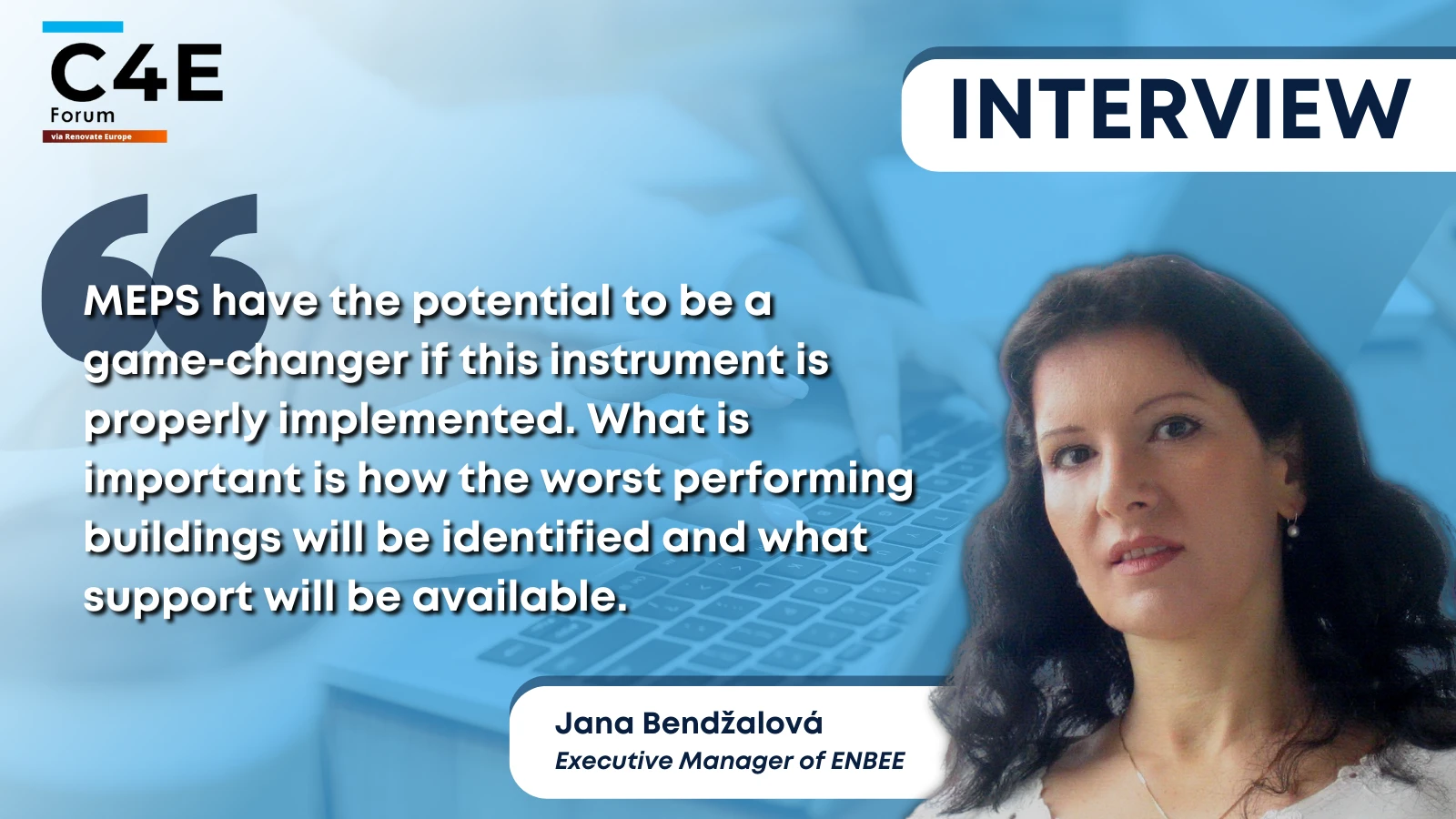
    Interview graphic for Jana Bendžalová from ENBEE, Slovakia.

    In the context of the last C4E Forum, we interviewed various of the speakers at the event on the three main areas of focus that we had in this past edition: energy security, the rebuilding of Ukraine and EU policy (REPowerEU and Fit-for-55 package).

    To take at look at the current state of EU Policy, we conducted a written interview focusing on the main file concerning energy efficiency in buildings, the Energy Performance of Buildings Directive EPBD, with Jana Bendžalová.

    Jana Bendžalová is the Executive Manager at ENBEE (Environment & Building Energy Efficiency), a Slovak private consulting company that brings together experts with years of experience in the field of energy performance of buildings and has with vast experience in the technical and legal implementation of the Energy Performance of Buildings Directive in EU and non-EU countries. Besides having work for many years on the implementation of EPBD, Jana is also the task leader in several EU projects and has participated in EU Member States standby committees for the transposition of the EPBD.

    How do you rate the revision of the Energy Performance of Buildings Directive? Does it look to you that the final version will be an improvement on the previous iteration?

    Good in intention, improvable in technical details, for example some definitions are missing, or some definitions are contradictory (ZEB on a net annual basis and the phase out of fossil fuels, “total” primary energy by excluding renewables).

    Version from Parliament improved several technical issues and also improved an ambition level especially towards EU harmonisation in energy performance assessment for key performance indicators. The version from the Council will leave more final decisions to the Member States which does not go towards a European level playing field.

    But we do not know now what will be a final version, if the attempt for more harmonisation and ambition will be accepted.

    Is the inclusion of minimum energy performance standards (MEPS) a game-changer for the sector?

    Yes it is, but the problem is that the requirements will not be the same in all countries, as the assessment methods are different. EU harmonisation on the quality of the assessment methods is urgently needed.

    MEPS have a potential to be a game changer if this instrument is properly implemented. Important is how the worst preforming buildings will be identified and what support will be available.

    We should be aware that the worst energy performing buildings are often connected with the energy poverty. Energy poverty should not be treated separately from MEPS. MEPS could be instrument for solving energy poverty problem.

    Important is a social justice. The performance of building, when the deep renovation brings the energy cost reduction that is higher than paying the loan for investment, is the margin when owner can be forced to renovation if appropriate financial instruments are in place ( e.g. loans with 0% interest rate).

    This level should be correctly estimated by MSs and the methodology should be provided by Commission.

    There should be also a commitment from the designer on the results, so that the energy and cost savings are really achieved. This also shows importance of quality of the assessment method for energy performance so that it takes into account all building technologies correctly.

    Problem is sometimes an unfortunate wording that buildings have to achieve by renovation, e.g. min. class “E”. It’s a big misunderstanding and a potential for lock-in effect. Buildings must be renovated based on minimum requirements for existing buildings and in line with national building renovation plans. However, it is rather a problem of communication towards the public, this problem has been fixed and made clear in the draft EPBD.

    Is the EPBD flexible enough to take into account the diverse needs of different EU countries and regions?

    There are no requirements set in the EPBD, except the MEPS energy class and the values for the ZEB definition. But setting values and classes without defining the assessment methods makes no sense.

    The EPBD mostly defines general principles, as for example that the IEQ should be taken into account. Then each country defines its own methods, sometimes fragmenting the EU market and creating barriers for the free circulation of services. This is a big problem for professionals and the industry.

    At least the energy calculation method, which is physics, should be common in the EU as properly proposed in the version from Parliament (art. 7, 4b). We should take care that this paragraph remains.

    Do you believe that the EU has prioritised the EPBD, as well as the Renovation Wave, as part of its REPowerEU plan to phase out Russian fossil fuel imports? Or has an opportunity been lost?

    I do not see the harmonisation and the EU added value, if the opportunity for a common technical transposition, for example by establishing a European calculation method as it has been done in the US, will be missed.

    What are the main challenges when it comes to implementing legislation like the EPBD?

    Quality, transparency, harmonisation. The technical transposition should not be made by national regulations but by European standards developed under CEN.

    By setting specific “means” (for example: no fossil fuel boilers) instead of fixing only the objectives (for example; carbon neutrality) the EPBD limits the possibilities of the designer to optimise the solutions for each building.

    There is no “one fits all” solution.

    It seems that the shift from gas to electrification in the heating sector, and the shift from the boiler to the heat pump seems to be the only solution. Other solutions, such as biogas, seem to be forgotten or made impossible to implement.

  • Blog post by Norbert Kurilla

    Blog post by Norbert Kurilla

    Nowadays out-of-crises policies and measures shall be fully compatible with a net-zero world and avoid creating further dependencies. I think many crisis can be turned into an opportunity. Especially from energy security perspective, it could be a positive impetus that drives environmentally sound and sustainable solutions. The new era is the green and digital transition that underpins greater resilience and energy and material independence. This transition however must be designed in a socially affordable way as immediate effects of fossil energy phasing-out pose harsh socio-economic consequences.

    Presidential office on the way to net-zero by 2030

    Practical examples can serve as an inspiration for individuals, company or public institution. The Presidential office wants to lead by example and become the first public institution in Slovakia and probably the very first Presidential office in the world to achieve climate neutrality by 2030 at the latest. This commitment was made in September 2020. Priorities for decarbonisation were set through data and evidence-based approach. In cooperation with the Institute of Environmental Policy we have developed a carbon calculator and inform about progress on annual basis. A special purpose energy audit was carried out to evaluating measures from an economic, energy and environmental point of view. It includes simple to more investment-intensive measures clustered in five areas. Mobility (upgrade of fleet to hybrid and electric vehicles via operational leasing, bike racks, charging infrastructure, commercial airlines, etc.), Energy (planned installation of photovoltaic panels to cover 15% of annual energy consumption), Renovation and operation of buildings (green roof, planned replacement of gas heating with heat pumps and ceiling insulation, etc.), Green infrastructure and offsetting (greenery and tree planting, presidential bees and urban biodiversity) and Miscellaneous (green public procurement, zero-waste office, ban on single-use plastics, donations, etc.) Energy efficiency measures and energy saving are the highest priority. Since we work with data and evidence, we can easily avoid “greenwashing”. According to the carbon calculator, we have to offset air travel emissions by planting 1300 trees every year. Last year we reduced emissions from transport by 50 percent, which was mainly due to electrification of the vehicle fleet, and for example we produced 50 kg of own presidential honey, which, in addition to supporting urban biodiversity and pollinators, is a great “side” product – an original gift that was given Pope Francis.

    The Presidential green seal motivates for sustainable renovations and operations

    The main objective of this flagship initiative (more in Slovak at www.zelenapecat.sk) is to motivate other organizations, institutions or the private sector to adopt “standards of a green institution” and direct the buildings renovation and subsequently their operation towards sustainability. Sustainable constructions, renovations and operation of buildings are essential to meet ambitious energy and climate goals. The Slovak President will award with her “Green Seal” the efforts of those renovation projects that meet technical, aesthetic, as well as operational and social criteria put forward by her initiative. Green Seal criteria were jointly developed by external sustainability experts. It is a unique political innovation (a new certification scheme for public buildings), which contributes to overall sustainability. The ten criteria combine the physical transformation of a building (sustainable restoration of the building) and the behavioral changes of the users of the given institution with an impact on the connected communities. This initiative naturally supports the achievement of national and European climate and energy goals, is compatible with the Paris Climate Agreement, European Green Deal and its Renovation Wave.

    Most complex climate crisis force us to reevaluate habitual approaches and attitudes Decarbonisation as a global trend counts on clean energy and energy efficiency. Sustainability and climate change implications are no longer on the margins, they are already central. If we act together and coordinately, we can be better prepared. Inaction and delays will be more expensive and painful. C4E Forum is an ideal opportunity to exchange further and elaborate profoundly on best practices and knowledge. Looking forward to welcoming you in Slovakia on 23-26 May 2023.

    Portrait of Norbert Kurilla.

    The author is a senior advisor to the President of the Slovak Republic for environment, energy, climate change and business. He is an environmental diplomat and economist. His international expertise on environmental policy, climate change and energy has developed during many years diplomatic assignment at the Permanent Representation of the Slovak Republic to the EU in Brussels. He was also deputy minister at the Ministry of Environment, Management Board member at the European Environmental Agency, and currently acts as a vice-chairman of the OECD Committee for Green Economy.

  • Blog post by Katarina Nikodemova

    Blog post by Katarina Nikodemova

    Europe is in energy crisis, let’s look at the solutions

    The day of 24 February 2022 set off an alarm in Europe. Not only did the aggression on Ukraine start, a new energy crisis was also launched in Europe.

    After initial shock that war is a reality in Europe, Slovakia realised that as a neighbouring country, its dependence on Russian fossil fuels became a huge burden. Europe reacted and launched the initiative REPowerEU. Individual countries mobilised their energy saving potential. All efforts were invested into diversifying natural gas sources, because Russia was no longer a reliable supplier.

    Russia’s gas is blood-stained gas – gas by which Putin finances his war on Ukraine. Paradoxically, thanks to this crisis, Europe learned several lessons. We are living a historical moment, that might mean a new era for many European countries. Looking at the solutions and ways to implement them might be a new restart for green economy transition in many countries in Europe.

    Energy independence is better than dependence

    Europe had to face that we have severe investment debt in being self-sufficient in energy sources. Slovakia was extremely dependent on gas imported from Russia. Germany also relied too much on Russian gas. This year we learned a cruel lesson that if we are too dependent, we are vulnerable.

    The threat of not having enough gas to heat our homes was so real and so close, that we were forced to look for solutions quickly. The winners in this situation were homeowners of passive houses, owners of renewable energy sources and companies that were not so dependent on fossil fuels. Acting under time pressure was not pleasant, but at least some of the long-delayed solutions suddenly got approval for implementation.

    Slovakia was hesitant when it came to energy savings. We negotiated exemptions to general European goals to save 15% of energy consumption until March 2023. The previous economy minister communicated this as a political win in Slovakia. However, it only took several months to realise that this approach is very short sighted and the Ministry is now planning to launch an information campaign on energy savings with an ambition to make public buildings leaders in energy savings.

    Cheap energy sources can quickly become expensive

    We have been listening for too long how natural gas is good, affordable and cheap. We built the whole infrastructure for this energy source. Heat pumps were not good enough compared to gas. A few months later, the whole logic is upside down. The prices for gas increased to extreme levels. People and companies that are dependent on it, struggle. The danger of rising energy poverty is real. All of a sudden, it is out of our control. How much it will cost next week, next month, next year is out of our control. Maybe there will be no gas at all. What we, however, can control is energy demand.

    The winners of the situation are those who invested into lowering their energy demand and those who are not dependent on gas, but on sun, wind or water. The companies did not have enough time to react which caused the situation we are facing now. The heat pump manufacturers don’t have satisfactory capacities to meet the demand for production. It is the same for producers of insulation and construction materials. The events happened so fast, that companies and governments struggle to react on time.

    Cooperation is a key to success

    Countries learned that it is good to be part of the bigger club. Especially in Eastern Europe, we often gossip about how the European structures are slow and bureaucratic. Now, we can feel the concrete benefit of feeling safe and rely on common solutions and negotiations. When it comes to looking for new suppliers or dealing with the prices, we could see that being part of a cooperative community is a win.

    Europe has many struggles ahead. The war is not over yet. The solutions for an energy self-sufficient and energy efficient Europe are not in place yet. We need cooperation, self-assurance and involvement of political leaders into discussion about challenges and struggles.

    The C4E Forum 2023 will be a great opportunity for bringing key actors together for discussions on these hot topics. None of the previous C4E Forums were held under such crucial political circumstances as this one. The agenda will cover the topic of energy efficiency in line with key European strategies and legislation, views on actions of member states and the perspectives of the CEE region as well as the need to discuss strategies for rebuilding Ukraine after the war is over. Join us for these discussions. We are all part of the solution.

    Portrait of Katarína Nikodemová.

    About the author:

    Katarína Nikodemová, Director of the Buildings for the Future, specializes on public policies and governance. After graduating from Political Science and European Studies, she worked for the European Commission and European Parliament, National Council of the Slovak Republic and several renowned NGOs both in Brussels and Slovakia. At previous positions, she specialized on activities related to climate change. For more than three years she is now leading a platform Buildings for the Future based in Slovakia focusing on public policies related to building sector. Buildings for the Future is a platform of 9 member associations, is an active member of the Slovak Climate Initiative that works towards sustainable energy and energy efficiency in line with the climate protection and national partner of the Renovate Europe Campaign.

  • Blog post by Adrian Joyce

    Blog post by Adrian Joyce

    The Central and Eastern European Region: Front line of the renovation battle

    In the middle of roaring war in Ukraine and skyrocketing energy prices, the emergency to renovate a leaky EU building stock responsible for up to 40% of our energy consumption is more obvious than ever. It is time to stop beating around the bush and take drastic measures to improve the performance of our buildings and renovation presents itself as the only sustainable option to tackle the ongoing energy security crisis and strengthen the EU’s resilience and independence towards geopolitical or other factors.

    Especially affected by this current dramatic scenario is the Central and Eastern European (CEE) region. With various countries sharing borders with a land at war and considering their huge dependency on Russian fossil fuel imports, energy efficiency measures become key to ensure not only the security of the area but also the living conditions of its citizens, ensuring homes that are comfortable, healthy and energy efficient.

    In a context where the energy policy debate is at the highest point at EU level, with both the REPowerEU Plan and a Fit for 55 Package (containing key legislation such as the Energy Performance of Buildings Directive and the Energy Efficiency Directive), it is our duty to further emphasise the need for energy renovations to take central stage if we want to achieve our 2030 climate targets and climate neutrality goal by 2050 together with independence from Russian fossil fuel by 2030.

    The ball is in our court, and we can either smash it, by tackling the issue right now, or we can let it slip away, and lament in the years to come not taking the ambitious approach when we had the chance. It is therefore essential that a key element like ambitious Minimum Energy Performance Standards (MEPS) is given the prominence it deserves to become the driver of energy renovation actions moving forward. In their design it is imperative they cover the full building stock with 2030 as a first milestone to measure progress. Ambitious MEPS together with a well-grounded definition of deep renovation including primary and final energy consumption to express energy needs, and consistently referring to the achievement of Zero-Emission Building (ZEB) status would put us in a good position and empower us to face the challenges ahead.

    But, what about the CEE?

    If we turn our focus towards the CEE region Member States and look at the various measures that governments are using to increase renovation rates, we see great disparity on the degree of relevance given to the matter with countries (like Croatia and Slovakia) proving to be quite ambitious while others (Hungary and Poland) taking time to get going.

    Some positives we can extract from the area are its efforts into the renovation of multi-family residential buildings (in countries like Bulgaria, Croatia, Latvia, and Romania), the holistic renovation approach expected (Croatia, Slovakia, and Slovenia) and the integration of digitalisation into renovations (Czechia, Slovakia, and Slovenia).

    Unfortunately, although there is progress in some departments, it is mostly challenges related to clear advice, financing, and availability of qualified workforce that the region is facing. The needs to leverage private capital and more market-based financing mechanisms to complement public funding, strengthening action on upskilling and technical assistance, and introducing clear and detailed references to the Energy Efficiency First Principle in the national renovation schemes are a few of the areas towards which CEE governments should direct their attention.

    This room for improvement evidences the need to couple the current relief measures put forward by all EU countries (not only the CEE region) to tackle the rising energy prices and its subsequent burden to companies and citizens alike, heavily relying on subsidies, with purposeful and needed investment in energy renovation measures. That is the only solution to avoid finding ourselves in the same conflict in the future.

    With more investment being channelled through this longer-term mindset, many of the mentioned obstacles in the region could be appropriately tackled. Mortgage Portfolio Standards (MPS), setting up an EU Renovation Loan, and accelerating the development of new financial products and services for renovation, by bringing together financial institutions, the supply chain, civil society, and government, are mechanisms that should be more intensively thought of to attract private finance.

    Equally important is increasing investment in skills and technical assistance as these are essential to scale up renovations, and the fact is that various good examples are already set up in the CEE. The CraftEDU in Czechia, the Train-to-NZEB and Fit-to-NZEB (present in Bulgaria, Croatia, Czechia and Romania) are successful upskilling programmes that could be further replicated in other countries. So is the current prevision from Member States such as Croatia and Slovakia to open up more one-stop-shops should be an approach that should be more extensive in the area.

    All these issues among many others relevant in scaling up the rate and depth of renovations to reinforce the EU’s energy security, boost our economies, and ensure a more sustainable future will be on the spotlight during the upcoming C4E Forum, co-organised by the Renovate Europe Campaign and Buildings for the Future, taking place next 23-26 May in Slovakia.

    In other words, the ideas and the tools are there, now it is up to all decision makers and all of us, relevant stakeholders, to truly show that the Renovation Wave is one that we want to safely surf and arrive comfortably to the shore.

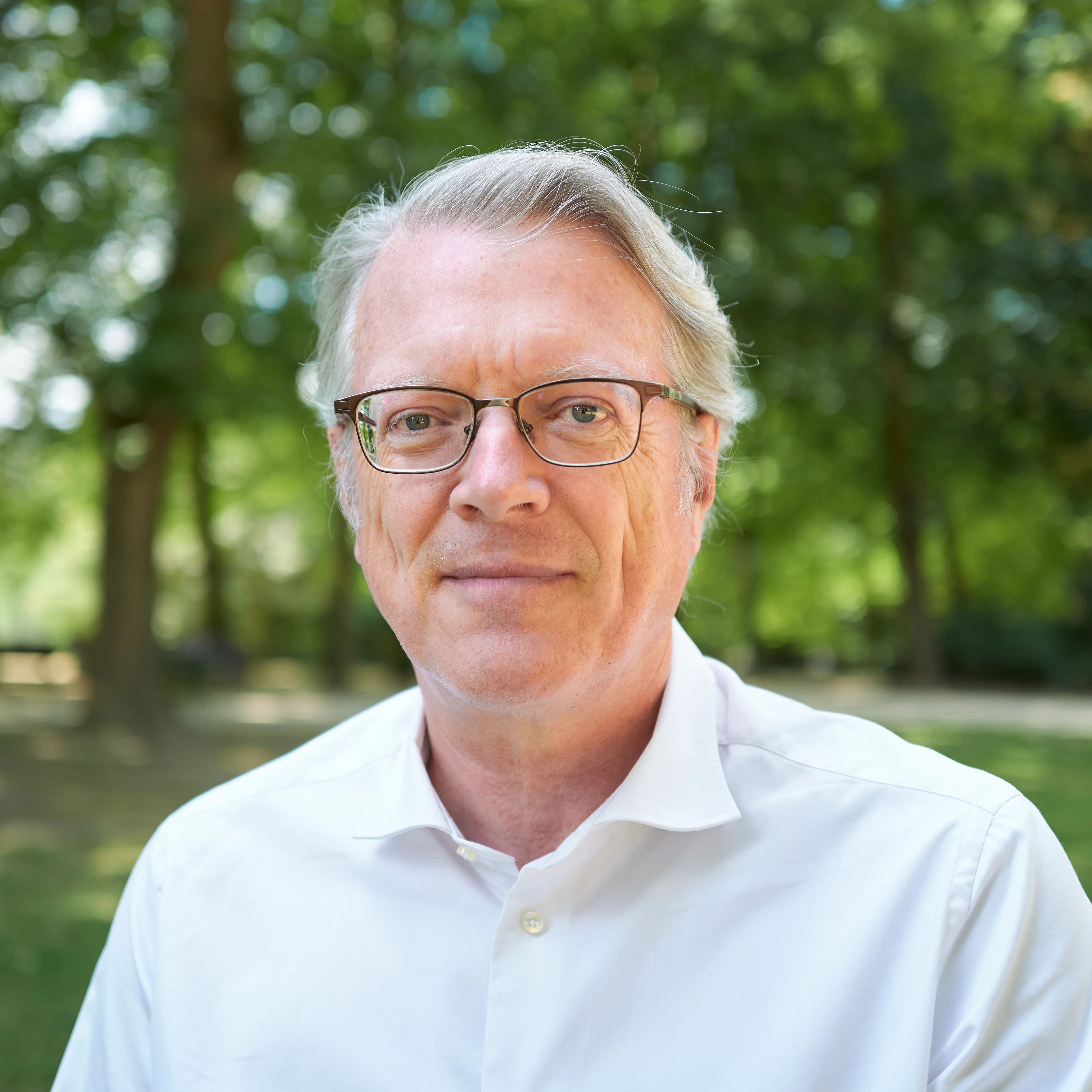
    Portrait of Adrian Joyce.

    About the author:

    Adrian Joyce, Director of the Renovate Europe Campaign, which has 49 partners from all segments of the construction sector, Adrian Joyce is also Secretary General of EuroACE, a European industry association gathering 15 of the leading product and equipment manufacturing companies in the construction sector. An architect by training with 18 years practice before taking up policy work in Brussels, he is a part-time Professor of Architecture at Louvain-le-Neuve, Belgium. Among other roles, he was Chair of the Coalition for Energy Savings, which represents around 15 million EU citizens through its members, from May 2017 to December 2020.

  • Blog post by Lisa Chase: What is “Sustainable,” …

    Blog post by Lisa Chase: What is “Sustainable,” …

    With the Sustainable Finance Disclosure Regulation (SFDR) entering its first year of reporting requirements, and the Corporate Sustainability Reporting Directive (CSRD) set to be finalised this year, companies have been awaiting guidance about how to measure and report sustainability factors. The EU Taxonomy Regulation provides clarification and establishes a classification system to define environmentally sustainable activities. This is important both for companies subject to the SFDR and CSRD and for companies in the building industry supply chains.

    The Taxonomy defines environmental sustainability according to an economic activity’s contribution to climate change and climate adaption using key performance indicators (KPI) for an extensive array of environmental factors. It defines an environmentally sustainable activity as one that:

    • Contributes to one or more environmental objectives
    • Does not significantly harm the environment or detract from environmental objectives
    • Complies with environmental safeguards
    • Complies with the Taxonomy’s technical criteria

    Since the draft CSRD applies to small and medium size companies (SMEs) in “critical industries,” including construction, any company marketing building products will need to familiarise itself with the Taxonomy, to understand how its products align. Building renovations or new construction projects will also need to ensure they comply with the Taxonomy to attract financing from banks subject to the SFDR. The Taxonomy aims to align with the Energy Performance of Buildings Directive (EPBD), although the Taxonomy’s targets for ‘green’ renovations are much lower than the 60 percent energy savings that building efficiency advocates have recommended.

    For example, the Taxonomy specifies that building renovations must meet the EPBD’s energy performance requirements for major renovations or achieve a primary energy demand reduction of 30 percent. To secure financing, the developer of a planned renovation would need to demonstrate it can meet the EPBD or Taxonomy requirement, since investors need to ensure their investment portfolios are SFDR (and Taxonomy) compliant. Similarly, an insulation supplier could market its products to builders by demonstrating that they align with the Taxonomy’s criteria for “climate mitigation,” and would also want to verify that its products can meet the EPBD thermal performance requirements. Once the revised EPBD is published, the Taxonomy will likely be updated to align with more stringent energy efficiency requirements.

    The Taxonomy applies to the SFDR and will likely apply to the CSRD as well. For example, beginning in January 2023, a Bucharest-based investment firm would follow the Taxonomy to evaluate and report the environmental KPIs of its EU and non-EU real estate projects, in order to comply with the SFDR. Once the CSRD is finalized, a building materials supplier would need to assess and report the environmental KPIs for its entire global supply chain, according to the Taxonomy. In addition to EU based financial institutions that need to comply with the SFDR, supranational banks like the European Investment Bank (EIB), will also be integrating the Taxonomy criteria into their investment decisions. Real estate developers in the EU and in CEE candidate states will need to demonstrate that their projects’ environmental performance aligns with the Taxonomy, in order to attract financing from EU investors.

    The Taxonomy is in the process of being developed and refined. In April, the Commission released detailed technical specifications for how companies subject to the SFDR must measure and report sustainability factors. The specifications include, for example, formulas for calculating carbon dioxide emissions per unit of fuel consumed and for calculating “inefficient real estate assets.” They also introduce indicators for assessing a variety of social impacts, including human rights and corruption, and corporate governance factors. Updated social indicators will likely be released later in 2022.

    The new sustainability specifications should provide a robust framework for the pending CSRD implementation. In late February, the European Commission also released its proposal for a Directive on corporate sustainability and due diligence, which is intended to complement the CSRD and the SFDR. The Due Diligence Directive would focus on supply chain disclosure requirements for large companies and would likely align with the Taxonomy specifications. The European Parliament is reviewing the Commission’s proposal but has not announced when it may release a draft Directive.

    Considering the controversy over the Taxonomy’s classification of natural gas as a more “sustainable” fuel source, and the EU’s planned decoupling from Russian sources, the Commission could make significant Taxonomy changes this year. Real estate companies and construction suppliers can prepare now for the expected updates, and CEE financial institutions that are already evaluating environmental factors can help developers assess their projects for Taxonomy alignment.

    As the Commission implements plans to reduce and potentially eliminate Russian petroleum imports, led by CEE governments, improved energy efficiency in every sector will be increasingly critical. The EPBD and complementary financing and corporate accountability policies will be central to achieving EU climate impact and energy independence priorities, particularly in the CEE region.

    Portrait of Lisa A. Chase.

    About the author:

    Lisa A. Chase has researched and written extensively on sustainable development and design for Harvard Graduate School of Design, Harvard University’s Real Estate Academic Initiative and Harvard Business School. She has co-authored publications on social entrepreneurship and corporate social responsibility in Stanford Social Innovation Review, Harvard Business Review and Harvard Business School Working Knowledge. Lisa has presented to academic and industry audiences, including Yale University, Fordham University, C4E Forum, VSE CEE Conference and SEE SDEWES Conference on policy and financing mechanisms for environmental and climate solutions. She holds a Master of Laws in European Union Law from King’s College London, where she researched the convergence of EU energy efficiency and corporate accountability policies. Lisa‘s consultancy, Lucky Fish Communications, specializes in policy analysis and content development for urban design and the built environment.