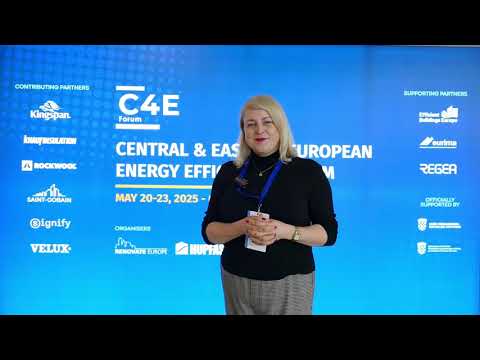
Marta Babicz from the National Fund for Environmental Protection and Water Management (Poland) recorded a short interview at the C4E Forum2025 in Croatia (20-23 May, 2025) about:
how to ensure the CO2 emissions trading revenues are efficiently channelled into projects that drive energy efficiency in Poland
examples of successful energy efficiency initiative in Poland that could serve as a model for other countries in the CEE region
what are the challenges Poland faces in alligning its energy policie with EU climate and energy objectives, and how can funding mechnisms help address these
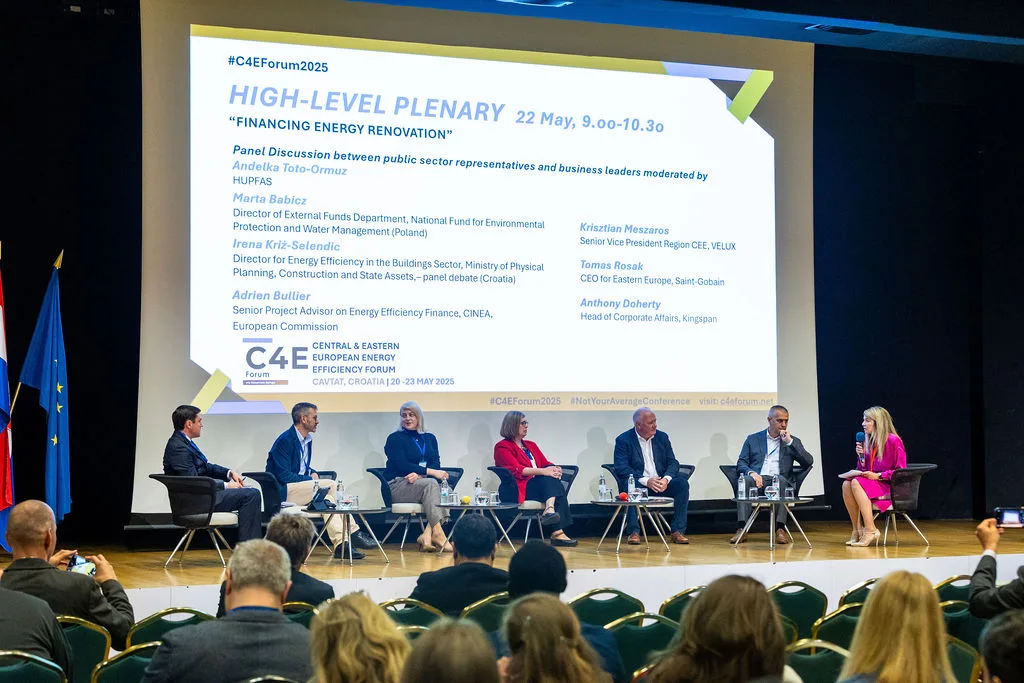
Energy renovation of buildings in Europe must be done. The directives and plans clearly state how many buildings we must restore, in what way and how much. But who will pay for it? At the Financing energy renovation panel discussion, it was stated that around 1.5 trillion euros need to be invested by 2030. To boost energy renovation, indeed, a concerted effort is needed, with private financing supporting public funding.
The panel discussion was attended by Marta Babicz, Director of External Funds Department, National Fund for Environmental Protection and Water Management, POLAND, Irena Kriż-Selendic, Director for Energy Efficiency in the Buildings Sector, Ministry of Physical Planning, Construction and State Assets, CROATIA, Krisztian Meszaros, Senior Vice President Region CEE, VELUX, Tomas Rosak, CEO for Eastern Europe, Saint-Gobain, Anthony Doherty, Head of Corporate Affairs, Kingspan and Adrien Bullier, Senior Project Advisor for Energy Efficiency Finance, CINEA. The discussion was introduced by Marko Zlonoga, Head of Buildings Department, REGEA, CROATIA, and moderated by Andelka Toto-Ormuz, HUPFAS.
– Public money can cover a maximum of 20 percent of energy renovation. The remaining 80 percent must come from the private sector, whether it is property owners or private companies – said Adrien Bullier. He clearly emphasized that for every euro invested, at least five euros must come from the private sector.
We must be very careful. Investing in energy renovation and decarbonization is not like investing in the stock market. Renovating buildings is much more than that. The prices of works and the return on investment—yes, they are important but not essential. The EPBD wants to push out the worst buildings and renovate them in terms of energy. Investing in energy renovation is not the same as investing in the stock market, but in people, said Bullier.
The participants of the panel discussion are optimistic about the continuation of energy renovation, achieving the decarbonization goals, but it is clear to everyone that the deadlines are short and the challenges are great.
– If we want to be successful, it is crucial to have a long-term plan so that everyone in this chain knows what is being done and what will be done. Public money makes up 20 percent of the total money for renovation, the rest comes from the private sector, from the owners. I believe that one of the good models is tax relief – said Krisztian Meszaros.
In Poland and Croatia, they have developed numerous models of energy renovation, especially in terms of financing sources. So, in Poland they started using the tools of the Modernisation Fund, and in Croatia they are using several EU funds to combine earthquake-resistant renovation, energy renovation and green technologies.
– In the last long-term strategies, we estimated that we need nine billion euros, the total value of renovation was estimated at 32 billion euros by 2030. That was before the price increase. We don’t have enough builders. We must calculate those numbers again – said Irena Kriż-Selendic. She warned that it is necessary, in addition to energy renovation, to also do structural renovation of the building because the lessons learned in Croatia after the earthquake are clear: buildings need to be comprehensively renovated to be safe for living.
– This is harmful for the construction sector and energy renovation. The big problem is the dependence on public funding.
Financing programs? In the last few years, there have been many programs to attract private money and loans with EU money. We have the possibility to launch guarantee schemes because banks do not have collateral when lending energy renovation. Loans and guarantees are key instruments. Credit lines are created – explained Bullier.
– We have buildings, houses and public buildings. Private houses – poorer and richer. The richer ones will do the renovation. The poor will never rebuild the building by themselves. State financing is crucial for them. Buildings are a different story. Some countries have renovated most of the buildings, improved the quality of life. In some it is not like that. Why – how was ownership made? If the building is not constructed as a community, there is no money and no credit. Buildings are subject to local laws and regulations. Banks are eager to invest in such projects, there is no risk, there is a great financing potential. Public buildings – this is a third of all buildings in Eastern Europe. A strong focus must be on speeding up the reconstruction of public buildings – said Rosak.
Overall, energy renovation of buildings will bring both opportunities and challenges for all EU member states, especially those in the CEE region. However, the participants of the C4E Forum conference will, with optimism, knowledge and experience, explore and advance the drive for energy renovation of the building sector.
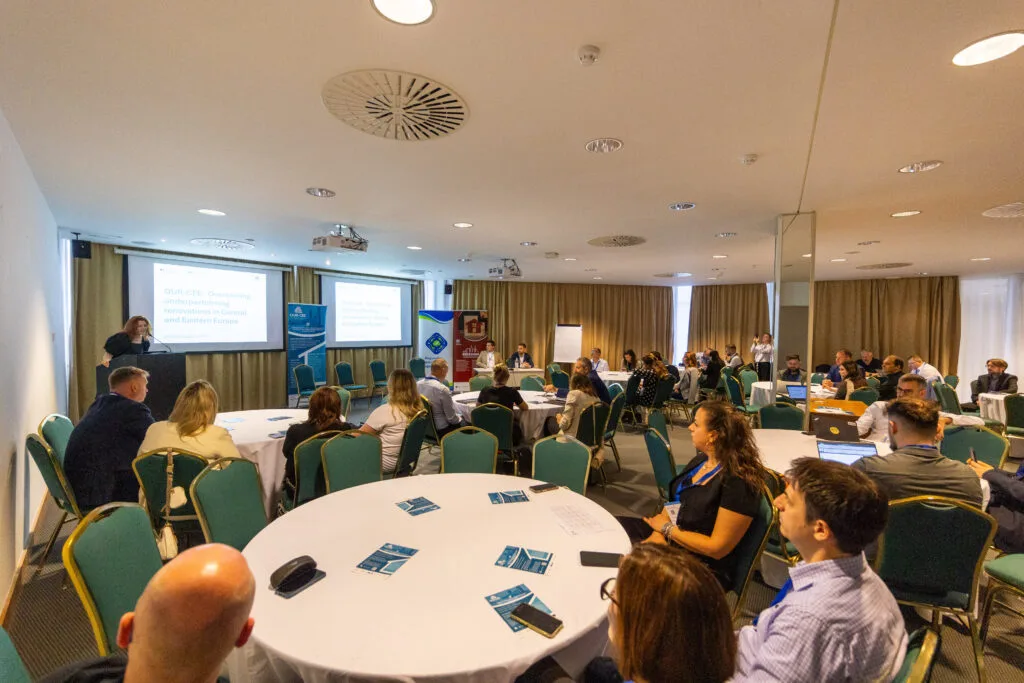
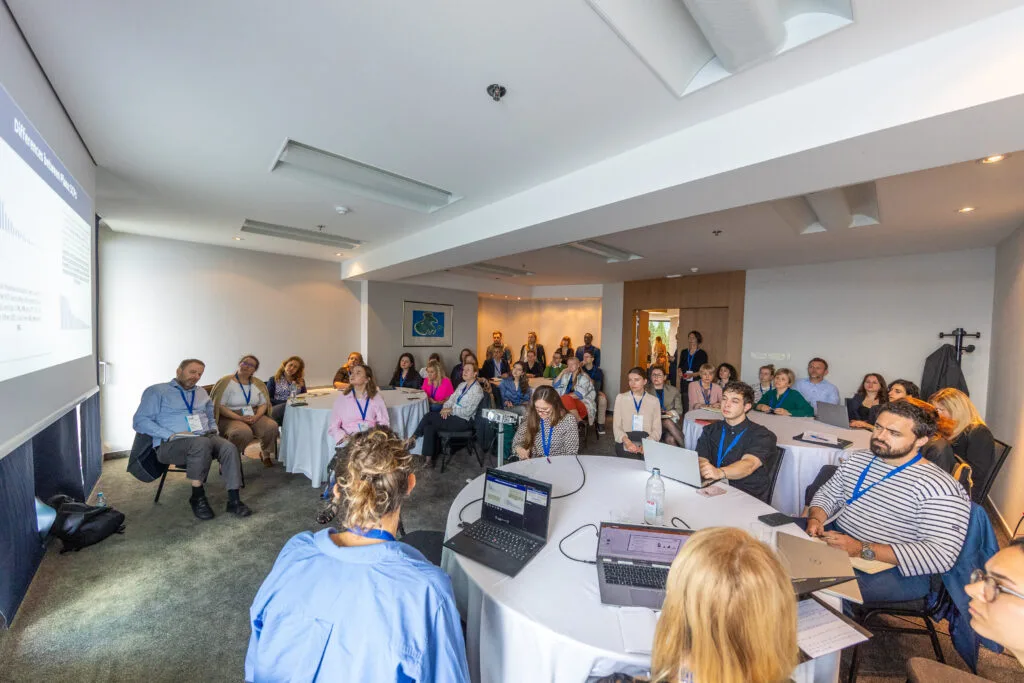
Day two of C4E Forum 2025 focused on the people, policies, and practical work driving energy efficiency across Central and Eastern Europe, with 14 panel discussions, the C4E Champion Award Ceremony, and a Knowledge Hub for project exchange.
Policy, practice, and people driving energy efficiency
The second day of the Central and Eastern European Energy Efficiency Forum (C4E Forum 2025) delivered a packed agenda of 14 panel discussions. Decision-makers, public officials, business leaders, NGOs, and technical experts discussed the current landscape, key challenges, and actionable solutions for scaling up building renovations and decarbonisation across the region.
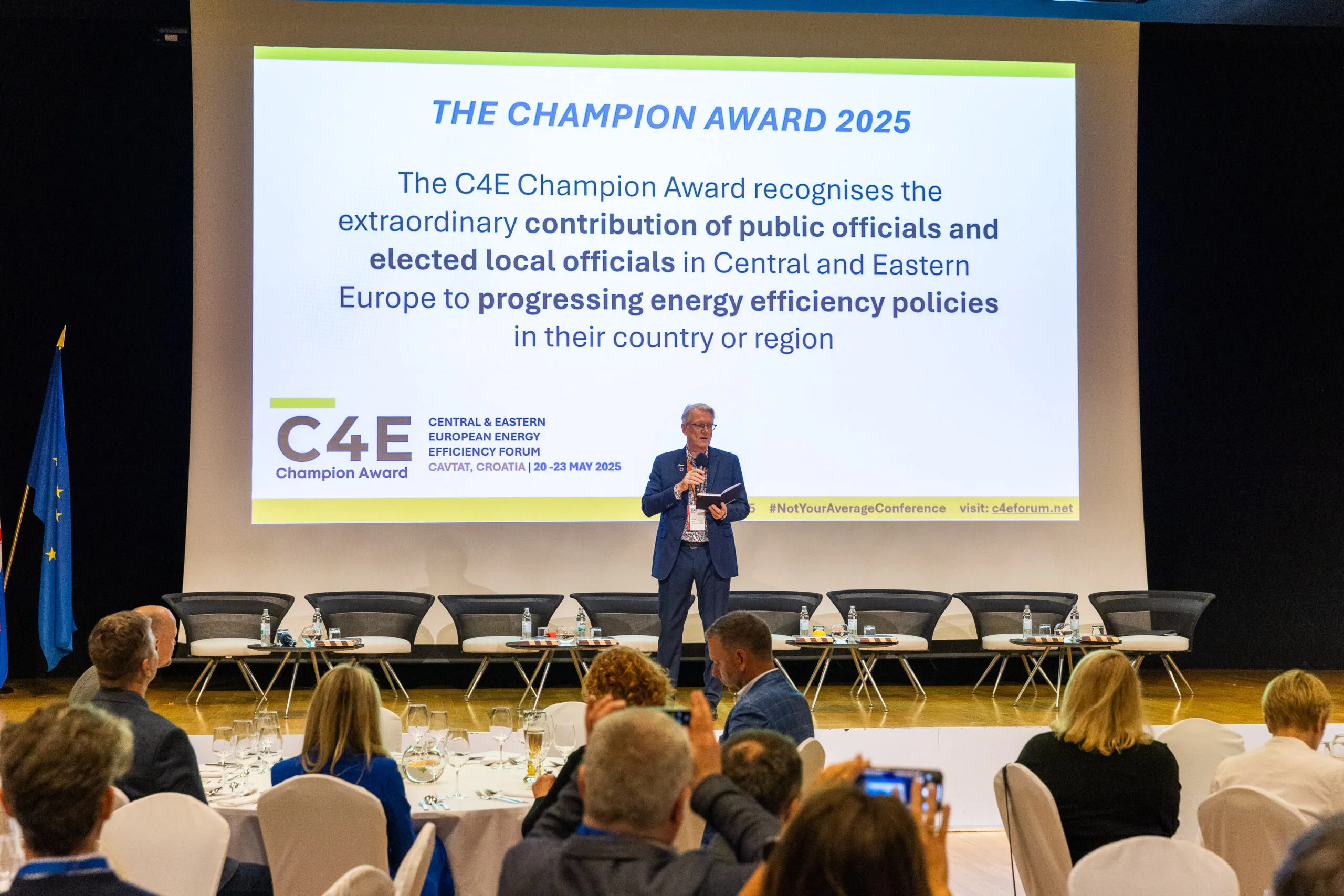
Celebrating leadership: the C4E Champion Award
The day concluded with the C4E Champion Award Ceremony, which honours exceptional public and elected local officials who have made significant contributions to advancing energy efficiency policy in their country or region. Held biennially by the Forum’s organisers, the award recognises leadership, innovation, and impact in public service.
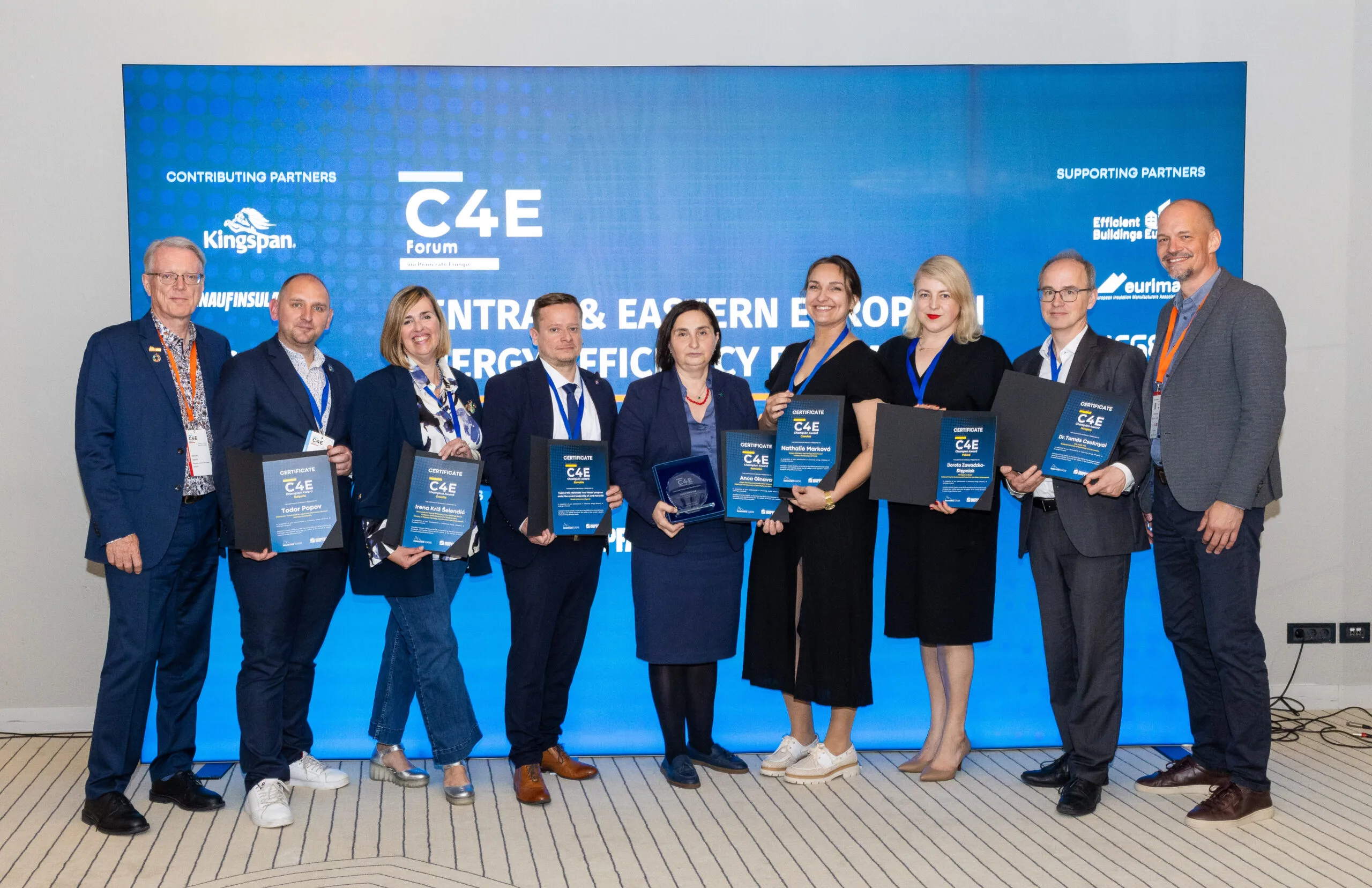
This year’s edition recognised seven national champions, each representing a different country in Central and Eastern Europe. One laureate was further distinguished as the regional champion, reflecting an exemplary level of influence and dedication across borders.
For her dedication to well-founded energy efficiency policies, her long civil service career, and her expertise on the Energy Performance of Buildings Directive, the 2025 Central and Eastern European Regional Award went to Anca Ginavar of the Ministry of Development, Public Works and Administration in Romania.
This is like a lifetime achievement award, but I’m not retiring. I’m not going anywhere. Thank you all from the bottom of my heart.
Anca Ginavar
Receiving the Romanian jury award, Ginavar said the award was not only for her, but also for her small and dynamic team. She described it as an incentive not to give up, noting the challenges ahead and the importance of reconstruction funding that can improve life for Romanian citizens through better building stock.
The C4E Champion Award recognises public officials and elected local officials progressing energy efficiency policies in Central and Eastern Europe.
Voices from the local champions
Todor Popov, Head of the Directorate “Administration, Legal, and Information Services”, Gabrovo Municipality, Bulgaria, said the award recognised the work being done and the opportunity to receive such an important honour.
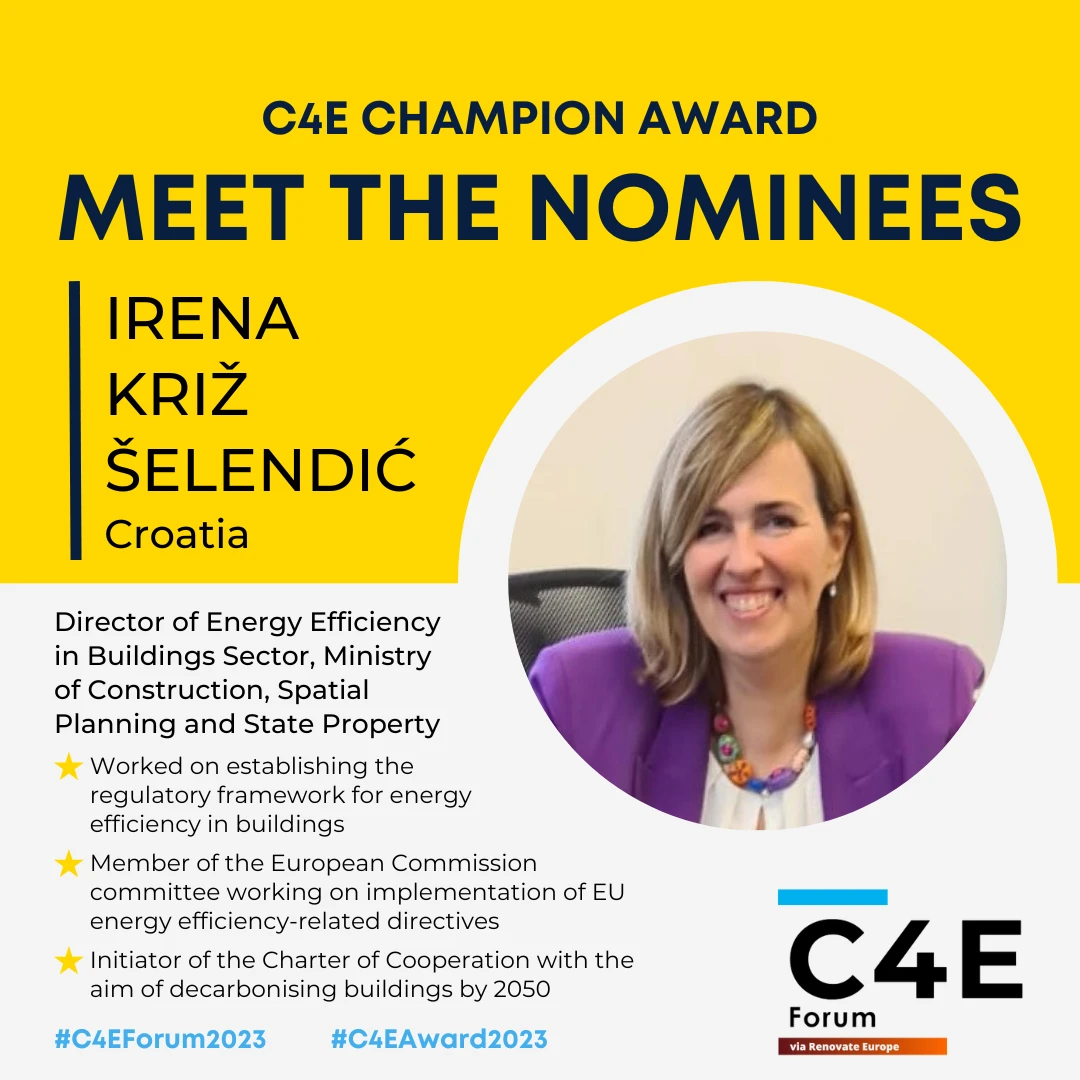
Irena Kriż-Šelendić, Director for Energy Efficiency in the Buildings Sector at Croatia’s Ministry of Physical Planning, Construction and State Assets, said renovated hospitals, schools, and buildings are the greatest award.
Nathalie Marková, Director of the Energy Efficiency and Savings Department at the Czech Ministry of Industry and Trade, described the award as an appreciation of cooperation between the public and business sectors.
Tamás Csoknyai, Head of Department and Associate Professor at Budapest University of Technology and Economics, said the award was real feedback on the hard work behind energy efficiency in Hungary.
Dorota Zawadzka-Stepniak, President of the Managing Board of the Polish National Fund for Environmental Protection and Water Management, was represented by Marta Babicz, who emphasised sustainable solutions and building a sustainable future.
Juraj Moravčík, General Director of the Slovak Environment Agency, said the award recognised the work of his team.
Local C4E champions and award representatives at C4E Forum 2025.
What the champions said the work requires
Persistence. Patience, independence, wisdom, and never giving up.
Learning. Being brave enough to admit mistakes and stay curious.
Communication. Continuing to work with people across institutions and sectors.
Knowledge Hub 2025: a marketplace of ideas
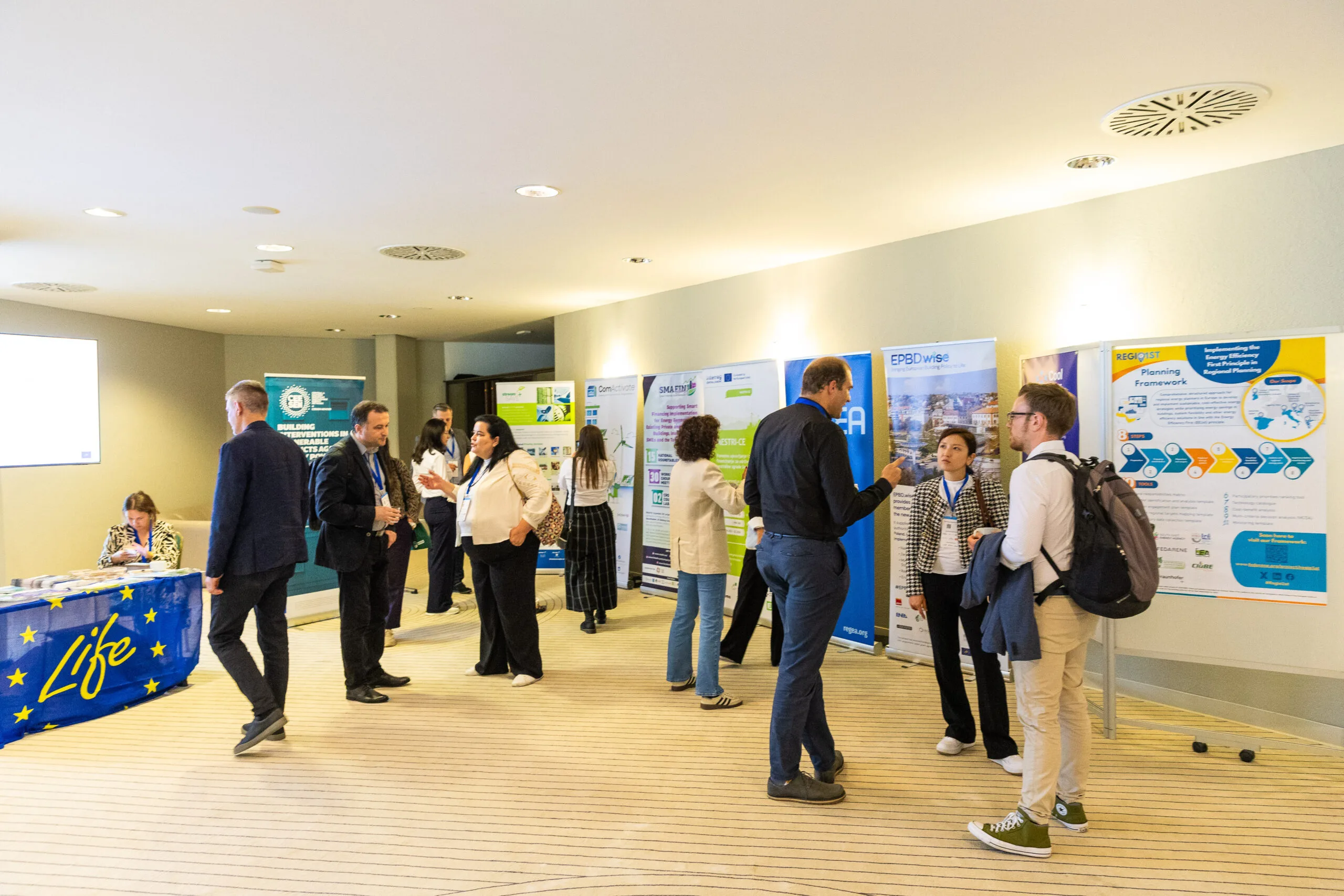
This year’s edition also featured the interactive Knowledge Hub, a dedicated space for showcasing innovative projects and case studies. The poster session highlighted grassroots initiatives, EU-funded projects, and local solutions tackling deep retrofits, sustainable cooling, regulatory reform, and historic building renovation.
Attendees could also explore the CINEA stand to learn more about funding and technical support opportunities under the European Commission’s LIFE Clean Energy Transition programme. With more than a dozen EU-funded initiatives on display, including EPBD.wise, CoolLIFE, and Renov-AID, the Knowledge Hub supported informal exchanges that complemented the formal sessions and encouraged collaboration across sectors.
The Knowledge Hub enabled participants to exchange ideas around EU-funded initiatives and practical building renovation solutions.
Meet the C4E Champions 2025
Read more about the award and the champions recognised at C4E Forum 2025.
Commissioner Šuica: energy efficiency in buildings boosts jobs and innovation in a sustainable way
C4E Forum 2025 Opens with Strong Focus on EPBD Implementation in Central and Eastern Europe
The Central and Eastern European Energy Efficiency Forum (C4E Forum 2025) officially commenced today at Hotel Croatia in Cavtat, with a dynamic line-up of pre-conference events followed by a high-level Opening Plenary. The Forum brings together key stakeholders from 23 countries to drive forward the energy transition in the region, with a focus on the implementation of the revised Energy Performance of Buildings Directive (EPBD).
At this large international conference, it was repeatedly emphasized that the EPBD is an extremely demanding regulation that will require a lot of preparation and little time. Namely, the member states have until the end of May next year to implement the directive into their national legislation.
EU Commissioner Šuica set the tone for an impactful C4E Forum 2025
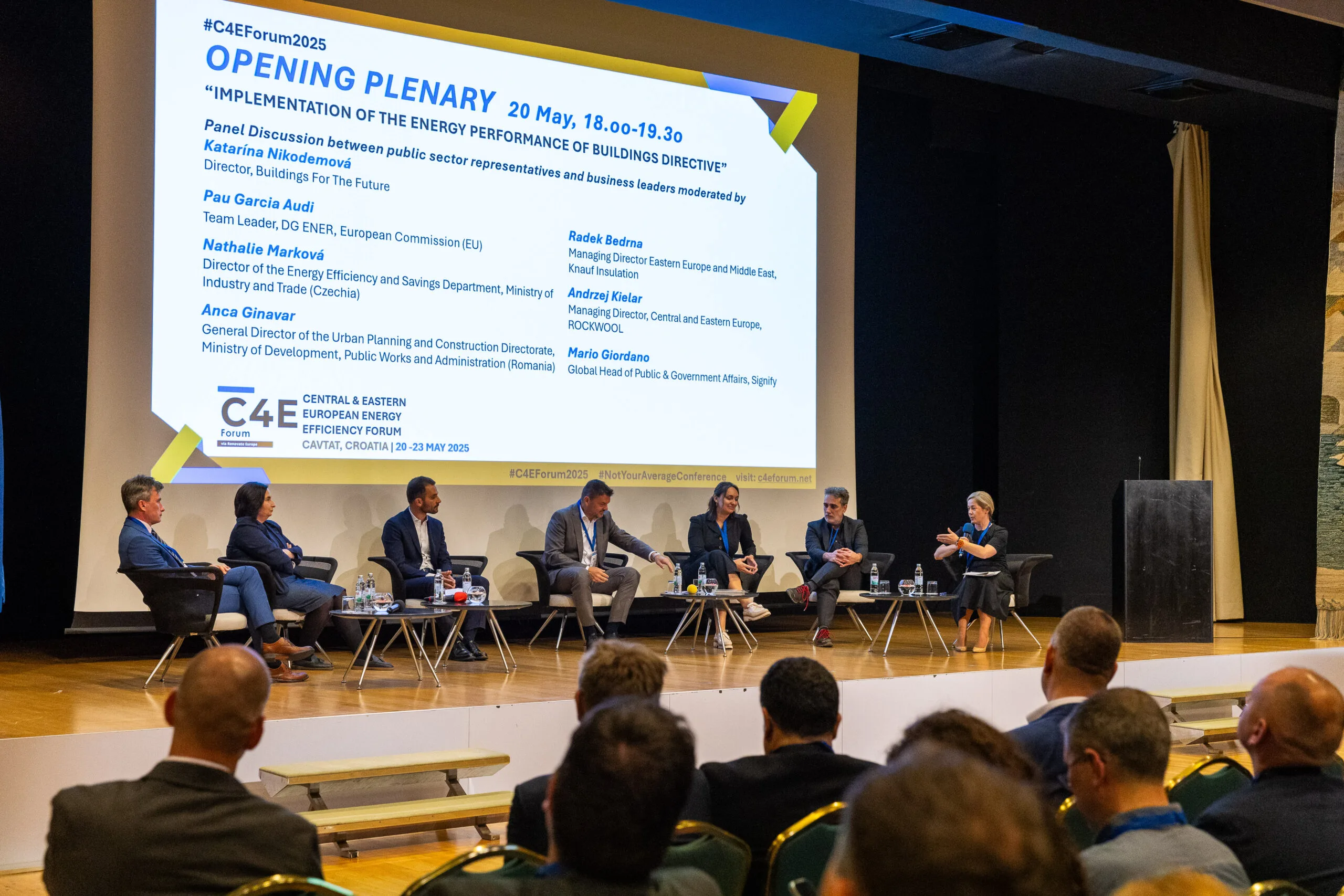
The Forum’s Opening Plenary was centered around the theme of “Implementation of the EPBD”. The plenary underscored the pivotal role Central and Eastern European (CEE) countries play in achieving EU climate objectives through deep building renovations.
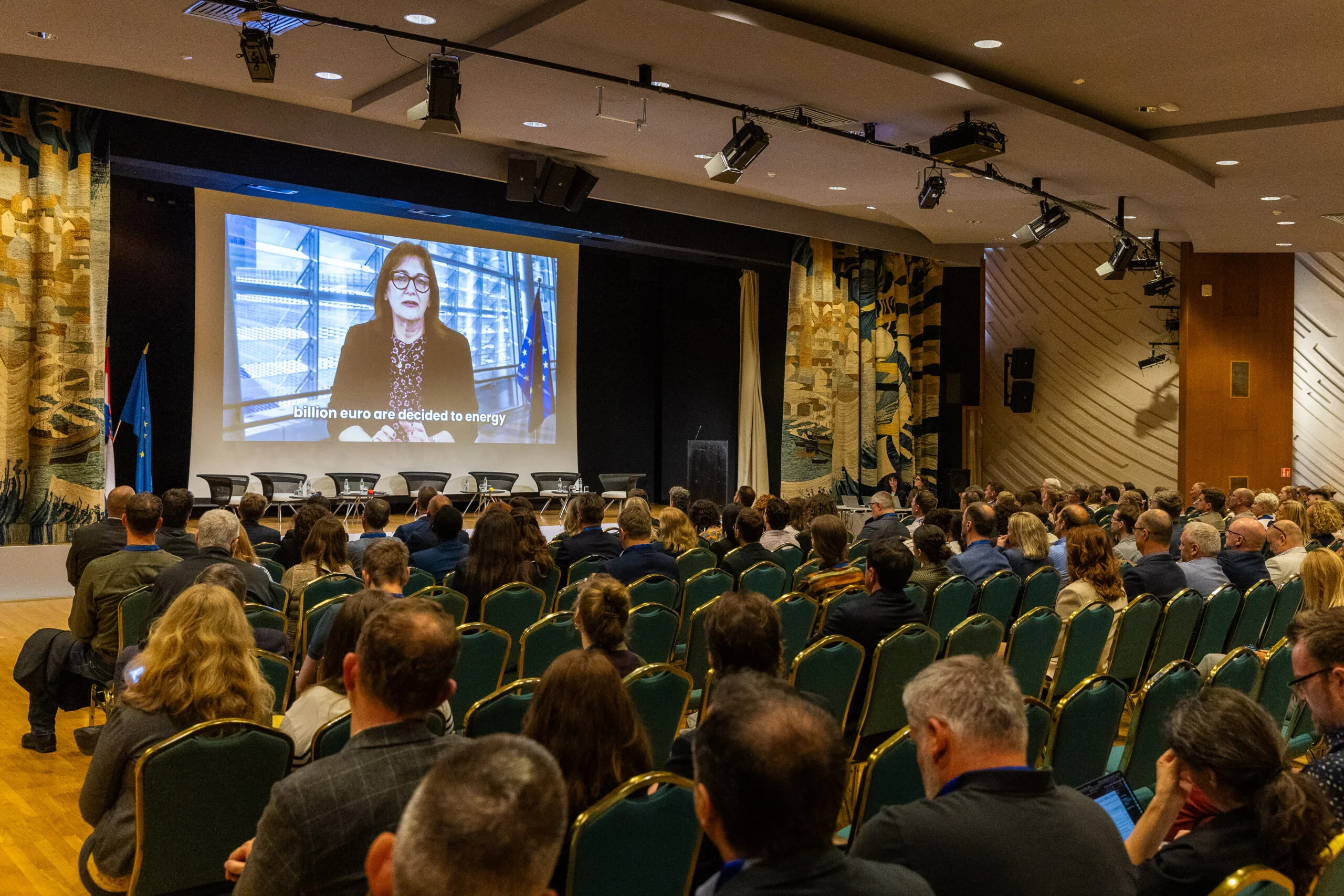
In a video address, Dubravka Šuica, European Commissioner for the Mediterranean, emphasized the urgent need for all EU Member States, especially those in Central and Eastern Europe, to prioritize the transposition and implementation of the EPBD.
The medium and long-term rollout of energy efficiency in buildings boosts jobs and innovation in a sustainable way. There is a clear timetable with clear targets. This gives governments, regional local authorities on the one hand and the market participants on the other hand the necessary security for planning and investment to be successful. Šuica she stated. She also said that a lower energy consumption means lower energy bills for homeowners, tenants, businesses and the public budgets.
A lower energy consumption also means a higher level of energy security. It has a Geo strategic advantage having to import less energy. This strengthens our autonomy and our economic stability – highlighted Commissioner Šuica.
Participants in the large panel discussion, representatives of the public and private sectors, emphasized one of the key problem – communication. Key public sector representatives joined the panel, including Pau Garcia Audi, Team Leader at DG ENER, European Commission; Nathalie Markova, Director of the Energy Efficiency and Savings Department, Ministry of Industry and Trade, Czechia; and Anca Ginavar, General Director of the Urban Planning and Construction Directorate, Ministry of Development, Public Works and Administration, Romania. They each provided national-level insights into ongoing preparations and legislative frameworks to support EPBD implementation.
From the business sector, prominent industry leaders such as Radek Bedrna (Knauf Insulation), Andrzej Kielar (ROCKWOOL), and Mario Giordano (Signify) echoed the necessity of public-private collaboration to ensure the EPBD’s goals are met through innovation, investment, and strategic partnerships. The session was moderated by Katarína Nikodemová, Director of Buildings for the Future, who guided the discussion with a focus on actionable pathways forward.
Representatives of the public and private sectors have emphasized several times that the goals of the EPBD are high and that they will be challenging to achieve. However, it was stated that there should be sufficient money, there is desire and it is necessary to communicate clearly with all stakeholders. It is also extremely important that citizens know and educate themselves.
The panel discussion emphasized that cooperation between public and private partners, i.e. the public and private sectors, is necessary. Only in this way can the energy renovation of buildings be carried out as planned.
The interlocutors agreed that it is best for each member state of the European Union to start with the energy renovation of public buildings. Namely, public buildings are large, ownership is clearer, procedures are clearer. However, what is more important, the public will see the results faster and will want to implement these procedures and examples in their buildings and homes.
The message from the European Commission is that they are a partner to all member states, they are available to all, and together we can achieve the positive results that the EPBD ultimately brings to everyone – lower energy consumption, energy independence, lower CO2 emissions.
Knowledge Sharing Ahead of the Main Event
Kicking off the afternoon, attendees participated in two interactive pre-conference sessions designed to equip energy professionals with the latest tools and strategies:
The session titled “Turning the new Energy Efficiency Directive into an opportunity”, co-organised by ENSMOV plus, Enefirst Plus, and SEED MICAT projects, offered participants insights into publicly available resources and tools to navigate the updated Energy Efficiency Directive (EED).
Parallelly, the CoolLIFE Tool & Knowledge Hub Training introduced participants to innovative solutions to better integrate low-carbon cooling strategies into energy planning and policy, aligning with municipal and national climate goals.
We are excited to announce the 2nd edition of the C4E Champion Award.
The C4E Champion Award is organized by C4E Forum organizers to recognize the extraordinary contribution of public officials and elected local officials in Central and Eastern Europe to progressing energy efficiency policies in their country or region. The Award is organised every two years with an award ceremony at the C4E Forum.
Key Changes in the 2025 Edition
This year, each country will have a National Champion instead of a national nominee. Among these national winners, one will be selected as the Regional Champion. National Champions will receive a fee waiver to participate in the C4E Forum 2025, covering accommodation and meals. Renovate Europe will oversee the decision-making process for selecting the National Champions.
The winners will be officially announced at the C4E Forum Award Ceremony on 21 May.
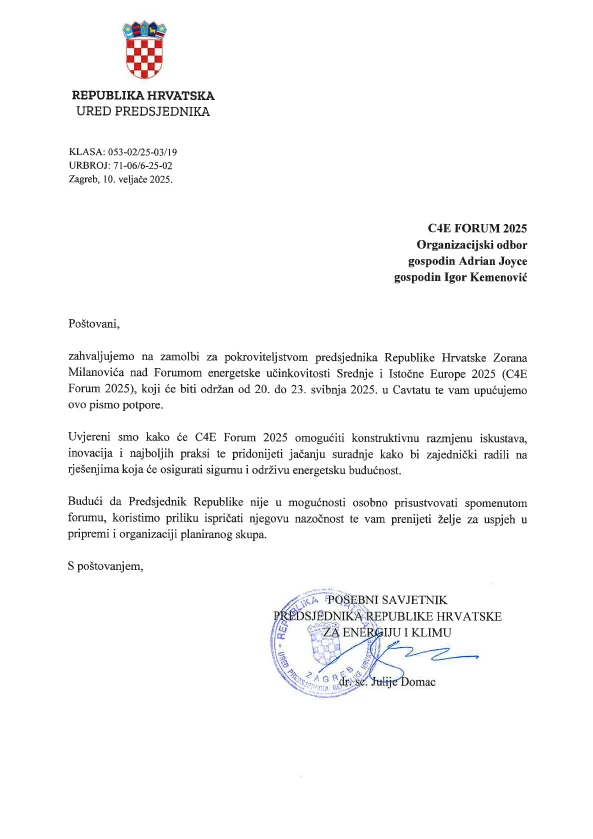
We are honoured to announce that C4E Forum 2025 has received the letter of support from the Office of the President of the Republic of Croatia. 🇭🇷
This recognition underscores the significance of our event and its impact, and we are incredibly grateful for this support.
As we bring together industry leaders, innovators, and changemakers, we look forward to meaningful discussions and collaborations that will drive progress.
Since the last C4E edition in 2023, the recast of the Energy Performance of Buildings Directive was officially adopted by the EU Institutions in April 2024.
With these regulations now fully in place and 2030 rapidly approaching, the focus must shift to on-the-ground implementation to achieve the EU’s climate neutrality goals. Member States must now prioritise the delivery of the Energy Performance of Buildings and Energy Efficiency Directives, underscoring the critical role of energy efficiency in reducing energy costs, enhancing living conditions, strengthening energy security, and boosting competitiveness.
Achieving an energy renovated building stock can be motivated by factors other than energy issues. For example, the terrible earthquakes in Croatia in 2020 motivated the government to introduce a programme of joint seismic and energy renovations across the affected areas. This has significantly stimulated renovation activities in that country.
Another approach can be to select a segment of the building stock for priority attention. For example, Romania chose its university buildings to be the subject of a programme that is co-funded by the European Investment Bank (EIB) worth a total of €200m. It is well known that studying in properly renovated buildings boosts learning ability and reduces absenteeism in the student population.
The Central and Eastern European Energy Efficiency Forum (C4E Forum) serves as an ideal platform to bring the topic of energy efficient renovation to the forefront, convening key governmental and industry stakeholders, exploring strategies to accelerate national implementation, and sharing best practices. Be sure to join us in Croatia, from the 20th to the 23rd of May 2025!
About the author:
Adrian Joyce is Secretary General of Efficient Buildings Europe, the leading European industry association dedicated to advancing energy efficiency in European buildings.
He is also Director of the Renovate Europe Campaign, which has 49 48 partners from all segments of the construction sector and which has been the main organiser of the biennial Central and Eastern European Energy Efficiency Forum (C4E Forum) since the 2023 edition.
An architect by training with 18 years practice before taking up policy work in Brussels, he is a part-time Professor of Architecture at Louvain-le-Neuve, Belgium.
Among other roles, between 2017 and 2020 he was Chair of the Coalition for Energy Savings which, through its members, represents around 15 million EU citizens.
The Importance of the next C4E Forum in Croatia: Addressing Building Renovation Challenges in Central and Eastern Europe
Next May, Croatia will host the Central and Eastern Europe Energy Efficiency Forum (C4E Forum), a pivotal event bringing together experts, policymakers and stakeholders from across the region to discuss the pressing challenges related to energy efficiency and building renovations. This gathering is not just a routine conference; it represents a significant opportunity for Central and Eastern European countries to collaborate, share knowledge, and develop strategies to tackle the unique issues they face. One of the focus areas of this edition will be the implementation of the Energy Performance of Buildings Directive, which EU countries will be aiming to transpose into national law over the next two years.
Addressing regional specificities
Central and Eastern Europe (CEE) have distinct characteristics that set them apart from other regions in Europe. Many buildings in this area were constructed during the socialist era, often with traditional and outdated materials and techniques that do not meet current energy efficiency standards. The C4E Forum provides a platform to address these specific challenges, enabling countries to share their experiences and solutions tailored to their unique contexts.
Fostering regional cooperation
The C4E Forum, under the umbrella of the Renovate Europe Campaign, is a unique opportunity for countries in the region to foster cooperation and build strong networks. By working together, countries with similar construction style can share resources, expertise, and best practices, creating a collaborative environment that benefits all participants. This regional cooperation is crucial for addressing common challenges and achieving our energy efficiency goals.
16 countries, exploring multiple themes of energy efficiency
The C4E Forum in Croatia next May is a critical event for Central and Eastern European countries. It will offer to stakeholders from 16 countries a platform to address the unique challenges of building renovations and EPBD implementation, promote energy efficiency, stimulate economic growth, enhance the quality of life, foster regional cooperation, and access essential funding. By coming together, countries in the region can develop effective strategies and solutions that will have a lasting positive impact on their buildings, economies, and citizens. The Forum represents a significant step towards a more sustainable and prosperous future for Central and Eastern Europe. You will be able to discover soon which are the topics which we will focus on during presentations, discussions and workshops.
Why Croatia as the venue?
It is a good question, but on the other side why should it even be a question! After Bulgaria, Romania, Poland and Slovakia, it is a privilege for us to host this biannual pivotal event in Cavtat in Croatia. It is also a kind of recognition for Croatia for everything it has done in comprehensive renovation, which has connected earthquake recovery that increases seismic resistance with energy renovation.
The role of HUPFAS for the success of the C4E Forum 2025
HUPFAS is the Croatian association of thermal facade system manufacturers and our members are 19 renowned companies with 1.600 employees in Croatia. We are crucial for achieving national climate policy goals and the decarbonisation of the economy. Also, HUPFAS is one of the key associations that continuously invest in raising awareness and standards of energy efficiency.
Therefore, we were chosen as the national partner of this conference to be held in Croatia in 2025 and have the privilege and responsibility of being an active stakeholder in making this conference a success together with the Renovate Europe Campaign
About the author:
Igor Kemenović (since 2022) is the President of HUPFAS-the Croatian Association of Thermal Facade Systems Manufacturers, based in Zagreb. Since 2013 Igor is also (together with his brother Marko) a CEO of a family company Kemenović d.o.o. which is Expanded PolyStyrene (EPS) producing company and member of HUPFAS as well. Igor is responsible for factory production control, production organization and special products and has been working in the company since graduation from the Faculty of civil engineering in 2001.
After the announcement that the C4E Forum will be held in Croatia in 2025, we asked the Croatian nominee for the C4E Champion Award 2023 about her reaction to this news and about real challenges that Croatia is facing.
A short interview with more details below:
How did you react when you found out that the C4E forum will be held in Croatia next year?
Of course, my colleagues and I, who work on building renovations, were thrilled.
We have been participating in this forum for several years, and it is certainly an honor for us to host colleagues from neighboring countries in Croatia.
It is also a kind of recognition for Croatia for everything it has done in the field of energy renovation and comprehensive renovation, which has connected earthquake recovery that increases seismic resistance with energy renovation.
Why do you think it is good that such conferences are held at the level of Central and Eastern Europe?
It is certainly good. We support and welcome such conferences.
These countries, which are members, are also neighbouring countries, they share part of a common history, have a similar way of building, similar architectural heritage, and have a lot to share. There is great potential for renovation in the countries of Central and Eastern Europe, for both public and private buildings.
There are also great challenges for all of us until 2050. It is necessary to establish new financial mechanisms so that we can renovate all buildings, and therefore the exchange of experiences and best practices from our countries is very important.
What do you think is the biggest challenge this year and next year in the construction and legislation sector? Is it MEPS or the creation of National Building Rehabilitation Plans? or both? Or something else?
We are already on a wave of renovations, and in Croatia, one of our biggest challenges in the next two years will be the lack of qualified labor, which we have already encountered. This is something we need to work on systematically, and within the framework of the National Recovery and Resilience Plan, we have several reforms addressing this issue. We are educating both domestic workers and workers from third countries, and we are also developing new study programs, so we are working on many fronts.
Additionally, in the next two years, member states will have to transpose the Directive on the Energy Performance of Buildings into their legislation, and this part will be less challenging than the implementation. Given that for the first time we have a mandatory renovation obligation that we did not have prescribed in this way, and considering that this will engage very large financial resources and a very large number of workers, it will be a huge challenge to transfer and achieve everything in the coming period. Therefore, we all need to work together. We must not lose sight of the “energy efficiency first” principle because if the renovation is reduced to some cheaper and shallow measures that are short-term profitable or just to fulfill the renovation on paper, it will be counterproductive to all our goals.
About the interviewee:
Irena Kriz-Selendic is currently Director of Sector, Energy Efficiency in Buildings in Croatian Ministry of Construction, Spatial Planning and State Property. Worked on the establishment of the entire regulatory framework for energy efficiency in buildings in Croatia, including Long term renovation strategy and on the development of national energy renovation programs for multi-apartment buildings, family houses, public sector buildings, cultural heritage buildings and energy poverty reduction programs. She participated in numerous EU projects (IPA 2012 “Strengthening Energy Efficiency in Buildings in Croatia”, Concerted Action for EPBD, Concerted Action for EED, CEI, BUILD UPON, BUILD-UP SKILLS project (COSKILLSS) and is a member of the committee at the European Commission that works on the implementation of EU directives in the field of energy efficiency. Irena received the annual award in 2019 for Person of the Year for Green construction and sustainable development, awarded by the Croatian Council for Green Construction and HUPFAS (Croatian Association of Thermal Facade Systems Manufacturers) and HUEC (Croatian Association of Energy Certifiers) for a special contribution to the promotion of green construction and sustainable development in Croatia.