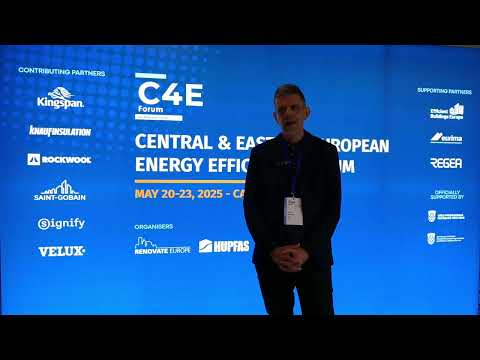
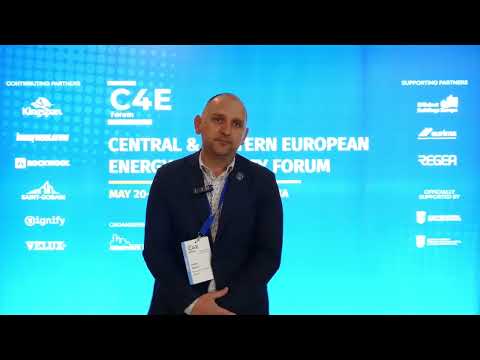
Marko Zlonoga from REGEA – North-West Croatia Regional Energy and Climate Agency interviewed during the C4E Forum2025 in Croatia shared with us his thoughts and examples of e.g. :
how to ensure that energy performance goals are embedded from the earliest stage of the building design
innovative tools and models that prove to be the most effective accelerating public buildings renovations
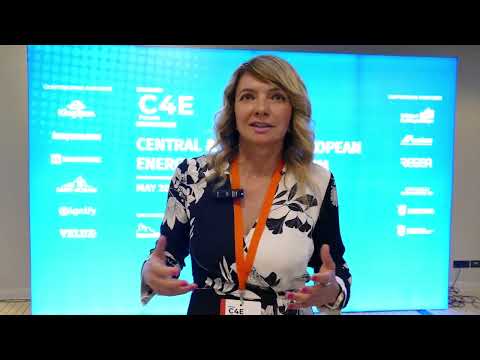
Andelka Toto-Ormuz of HUPFAS, national co-organiser of C4E Forum 2025 in Croatia, shares her key takeaways from the event and explains why clear communication is essential to successful energy efficiency measures.
Explore more C4E Forum voices
Continue with more interviews and reflections from the C4E Forum community.
Todor Popov, Head of Directorate “Administrative, Legal and Information Services” at Gabrovo Municipality and C4E 2025 National Champion from Bulgaria, speaks about Gabrovo as a national model for efficient urban development.
In the interview, he discusses one-stop shops and the ways cities can benefit from exchanges across the Central and Eastern European region.
Iva Mraz from SUPEUS, the Student Association for Promoting Energy Efficiency, shares her vision for how young people can drive change in the energy efficiency sector.
Iva underlined the need for preparing future engineers and decision-makers by giving them the information they will need once on the ground: they are not just learners, they are the future leaders.
We cannot focus on energy efficiency without empowering future generations and providing them with the skills they need to lead the energy transition.
Watch the full interview to hear Iva’s thoughts on the challenges and opportunities ahead and discover how student voices are shaping the path to energy efficiency.
Nathalie Markova, Director of the Energy Efficiency and Savings Department at the Ministry of Industry and Trade of the Czech Republic, shares her thoughts on the revised EPBD and energy efficiency in Czechia.
opportunities and challenges for Czechia in implementing the revised EPBD
examples of successful energy efficiency initiatives
the role of public engagement and cross-sector collaboration
Irena Kriż-Selendić, Director of Directorate for Energy Efficiency in the Buildings Sector, European Union Projects and Programmes Ministry of Physical Planning, Construction and State Assets, Croatia gave a short interview during the C4E Forum 2025 in her home country.
In the video she speaks about:
the meaning of receiving the C4E Champion Award 2025 for Croatia for her
dealing with several different programmes and funds dedicated to energy efficiency in Croatia
Anca Ginavar is General Director of the Urban Planning and Construction Directorate, Ministry of Development, Public Works and Administration in Romania
At the C4e Forum2025 in Croatia she was nominated CEE Regional and Romanian Champions, recognising her advocating efforts for efficient buildings and communities.
In the below video interview you can listen to Anca’s reflections on recent progress in Romania, the challenges ahead, and why regional cooperation is key to accelerating the green transition across Central and Eastern Europe!
Anna Ackermann, Policy Analyst at the International Institute for Sustainable Development and a passionate advocate for green recovery in Ukraine shares her vision for rebuilding Ukraine’s energy infrastructure -not just restoring, but transforming the built environment based on sustainability, resilience, and long-term impact.
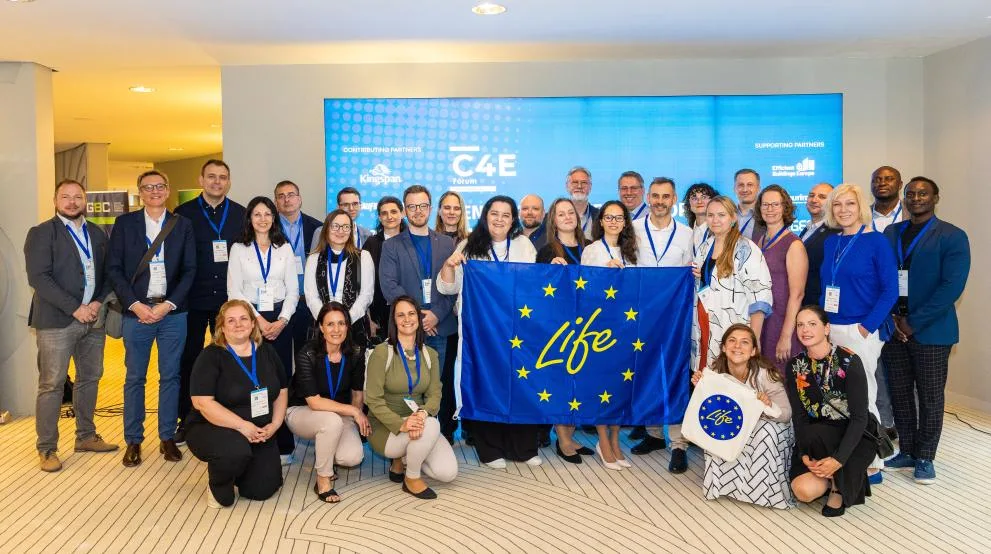
For the second time CINEA was present at the C4E Forum. This time the networking possibilities were also strengthened by organising the Knowledge Hub, a marketplace for projects and case studies.
A summary of the LIFe presence at the C4E Forum 2025 was published here initially and you can read a reprint below:
Teams from more than 20 LIFE projects shared their knowledge about how to make Europe’s buildings more energy efficient for a greener, more secure future.
Improved energy efficiency in Europe’s buildings will lower bills, cut carbon emissions and boost the EU’s autonomy, a major conference attended by more than 20 LIFE projects heard.
‘The energy efficiency potential of the building sector is massive’, Dubravka Šuica, European Commissioner for the Mediterranean, told the conference in a video address. ‘Lower energy consumption means a higher level of energy security. It has a geostrategic advantage having to import less energy. This strengthens our autonomy and our economic stability’.
Refurbishing existing infrastructure will be crucial if EU Member States are to meet the target of completely decarbonising their buildings by 2050, as set out in the Energy Performance of Buildings Directive (EPBD) and the revised Energy Efficiency Directive (EED). According to Adrien Bullier, a senior project advisor at the European Commission’s Climate, Infrastructure and Environment Executive Agency (CINEA), meeting the 2030 energy efficiency targets will require additional investments of €165 billion per year, a large share of which will be dedicated to building renovation. 10-20% of that investment can be expected to come from public funding, he said — but the rest will have to be met by the building owners, mostly through commercial lending. Public funding will need to be increasingly targeted to low-income households and to facilitate access to loans.
Against this backdrop, initiatives that foster collaboration between key stakeholders are becoming ever more vital. The LIFE SMAFIN Expanded project hosted a session on creating smart financing solutions for energy efficiency renovations. ‘SMAFIN Expanded creates structured national dialogues that connect policymakers, financiers and experts in Bulgaria, Croatia, Greece, Romania and Slovenia,’ said Alice Corovessi, managing director of Greek non-profit project partner INZEB.
Property owners can get support for designing, financing and implementing energy renovations from ‘one-stop shops’ established under the EED and EPBD. LIFE Renov-AID held a workshop how they are simplifying, accelerating and scaling up energy-efficient home renovations in Slovenia. The project operates pilot projects in Ljubljana, Kranj and Velenje aimed at simplifying energy efficiency improvements for homeowners but they face challenges including fragmented supply chains, workforce shortages and a lack of stable financing mechanisms. LIFE heritageHOME also presented its one-stop shop which supports retrofitting historical buildings in Estonia.
Also taking part in C4E was LIFE CEESEN-BENDER, which works with vulnerable homeowners and tenants living in apartment buildings across Croatia, Slovenia, Estonia, Poland and Romania. ‘By developing tailored renovation roadmaps, training energy professionals and building managers, and advocating for policy change, the project creates the foundation for a fair, inclusive and energy-efficient transformation of the building stock,’ said Matija Eppert, a senior expert at the Society for Sustainable Development Design in Croatia, which is leading the project.