Stability and predictability is what brings the financial sector in
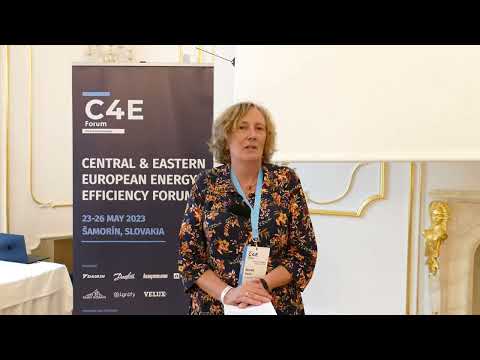
Renée Bruel (Director of the Buildings Programme at the European Climate Foundation) gave us a few minutes of her time during the fourth edition of the C4E Forum for a short interview.
She talks about the importance that the event has in the Central and Eastern European region as well as addresses the adjudication of the first C4E Champion Award, for which she was a member of the selecting jury.
00:00 Presentation
00:08 What makes the C4E Forum such a relevant event for Central and Eastern Europe?
01:38 With the first C4E Champion Award having been announced, why is it important to openly recognise the good work of public officials when it comes to renovation and energy efficiency policymaking?
02:57 Czech Deputy Minister Jan Kříž has been selected as the first recipient of the C4E Champion Award. What makes him a great example of how public officials should lead the transition to a more efficient building stock?
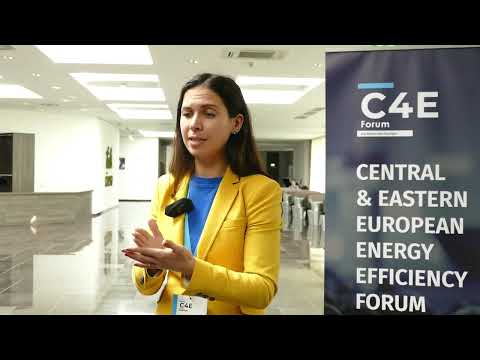
Anna Ackermann (Policy Analyst, Green Reconstruction of Ukraine, at the International Institute for Sustainable Development, and Board Member of Ecoaction) talks about the rebuilding needs of Ukraine during the 4th edition of the Central and Eastern European Energy Efficiency Forum (C4EForum) that took place in Slovakia between the 23rd and 26th of May 2023.
00:00 Who are we interviewing?
00:15 How substantial are Ukraine’s needs when it comes to rebuilding houses, commercial buildings, and public sector facilities?
04:35 What tangible role can the EU play in all this?
07:46 Do you think that these developments make the case for Ukraine’s membership in the European Union more demonstrable?
10:27 Do you think that if all policies for Ukraine’s reconstruction come together it could show all Member States how to effectively scale up renovations while improving people’s quality of life?
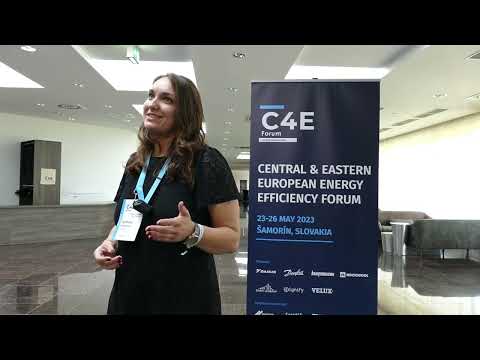
Nathalie Marková (Head of Energy Efficiency Unit, Ministry of Industry and Trade Czech Republic) talks about the role of energy renovation to increase the EU’s energy security and independence during the 4th edition of the Central and Eastern European Energy Efficiency Forum (C4EForum) that took place in Slovakia between the 23rd and 26th of May 2023.
00:00 Who are we interviewing?
00:07 How significant a role can energy performance of buildings, energy renovations play in boosting energy security?
00:51 Has the potential of building renovations to increase energy independence and phase out Russian energy imports been fully accepted by policymakers?
01:38 Energy efficiency often plays second fiddle to energy supply, do you think that the focus is shifting quickly enough?
02:16 The Energy Performance of Buildings Directive is the main way to remodel the sector. How important is it for there to be a really good and comprehensible agreement?
03:05 What are Czech Republic’s particular needs when it comes to energy renovations? Access to financing, better technical support, information campaigns…
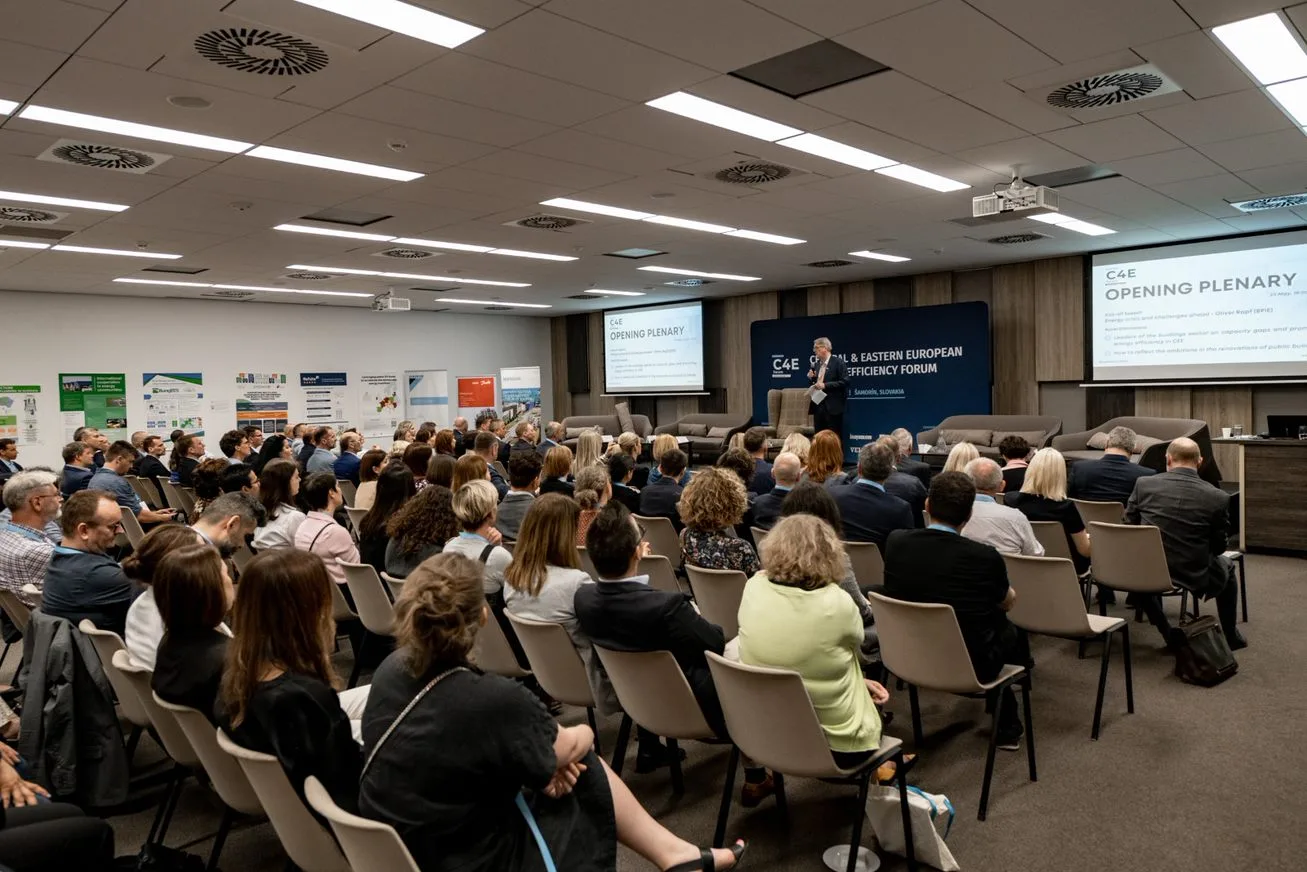
250 representatives of the academic, not-for-profit, private, and public sectors attended the fourth edition of the C4E Forum in Slovakia.
Improving the energy efficiency of buildings is a neat and effective way for Europe to meet both its geopolitical and domestic targets. As demonstrated at a high-level forum in Slovakia, Central and Eastern Europe has the potential to lead the fight against leaky infrastructure.
During the latest edition of the Central and Eastern European Energy Efficiency (C4E) Forum between 23 and 26 May, the future of Europe’s entire building sector was front and centre as delegates discussed how best to use renovations to tackle geopolitical challenges.
The X-Bionic Hotel and conference centre in Šamorín, Slovakia, was the perfect venue for what was billed as “not your average conference”, as the sports and leisure complex is a fully renovated former sanatorium.
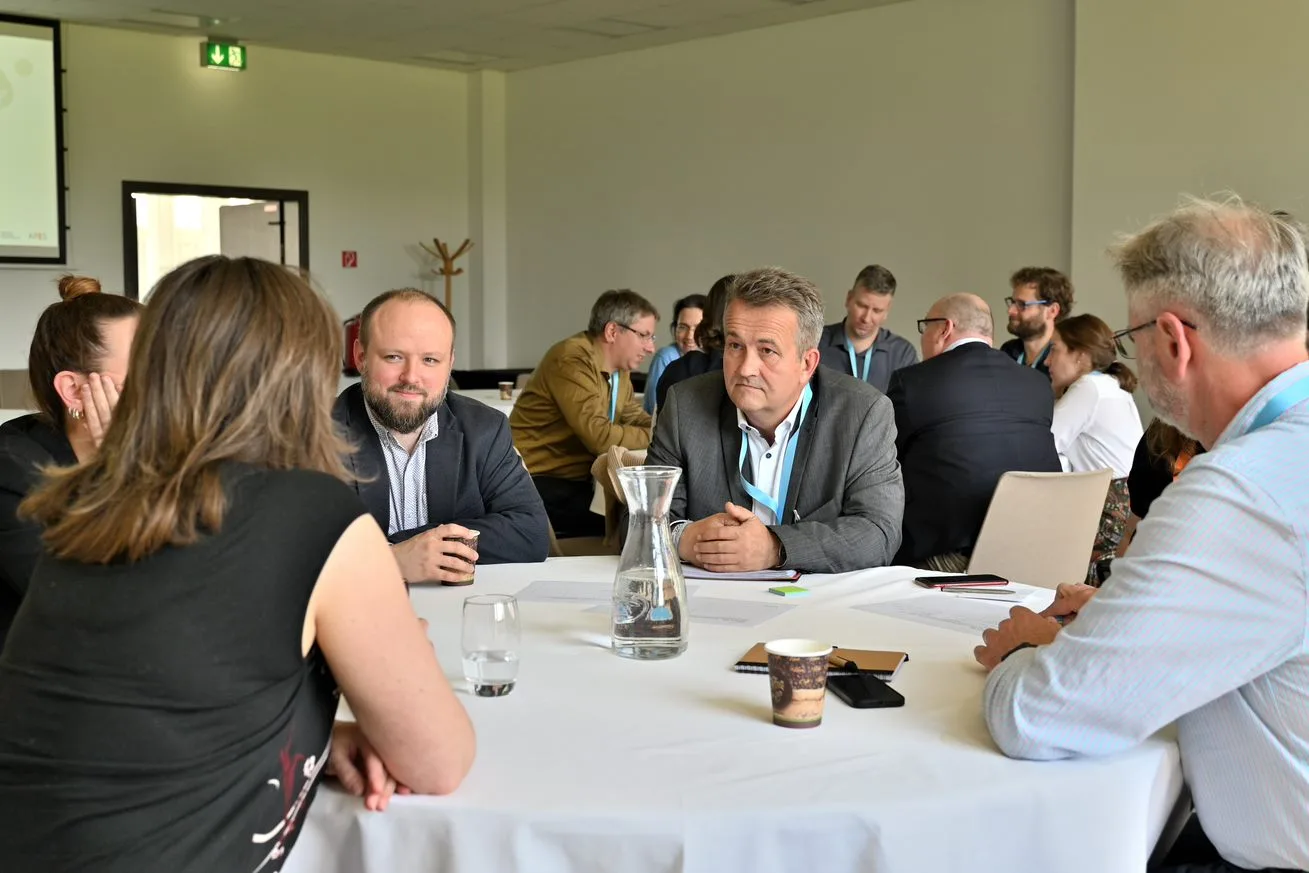
A bona fide local success story that is home to the Slovakian Olympic team, the venue played host to three days of plenaries, seminars, and informal chats, all aimed at solving some of the sector’s major problems and unlocking its full potential.
Following Russia’s illegal invasion of Ukraine, energy security has rocketed up the political agendas of governments across Europe. Even though supply-side measures have dominated policy responses, the debates at the C4E Forum demonstrated that it is now imperative to give priority to demand-side measures.
Given that buildings soak up 40% of energy demand and produce more than a third of the EU’s emissions, improving their performance is seen as a win-win for climate, energy, foreign, and social policy goals.
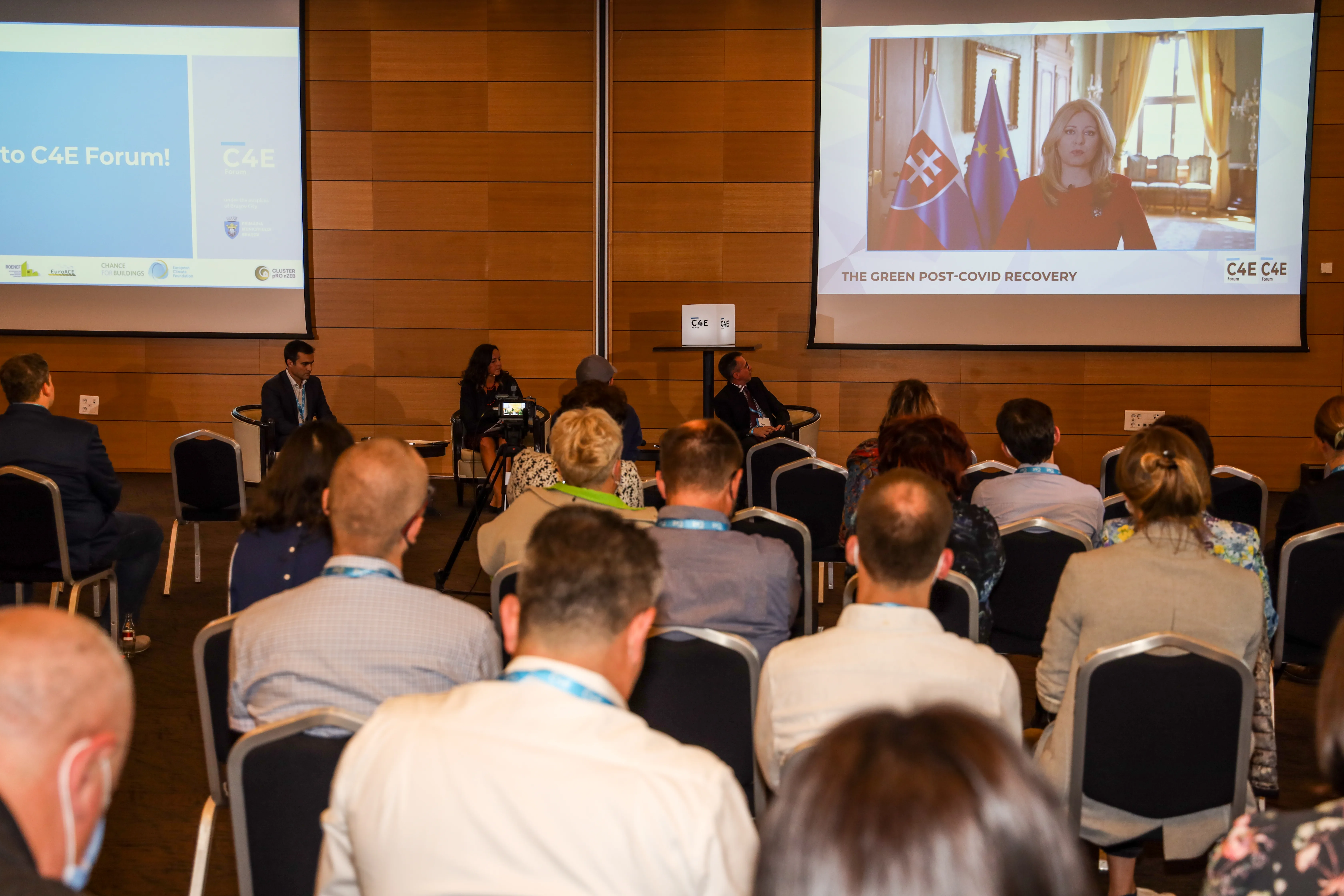
At the C4E meeting, Slovakian President Zuzana Čaputová, patron of the event, weighed in with a video message to outline how important her country considers improvements to the energy performance of buildings.
In Slovakia, in the next few years, we will spend a huge amount of resources on rebuilding our economy and making it more resilient. The energy efficiency of our buildings is among our top priorities.
Zuzana Čaputová
The topics and areas of discussion ranged from high-level geopolitical considerations, such as how best to support Ukraine’s ongoing reconstruction efforts, to practical know-how that authorities can use to better design and implement renovation programmes.
The latter includes best practices for upgrading multi-apartment buildings, tips on how to use data to maximise renovation effectiveness, and insights into how the labour market will have to evolve to meet new demand.
Talks also centred on sharing best practices, know-how, standards, and financial aid for Ukraine’s reconstruction. Industry representatives showed a particular willingness to do more to help the invaded country.
C4E Forum 2023 focused on energy security, rebuilding Ukraine, REPowerEU, and the Fit for 55 package.
Getting the politics right
The European Union is updating the Energy Performance of Buildings Directive (EPBD), which governs much of what the sector is trying to achieve in the coming years. Talks between the European Parliament, Council, and Commission kicked off in June, shortly after the C4E Forum.
EU-wide elections in June 2024 and Spain’s decision to trigger a snap election in July 2023, right at the start of the country’s rotating EU presidency, meant the EPBD talks risked being dragged down by electioneering.
There was a lot of work to get through to craft a compromise deal on the EPBD, including requirements for zero-energy buildings (ZEBs), which buildings should be targeted by minimum energy performance standards (MEPS), and how to rescale energy performance certificates (EPCs).
At the C4E Forum, delegates from industry, civil society, and academia urged policymakers to push for the maximum ambition possible in the EPBD reform and to do the same when implementing the rules.
MEPS have the potential to be a game-changer if this instrument is properly implemented. What is important is how the worst performing buildings will be identified and what support will be available.
Forum attendees also urged public authorities to defuse the risk that electioneering and politicking poses to renovation programmes by ensuring schemes are long-lasting beyond government terms and renewal decisions are made well ahead of final deadlines.
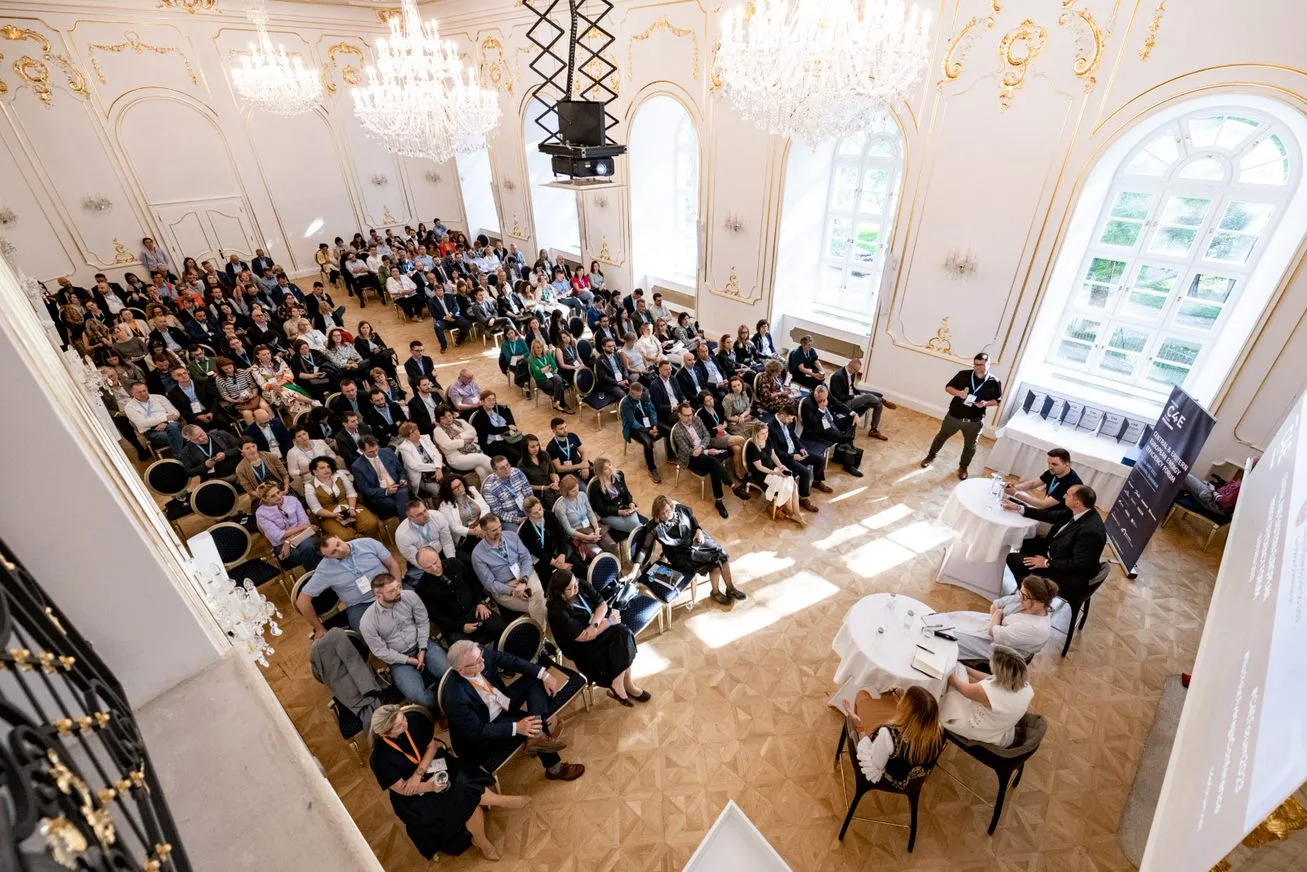
For the first time, the C4E Forum took place in two locations. The renovated Pezinok castle hosted the controversial ideas session and the first C4E Champion Award ceremony.
Looking after our heritage
One of the most prevalent myths linked to the EU’s Renovation Wave concerns old heritage buildings and the supposed requirements that the EPBD would impose on those structures.
Heritage buildings can be exempted from renovation criteria, and there are no obligations on either authorities or property owners to retrofit heritage-listed structures, contrary to misreporting that has wrongly claimed they would have to be demolished.
Although there is no obligation, it is still possible to improve the energy performance of buildings from the past. A castle near the C4E Forum venue, in the town of Pezinok, is a testament to that.
Originally hailing from the 13th century, the castle was rebuilt over the years and eventually purchased by local winegrowers, who added a winery and hotel to the complex. A recent renovation means it is now an A-rated building.
The castle was also the venue for the C4E Champion Award, an accolade granted to the Central and Eastern European public official who has made the most significant contribution to energy efficiency in buildings within their jurisdiction.
Jan Kříž, a deputy environment minister in the Czech government, was the 2023 champion, impressing the judges with his long track record of overseeing large-scale renovation programmes and ensuring an even geographical spread of renovated buildings across his country.
Making small innovations every year rather than deep changes is the reason behind the success of our programmes.
Jan Kříž
The Czech official made the point during his video acceptance speech. In the job since 2007, Kříž has been able to call on vast experience when making key decisions on issues such as subsidy levels, yielding impressive results that officials in other countries have been urged to learn from.
Crucially, Kříž has acted as a constant contact point under successive ministers, ensuring stability for renovation programmes and preventing the issue from being over-politicised, one of the most damaging risks such schemes can face.
That was one of the main points delegates took away from the forum: renovation schemes need time to be established and start working, so they need to be designed to survive election cycles. As Europe headed into a busy voting period culminating in the June 2024 EU elections, it was a mantra worth remembering.
Sam Morgan is a Brussels-based climate and energy journalist covering the EU institutions, European politics, climate, energy, and more.
His work has been featured in international and national media outlets, in print magazines, and on YouTube. He also has experience moderating high-level events with senior politicians and public figures.
Renovation programmes that are vital for Europe’s efforts to achieve its ambitious climate goals must be bolstered by renewed political will and be maintained across election cycles, according to delegates attending the 4th edition of the Central and Eastern European Energy Efficiency Forum (C4E).
The multi-day C4E event focused on three main issues: energy security, the reconstruction of Ukraine and the EU’s Green Deal-enabling ‘Fit for 55’ package of energy and climate reforms.
Representatives from the private sector and civil society urged political actors to take brave decisions and ensure that renovation programmes are given the necessary time to actually work by maintaining them across election periods. If that political will is found, the CEE region has the chance to be the most successful region in the EU for energy renovations.
A busy electoral cycle awaits Europe over the next 12 months. In the CEE region alone, Croatia, Greece, Poland and Slovakia will hold national elections, with polls also scheduled in Belgium, Luxembourg and Spain. EU-wide elections in June 2024 will usher in new political leadership at both the European Parliament and European Commission.
At the C4E event, public authorities were also encouraged to roll out well-designed subsidy schemes that have a long-term outlook and address the needs of those that really need support, as well as leading by example by dramatically increasing the renovation rate of public buildings.
Governments should also immediately refocus ongoing energy price subsidies — which have topped €500 billion since the start of the price crisis in 2021 — towards efficiency measures that will have a long-term impact and insulate households and businesses against future shocks.
Slovakian President Zuzana Čaputová opened the C4E Forum, held in Slovakia for the very first time, with a video message, in which she insisted that Russia’s invasion of Ukraine has increased the sense of urgency for energy transition policies.
“In Slovakia, in the next few years, we will spend a huge amount of resources on rebuilding our economy and making it more resilient. The energy efficiency of our buildings is among our top priorities.”
“Supporting the Renovation Wave, which is compatible with the European Green Deal and Paris Climate Agreement, will help reduce energy bills. This could be a real gamechanger.”
The president is matching words with actions as her office aims to become net-zero by 2030, the first public body to do so in Slovakia and possibly the first presidential office in the world.
“This means clean mobility, zero waste, energy efficiency, renewables or planting thousands of trees to offset air travel.”
‘Political will’ and ‘financing’ were identified by the forum’s attendees as the two main challenges facing energy efficiency policies in the CEE region; however, several speakers pointed out that the latter is often guaranteed when the former is in place.
Slovak member of the European Parliament Martin Hojsík said during a panel dedicated to political leadership during times of crisis that financing is not the main concern in the EU.
“There is an insane amount of money available, even more so if unused loans are taken up, under terms that are impossible to find on any other market. CEE political leaders need to be reminded that the energy transition will ultimately benefit them with more voter support.”
Ukraine’s reconstruction needs were also discussed prominently during the forum, as the EU-candidate country aims to ‘build back better and greener’ following Russia’s illegal invasion. Adoption of EU norms and standards is ongoing and is set to be accelerated.
Quick fixes and short-term policies should be avoided, according to industry and civil society speakers, who are championing measures such as new financial mechanisms that include grants and preferential loans.
Capacity building for Ukrainian companies and support through new energy efficiency standards should also be provided and although the war is not yet over, decisions must be made now.
According to Anna Ackermann, policy analyst for the International Institute for Sustainable Development’s Energy team working on green reconstruction of Ukraine and board member of the Center for Environmental Initiatives Ecoaction, Ukraine is already rebuilding in line with the EU’s goal of climate neutrality by 2050 but it is also important to keep a Ukrainian ownership of the reconstruction.
“They (EU countries) of course see the economic business interests reconstruction because the companies could be coming with their know how, equipment and so on to Ukraine to physically reconstruct […] How we can actually have not just the importing of knowledge, resources, and know-how but to actually have that installed in Ukraine, have production lines installed in Ukraine, which would be very important for Ukraine’s sustainable economic recovery and development.”
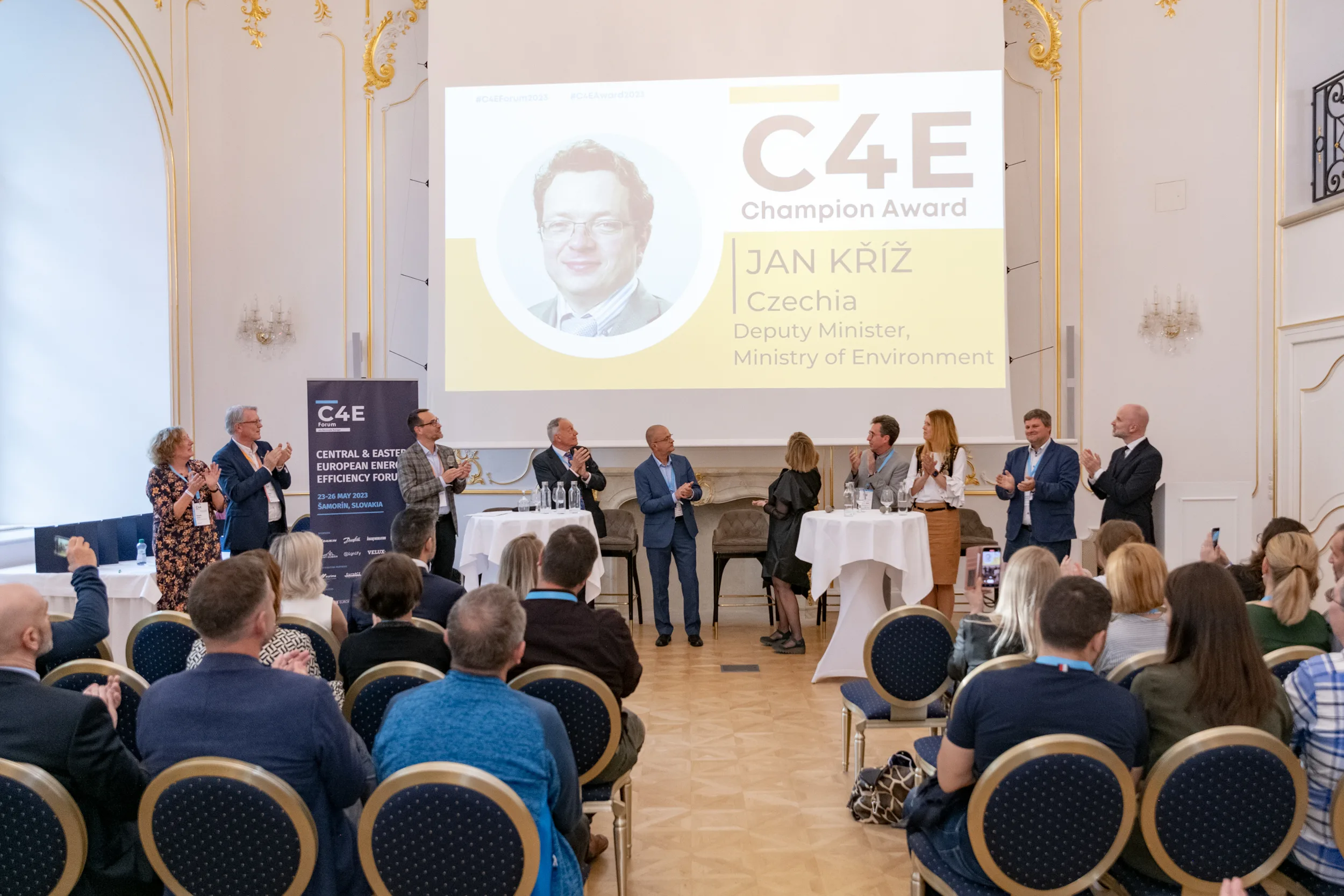
Jan Kříž, Deputy Minister at the Ministry of Environment of the Czech Republic, was awarded the first edition of the C4E Champion Award in a festive ceremony that took place last evening at the Šimák Castle in Pezinok, Slovakia.
The C4E Champion Award is an initiative launched by the C4E Forum, which is currently holding its fourth edition in Šamorín, Slovakia. The purpose of the award is recognising the role of public officials in enhancing energy efficiency of buildings in Central and Eastern Europe (CEE).
Being responsible for 36% of the EU’s CO2 emissions and 40% of our energy consumption, buildings play a key role in tackling the current energy and climate crisis. Therefore, strong leadership in the public sector becomes essential in the implementation and promotion of good practices in the transition to a fully energy efficient building stock.
A total of 7 officials from different countries in the CEE region were nominated,
“It is a pleasure seeing so many CEE public officials leading in the push for more ambitious renovation and energy efficiency policies in their countries,”
says Adrian Joyce, Director of the Renovate Europe Campaign and member of the award’s jury.
“It is our duty to acknowledge their pioneering work and to hope that many more officials follow the footsteps of our nominees. They have proven their will to engage with stakeholders and have displayed strong conviction to further profiling energy efficiency and renovation as a political priority,”
he added.
The jury selected Jan Kříž as the first awardee of the C4E Champion Award in appreciation of his long-term work on renovation support projects in the Czech Republic.
“Mr. Kříž’s greatest achievement has not only been his contribution to establishing exemplary programmes such as the single-family home renovation subsidy program Nová zelená úsporam, but especially his strong defence of quality renovation for more than 10 years over several political cycles and pressures,”
says Renée Bruel, Director of Buildings Programme at the European Climate Foundation and also member of the jury.
“Thank you very much for the appreciation that I have received from your side. It’s a very big motivation for us and for our team that is engaged in energy efficiency projects,”
“small innovation every year rather than deep changes is the reason behind the success of our programmes.”
The fourth edition of the C4E Forum is taking place from 23rd to the 26th of May in Šamorín, Slovakia. With the presence of around 240 participants representing all sectors (government, industry, research, and not-for-profit), the C4E Forum has established itself as the premier biennial event on energy efficiency policy in Central and Eastern Europe.
You can follow the latest news on the activities of the C4E Forum by following its specific pages on Twitter and LinkedIn, and by visiting its website.
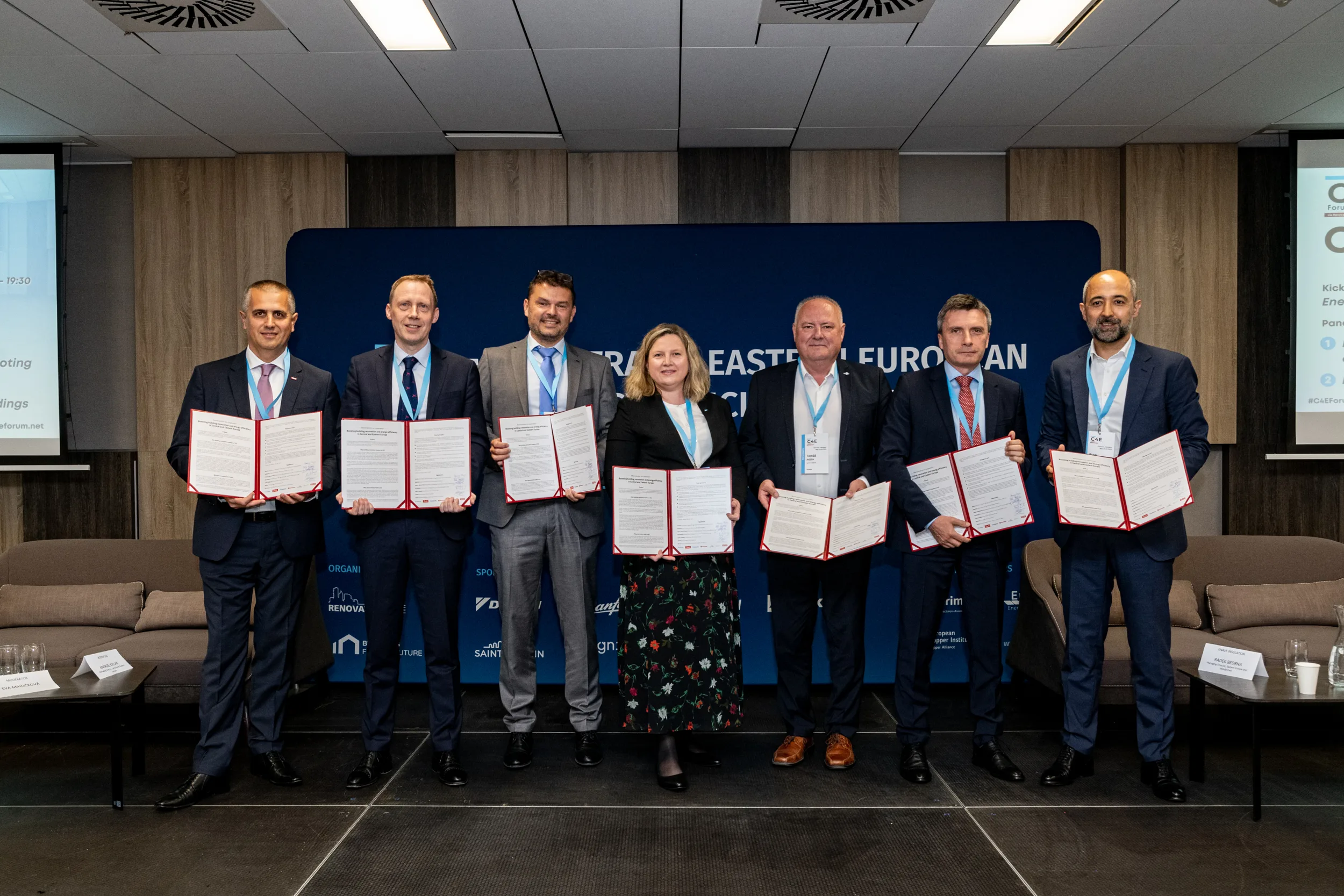
Signatories of the memorandum – from left to right: Krisztián Mészáros (Senior Vice President, CEE Region, VELUX), Adam Jedrzejczak (East Europe Regional President, DANFOSS), Radek Bedrna (Managing Director, Eastern Europe and Middle East, KNAUF INSULATION), Tanja Banay (General Manager Strategic Business Unit Commercial CEE, DAIKIN), Tomáš Rosák (CEO, Eastern Europe, SAINT-GOBAIN), Andrzej Kielar (Managing Director, Central and Eastern Europe, ROCKWOOL), and Eran Görgen (CEO, Europe East, SIGNIFY).
Šamorín, 23rd of May 2023
Two thirds of the 43,6 million dwellings in single- and multi-family houses in Central and Eastern European (CEE) countries are older than 30 years (built before 1989, according to EU Building Stock Observatory) and are to a great extent inefficient. Citizens and societies suffer from high energy bills, low living comfort, severe air pollution and fossil fuel dependency above EU average. To help address these pressing concerns, industry leaders in the building renovation sector DAIKIN, DANFOSS, KNAUF INSULATION, ROCKWOOL, SAINT-GOBAIN, SIGNIFY and VELUX signed a memorandum at the Central and Eastern European Energy Efficiency Forum (C4E Forum) in Slovakia yesterday evening. They commit to work together and take systematic and effective steps to raise the profile of building retrofit and energy efficiency in public policy discussions across CEE countries.
The companies’ CEE footprint counts more than 42 thousand employees and 100 production plants. They intend to focus on more systematic and effective engagement in national public policy debates and on making building renovation their priority topic. Citizens and institutions need national governments to adopt public policies to help them overcome number of barriers to renovating their buildings and contributing to the common good of clean air, public health, energy security and decarbonization.
Building renovation can provide healthier, more efficient and cheaper-to-run buildings as well as cleaner air and improved energy security of CEE countries. Moreover, retrofitting buildings provides already today hundreds of thousands of jobs in the CEE region.
Industry supports these claims by expert studies: Insulating residential buildings alone can save on average 44 % of end use energy and 46 % of natural gas according to Buildings Performance Institute Europe. EuroWindoor identified that replacing windows can result in potential additional energy savings of up to 15% of total heating needs. Healthy Homes Barometer 2022 showed that one in three Europeans are affected by at least one indoor climate hazard, such as damp and mold, darkness, cold or excess noise. Heat pumps have the potential to avoid over 600 million tons CO2 emissions in the European building stock, according to EPEE HFC Outlook model prepared by Gluckman Consulting. Ecofys calculated that technical building systems, which include metering, temperature regulation and balancing of heating, cooling and hot water installations, have the potential to generate energy savings up to 30%. Finally, switching all the light points to connected LEDs could reduce annual emissions by 19 million tones CO2 and energy costs by €16.4 billion in the CEE countries, as outlined by the Green Switch conversion model.
The regional business leaders are committed to raising the profile of building renovation and energy efficiency by providing the necessary personal and financial resources to establish and maintain national associations equipped with the expertise to engage in public debates effectively.
The companies also aim to leverage their expertise and knowledge by inviting other businesses, non-governmental, academic, and public institutions to collaborate and support national and regional initiatives that advocate for building renovation and energy efficiency. The cooperation will focus on energy efficiency policies, renovation programs and other related aspects in CEE countries, including Poland, Czech Republic, Slovakia, Hungary, Romania, Bulgaria, Serbia, Croatia, Slovenia and others.
Quotations of memorandum signatories:
DAIKIN, Tanja Banay, General Manager Strategic Business Unit Commercial CEE:
“Accelerating the growth of heat pumps is essential to reduce dependence on fossil fuels. Any type of heat pump provides significant benefits in terms of energy efficiency and CO2 emissions reduction compared to a gas boiler. To achieve a decarbonized building stock in the European Union by 2050, a broad range of heat pumps will be necessary, including affordable air-to-air models, particularly in Central-Eastern-European countries.”
DANFOSS, Adam Jedrzejczak, East Europe Regional President:
“We observe a one-sided approach focusing solely on the supply of energy, not enough on demand. If we don’t curb our demand for energy, the build-out of renewables will not be even near sufficient. We simply will not have enough green energy to meet the demands of a growing population. The technology is available, and energy efficiency solutions can be used today across all sectors, in particular in the building sector. If we don’t act now to address the growing demand for energy it will be extremely difficult and more expensive to meet the Paris Agreement goal of staying below 1.5 degrees warming.”
KNAUF INSULATION, Radek Bedrna, Managing Director, Eastern Europe and Middle East:
“CEE is home to 5 out of 7 EU countries with the highest gas saving potential coming from insulating residential buildings. More than 50 % of gas can be saved in Romania, Bulgaria, Czechia, Slovakia, Hungary. Building owners need stable, long term and motivating government programs to boost renovation.”
ROCKWOOL, Andrzej Kielar, Managing Director, Central and Eastern Europe:
“We all need less energy. Most buildings in CEE countries do not meet any energy efficiency standards. There is no other way to change this than through massive thermal modernization of buildings. We cannot expect a miracle to happen, only a consistent action plan in all countries and effective, long-term financial support programs supporting it have to be taken into action. Then we will improve the living standards of the CEE citizens and the whole countries, reduce energy poverty, take care of the climate, economic development and energy security. There are so many positive and obvious results, and yet there are still too many barriers to thermal modernization.”
SAINT-GOBAIN, Tomáš Rosák, CEO, Eastern Europe:
“Buildings and their construction represent nearly 40% of CO2 emissions and 35% of the waste is produced by construction industry in EU. SAINT-GOBAIN shows that it is possible to change it by investing into the projects and technologies which decrease impact of our operations, developing innovative solutions which contribute to the energy efficiency of the buildings, introducing new technologies for recycling and replacing basic raw materials with recycled ones.”
SIGNIFY, Eran Görgen, CEO, Europe East:
“While the energy transition accelerates and we aim to electrify transport and home heating, efforts to reduce our existing electricity consumption should be a priority. Lighting is one of the areas where we can significantly improve energy efficiency with relatively little cost and effort, without sacrificing safe and well-lit urban spaces. Energy-saving LED lighting significantly reduces operating costs, is widely available, lasts longer, and is more environmentally friendly than its traditional conventional counterpart.”
“Latest studies show that fifty million European households live in energy poverty and one in three Europeans are affected by at least one indoor climate hazard, such as damp and mould, darkness, cold or excess noise. Furthermore, we still face to climate and energy crises and therefore, there is an urgent need for sustainable and affordable buildings for people to thrive at work, at school and at home. It is not only about the governments but also the private companies have to be part of the solutions. We all need to change the way we look at buildings today – moving beyond energy performance, to climate, environment and health.”
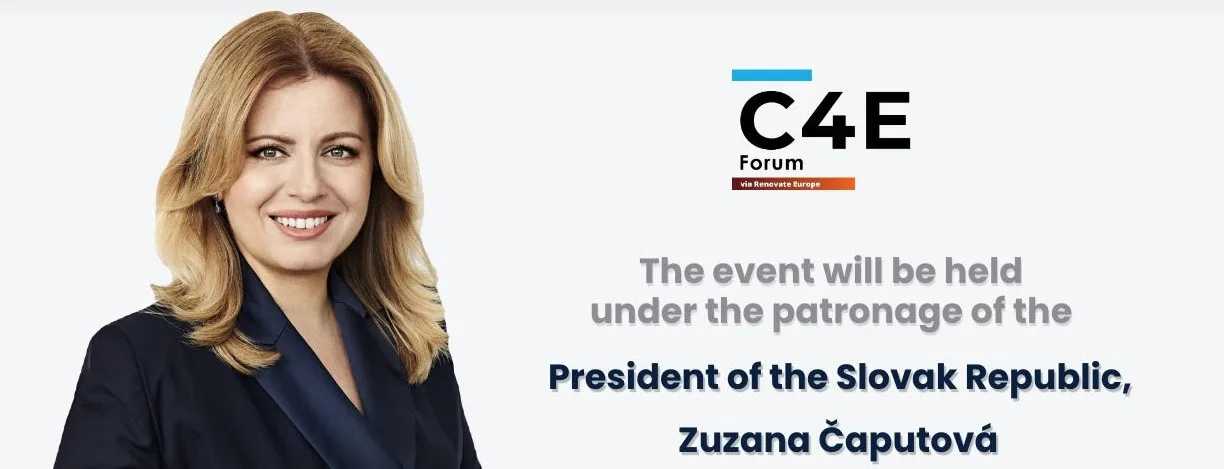
We have the honour and pleasure to announce that President of the Slovak republic – Zuzana Čaputová has taken over the patronage of the C4E Forum 2023 which will take place in Samorin, Slovakia between 23 and 26 May 2023.
Madam President has earlier showed her interest in the C4E Forum by recording an address for the Participants of the 2021 edition in Romania where she named energy efficiency of buildings as one of the top priorities in Slovakia. A priority that will help not only the climate (she mentioned the IPCC report showing that our human activity is changing the climate in unprecended and even irreversible way) but also economy and the citizens. This is the fact not only for Slovakia but for all the other EU countries. Therefore, she expressed her support for the Renovation Wave as 36% of Europe’s emissions come from buildings and in Slovakia this amount is 33%.
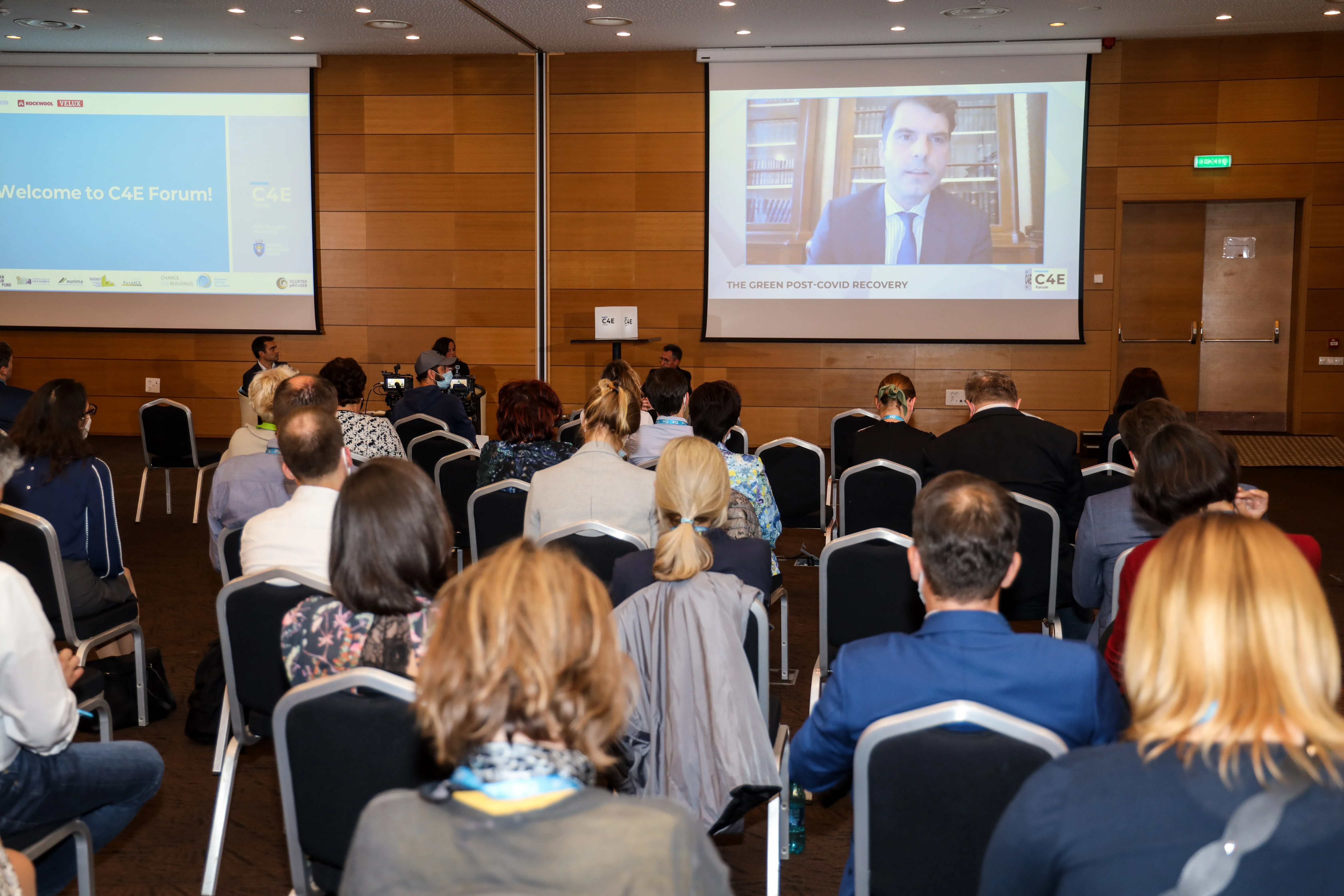
Madame President’s advisor Norbert Kurilla has also participated online in the opening plenary where he discussed the topic of the green post-covid recovery with experts and public officials from Romania, Slovenia and the EU.
The Office of the President of the Slovak Republic perceives the climate crisis as one of great challenges of present times. The Presidential Office wants to become the first climate neutral public institution in Slovakia by 2030. In order to achieve this, it annually evaluates its carbon footprint and takes adequate measures.
With the current ongoing war in Ukraine and energy security and prices top of mind with EU citizens and policy makers alike, the Central and Eastern European (CEE) countries are at the very frontline of the energy crisis. One key action towards reducing our dependence on Russian fossil fuel imports is to boost energy renovation measures and cut energy waste in buildings.
Therefore, from the Renovate Europe Campaign (REC), with the support of our national partner Buildings for the Future, we are delighted to announce that we will organise the next C4E Forum in Slovakia from the 23rd to the 26th of May 2023.
In a context where the Energy Efficiency Directive (EED) is entering its trilogue phase and discussions are taking place in the European Parliament concerning the Energy Performance of Buildings Directive (EPBD), the C4E Forum will be a great opportunity for stakeholders to track how implementation is proceeding as well as reviewing if REPowerEU funds are being properly streamlined into energy efficiency measures.
The EU is mainly working to improve its energy security by focussing on supply issues, whereas it should pay more attention to energy renovation as the sustainable option to properly tackle the energy security crisis. After all, the safest, cleanest and cheapest energy is that which we do not use.
The 4th edition of the C4E Forum will provide two and a half days of interactive sessions and networking opportunities in the unique and attractive setting of Šamorín, a Slovak resort on the banks of the Danube River, close to Bratislava and Vienna. With a clear CEE focus, discussions and presentations on real and topical policy challenges and solutions with the participation of a broad representation of stakeholders (decision-makers, industry, NGOs…) will take place.
“Through the years the C4E Forum has proven to be an essential part of community-building and knowledge-sharing among CEE stakeholders to further push for more action in the field of energy efficiency in our countries,”
said Katarína Nikodemová, Director of Buildings for the Future.
“Today this topic is more relevant than ever, it is therefore a great honour and privilege for us to be co-organisers and hosts of the next conference here in Slovakia,”
she continued.
“From healthier living conditions for our citizens, to boosting our economies, and increasing our resilience to geopolitical developments, energy renovation and creating a more energy efficient society has the intrinsic potential to deliver benefits for all,”
comments Adrian Joyce, Director of the Renovate Europe Campaign, adding
“The C4E Forum is at the forefront pushing these ideas across the CEE region. Under our new lead, we guarantee keeping the great elements that have solidified the C4E brand while also promoting more original ideas to create an even more influential, engaging and attractive event.”
In the coming weeks, details on registration for the event and a call for presentations will be issued.