
Category: Insights & analysis

Policy analysis, explainers, research, and evidence-led commentary.

  • Understanding Poland’s Building Data Gap

    Understanding Poland’s Building Data Gap

    What does Poland’s building stock really look like today and what stands in the way of making buildings warmer, healthier, and more energy efficient?

    The latest baseline assessment from the JustReno project dives into these questions, offering a clear snapshot of where Poland stands and what needs to change.

    The report is structured in three parts: an overview of Poland’s building stock, a look at how building data is governed at national and local levels, and an explanation of key concepts such as energy poverty, vulnerable consumers and worst-performing buildings. Together, these sections highlight Poland’s main data gaps and challenges and point to the steps needed to improve the situation.

    Overview of the building stock in Poland

    Most of dwellings in Poland are located in urban areas, and their energy performance varies, fo example due to the year of construction, types of HVAC systems, quality of building envelope and window area.

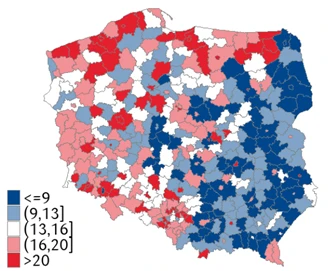
    The most important data source on the energy efficiency of buildings in Poland is the Central Register of Energy Performance of Buildings (CREPB), maintained by the Ministry of Development and Technology. The register contains a list of energy performance certificates (EPCs), which provide general information on the energy performance of buildings. The methodology assumes that the calculations take into account the building’s heating and ventilation requirements, hot water preparation and cooling. When issuing certificates for non-residential buildings, built-in lighting should also be included. EPCs are required for new buildings and premises put into use and existing ones sold or rented. Existing buildings and premises used ‘for own use’ do not need to have an EPC. For this reason, not all buildings and premises in Poland are included in the CREPB and data on their energy performance is often unknown.
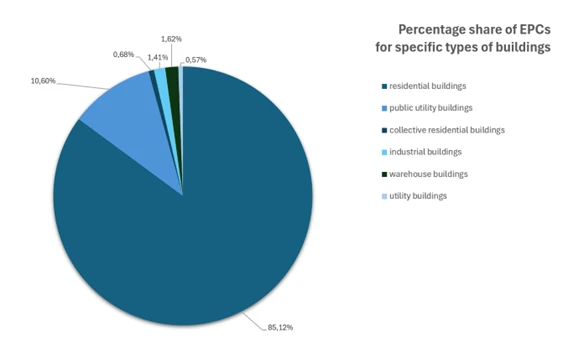
    Pie chart showing percentage share of energy performance certificates for specific types of buildings in Poland.
    Figure 1. Percentage share of energy performance certificates for specific types of buildings [The National Energy Conservation Agency, National building renovation plan 2024 (pl. Krajowy plan renowacji budynków 2024 r.)]
    Map of Poland showing the number of energy performance certificates per 1,000 dwellings by area.
    Figure 2. Number of EPCs per 1,000 dwellings since the introduction of mandatory energy performance certificates [Economic Analysis Department of PKO Bank Polski S.A., Housing stock through the prism of energy performance certificates (pl. Zasób mieszkaniowy przez pryzmat świadectw energetycznych)]

    The report makes one thing clear: improving Poland’s building stock starts with improving the data behind it. The main challenges primarily concern the accuracy, quality and accessibility of data. The data availability varies significantly depending on the age of the building. Another major challenge is the increase of the degree of digitisation and automation of information on Polish building resources, which would facilitate the work of numerous industries and help building residents.

    The Polish policy and legislative context on energy performance of buildings

    EU policy plays a major role in how Poland manages and regulates its building stock data. These are two directives in particular, the Energy Performance of Buildings Directive (EPBD) and the Energy Efficiency Directive (EED). In Poland, they are mainly transposed through the Act on Energy Performance of Buildings, which provides the principles for the preparation of EPCs and rules for operating the Central Register of Energy Performance of Buildings.

    The implementation of the EPBD in Poland, both the previous and the current version, is being carried out in such a way as to meet the minimum requirements. There is a lack of comprehensive solutions that cover various sectors and educational campaigns aimed at the public explaining the context and benefits of implementing the new regulations, such as EPCs.

    The implementation of the EED in Poland is seen as a gradual process that needs more work and legal and organisational changes. Poland is meeting the directive’s goals through a system that requires energy efficiency, including energy efficiency certificates and energy audits, which have been mandatory for large companies since 2016.

    Worst-performing buildings in Poland

    One of the key definitions explored in the report is a worst-performing building. These buildings have the highest final energy consumption (in kWh/m²/year) of the national building stock. They are often occupied by the most vulnerable groups in society. They can also be associated with energy performance classes that are based on the annual non-renewable primary energy demand. Their aim is to provide an easy understanding about the energy standard of the building, allowing users to easily determine whether there is a need to improve the current condition of the building. In Poland, the idea of such classes was introduced in 2024, but their general use is planned to be mandatory from 2026. There are eight classes from A+ (best-performing) to G (worst-performing).

    Next steps for better building data

    Thanks to EU policies and rising awareness of the challenges the construction sector is facing, Polish regulations and data collection methods are in the process of continuous improvement and are moving in the right direction. However, there is still a lot of work to be done. The main priorities are data digitisation and the automation of data verification and processing. Increased access to open-source data on the building stock is necessary as well.

    While the report zooms in on Poland, many of the obstacles it uncovers echo across Central and Eastern Europe, offering lessons and inspiration for countries facing similar housing and data challenges.

    About the JustReno project:

    JustReno project supported by EUKI is aimed at providing support for implementing EU building renovation policies in Hungary, Poland, and Romania, ensuring a socially just transition by prioritising worst-performing buildings and vulnerable households.

    About the author:

    Portrait of Szymon Firląg.

    Szymon Firląg – University professor at the Faculty of Civil Engineering, Warsaw University of Technology in the sustainable development team. He conducted research at the Passivhaus Institut in Germany, where he had the opportunity to stay, as a fellow of the Nowicki Foundation and the Deutsche Bundesstiftung Umwelt. Thanks to a grant from the Center for Advanced Studies of the Warsaw University of Technology, he worked on control algorithms for smart windows at Lawrence Berkeley National Laboratory in the US.

    President of the Union of Employers – Manufacturers of Construction Materials. Cooperated with the National Energy Conservation Agency, the National Energy Conservation Agency, Buildings Performance Institute Europe and the Energy Conservation Foundation, where he was engaged in projects related to energy efficiency of buildings. He was involved in the design, construction and certification of the first passive and energy-efficient buildings in Poland. Expert of the European Research Executive Agency.

    He is the author of numerous articles and books, and has participated in campaigns promoting energy-efficient construction and thermal renovation in Poland.


  • Understanding Romania’s path to building decarbonisation

    Understanding Romania’s path to building decarbonisation

    As Romania moves toward decarbonising its buildings, a clear picture of the current building stock is crucial for planning effective policies and identifying the financing needs, estimated at over EUR 20 billion.

    To achieve the mapping of the buildings in our country, it is necessary to identify the existing data and the information that will be needed in the future. This process is hindered by the lack of digitalisation, which would allow the easy centralisation of relevant information and documents.

    Core data sets supporting Romania’s building stock assessment

    An important step towards mapping the building stock has been taken through the national censuses, which enabled the collection of information on the condition of buildings in terms of energy performance, with the data later included in the Long-Term Renovation Strategy – the first strategic document to outline Romania’s national action directions towards decarbonising the building stock.

    In addition, two other essential tools for this endeavour are currently being developed:

    1. the National Systematic Cadastre Programme, which final results will become visible shortly; and
    2. the National Building Registry, created as part of the transposition of the new Energy Performance of Buildings Directive (EPBD). This will be a comprehensive digital database on the condition of buildings, including energy performance indicators, and will be continuously updated based on the issued Energy Performance Certificates.

    These efforts will culminate in the adoption of the National Building Renovation Plan, which is in an advanced stage of preparation and will set out the action directions for the coming period with a view to achieving the EPBD objectives.

    Financing remains the biggest barrier

    While data collection has improved and we will soon have a clearer picture of the building stock, the real challenges arise when it comes to identifying the financial resources needed to carry out investments in the energy efficiency of buildings.

    Although in recent years several programmes have existed to finance energy efficiency projects for residential and public buildings in Romania — programmes that enjoyed budgets of several billion euros — the recent fiscal measures have suspended a large part of these funding lines and have considerably slowed down investments at national level, with no clear timeline for their resumption.

    Even the Social Climate Fund, which would provide Romania with around EUR 3 billion in financial allocations for building renovation projects, focusing on vulnerable households and low-income families, is uncertain following the recent European-level decisions to postpone the implementation of the ETS2 mechanism.

    In conclusion, the building decarbonisation targets are achievable, but better coherence is needed in public policies in this field, as well as improved coordination between the institutions responsible for mapping the building stock and financing its decarbonisation. In addition, the focus should be placed on supporting energy-poor households and low-income families, in order to reduce their socio-economic vulnerability and ensure success in meeting the intended objectives.

    How do technical assistance projects support the transposition of the new EPBD?

    The answer varies from country to country and depends largely on public authorities’ willingness to ensure transparency and allow civil society to contribute meaningfully to legislative improvements.

    Fortunately, in Romania there is genuine dialogue with the institution responsible for transposing the EPBD recast — the Ministry of Development, Public Works and Administration — which coordinates the activity of the dedicated working group and actively encourages participation in its proceedings.

    In this supportive context, projects such as JustReno and EPBD.wise provide valuable assistance. They help Member States interpret the new EPBD requirements and identify effective implementation tools. A concrete example is the series of reports developed under the JustReno Project or the guidance documents offered by the experts involved in the EPBD.wise Project, which provide both general information relevant to all Member States and country-specific data to facilitate the legislative transposition process.

    About the author:

    Portrait of Andrei Iorgulescu.

    Andrei Iorgulescu is the Programme Director of the Romanian Association for the Promotion of Energy Efficiency in Buildings – ROENEF. Previously, Andrei served for more than six years as Director of the department responsible for the development and implementation of environmental programmes within the Environmental Fund Administration – Ministry of Environment, Waters and Forests, where he coordinated the launch of several programmes dedicated to deep renovations and the use of energy from renewable sources, benefitting tens of thousands of beneficiaries and with combined budgets of several billion euros.

  • Blueprints for Change: Why Central and Eastern Europe Needs Strategic Building Renovation Plans?

    Blueprints for Change: Why Central and Eastern Europe Needs Strategic Building Renovation Plans?

    As Europe races toward climate neutrality, the Energy Performance of Buildings Directive (EPBD) offers a rare opportunity to turn ambition into action. At the heart of its implementation lies the national building renovation plan – a strategic tool Member States have to create for a consistent policy framework for building decarbonisation. More than a compliance exercise, the renovation plan should serve as a blueprint for translating scattered, often short-term measures into coherent long-lasting transformations that pave the way toward a zero-emission building stock by 2050.

    In Central and Eastern Europe (CEE), as in other parts of Europe, the need for a strategic vision for building decarbonisation is particularly acute. Yet the CEE region faces a unique combination of challenges from aging and inefficient buildings to high rates of energy poverty and a limited administrative capacity to deliver large-scale renovation programs. Furthermore, building policies in many CEE countries have been reactive, fragmented and heavily reliant on EU funding cycles rather than embedded in long-term national strategies.

    National building renovation plans offer a critical opportunity to break this cycle by providing a consistent, forward-looking vision for building decarbonisation. For CEE countries, renovation plans are not just a planning tool, they represent a catalyst for unlocking systemic reforms and ensuring that building decarbonisation becomes a pillar for both energy security and social cohesion.

    How to do so?

    Planning with purpose

    National building renovation plans should serve as a strategic backbone for building decarbonisation, bringing together all relevant policies, measures, and investment needs into one coherent framework. In CEE countries, renovation plans can ensure greater continuity and alignment across programs by functioning as a central reference point for decision-making. They should not merely reflect what exists but actively guide the long-term planning of building decarbonisation, providing a structured approach to designing both immediate responses and sustained interventions in an aligned way. Additionally, by being a repository of investments and financing sources, the renovation plans can ensure funding continuity for renovations, helping policymakers navigate various financing streams both public and private. When renovation plans offer a clear, long-term roadmap, they create predictability and foster public trust, turning building decarbonisation efforts into a unifying collective action.

    Breaking the silos

    In many CEE countries, the responsibility for building renovation is spread across a fragmented landscape of ministries, agencies, and local authorities, often with minimal coordination between them. As a result, renovation actions tend to be siloed, with little alignment between policy measures, funding programs, and regulatory instruments. Given the holistic nature of national building renovation plans, which must encompass a wide range of measures and investments for decarbonising the building stock, their effective elaboration will require active collaboration between different ministries and across various governance levels.

    Ministries responsible for energy, environment, housing, finance, but also cultural heritage, employment, and local governments must come together to ensure coherence in planning and avoid duplicating efforts. Moreover, this collaboration should go beyond a mere exchange of information and strive to leverage synergies between the various provisions of the EPBD. Additionally, the work on national building renovation plans needs to be aligned with other national strategies, such as National Energy and Climate Plans and Social Climate Plans, ensuring consistency between the building sector’s decarbonisation actions and broader national energy and climate goals as well as social requirements.

    A plan for all

    Public participation and stakeholder involvement are essential to ensure social acceptability and credibility for renovation plans. Given the social sensitivity of building policies, especially in regions affected by high rates of energy poverty and poor housing conditions, early and inclusive dialogue is vital to ensure that planned measures reflect real needs and local realities.

    Without this, policymakers might risk designing renovation plans that are technically sound but socially disconnected and difficult to implement on the ground. Importantly, stakeholder involvement should not be limited to the drafting phase. Continuous engagement throughout implementation is essential to monitor progress, adapt measures and ensure accountability.

    Tracking progress

    There is indeed a gap in understanding the effects and effectiveness of building policies, especially in countries where institutional capacity and reliable data are limited. Beyond its role as a strategic planning tool, the national building renovation plan can be a valuable monitoring and reporting instrument. By compiling all relevant policies, measures and investments related to building decarbonisation, the renovation plans can give governments a clear picture of how their building decarbonisation strategies are actually performing.

    In this way, the renovation plans will strengthen public trust in the effectiveness and fairness of the building decarbonisation process and build legitimacy of climate action. A robust monitoring and evaluation framework will not only help improve policy outputs but will also represent a way to counteract and dismiss in an evidence-based manner a potential social – or even political – reluctance toward building policies.

    For Central and Eastern Europe, the national building renovation plan is more than a bureaucratic exercise, it is a chance to create a coherent, collective, long-term vision for building decarbonisation. Through strategic planning, cross-collaboration and dialogue, renovation plans can do what piecemeal policies have long failed to achieve – align fragmented renovation actions, direct investments where they matter most, and chart a clear, credible path to climate neutrality for buildings. They offer governments the means to think long-term, act strategically, and engage citizens in a transformation that affects every home, school, and workplace. Crucially, they also provide the tools to measure progress, correct course when needed, and build the public trust essential for change. If done effectively, the national building renovation plans can become a cornerstone of not just decarbonisation, but resilience, social fairness, and cohesion.

    Portrait of Denisa Diaconu.

    About the author:

    Denisa Diaconu is a Project Manager at Buildings Performance Institute Europe (BPIE), managing projects on policy implementation and capacity building for public authorities. She is coordinating from BPIE’s side the EPBD.wise project, which provides direct support to national policymakers in implementing EPBD.

    Resources

    This article was written under the EPBD.wise project, which provides direct support to policymakers in six countries (Bulgaria, Greece, Hungary, Poland, Romania and Ukraine) to design, implement and evaluate key provisions from the Energy Performance of Buildings Directive (EPBD).

  • Buildings Climate Tracker: pathways to climate-neutral buildings in Central and Eastern Europe

    Buildings Climate Tracker: pathways to climate-neutral buildings in Central and Eastern Europe

    The EU Buildings Climate Tracker, a flagship annual report from the Brussels-based think tank BPIE, evaluates progress in decarbonising buildings across the EU. The report finds that in Central and Eastern Europe (CEE), progress towards a low-carbon built environment has slowed, and that tailored strategies are urgently needed. Linking economic growth, energy security, and better quality of life to mass-scale energy renovation could help the CEE region to accelerate efforts, close the gap, and get on track to climate neutrality.

    The second edition of the EU Buildings Climate Tracker, published in November 2023, underscores the urgency and scale of efforts needed to decarbonise the building sector in the European Union. Central and Eastern Europe (CEE) faces unique challenges here and needs tailored strategies to achieve climate neutrality by 2050. The report’s insights provide a critical roadmap for policymakers, stakeholders, and communities in the CEE region.

    The EU Buildings Climate Tracker evaluates the progress of the building sector in the EU towards climate neutrality using a composite index of five key indicators: CO2 emissions, final energy consumption, renewable energy share, investments in renovation, and domestic energy expenditures. For the CEE region, the analysis presents a more daunting scenario compared to the broader EU context.

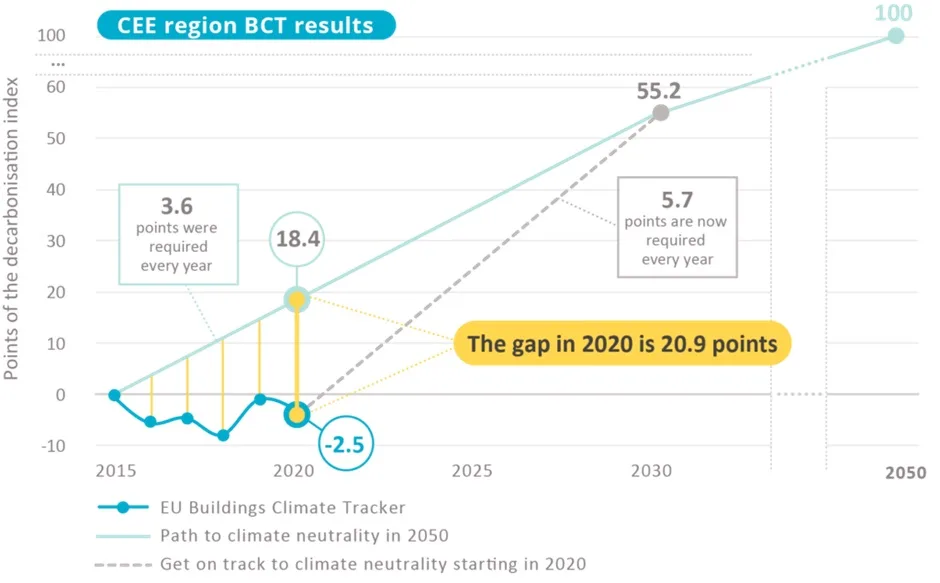
    By 2020, the CEE region was 21 points off the required decarbonisation path, the largest gap since 2015. This shortfall indicates that the policies and measures implemented in the region have not been sufficient to align with the ambitious climate goals set for 2030 and beyond. The current trajectory necessitates a significant increase in annual decarbonisation efforts, estimated at 5.7 points per year, to close the gap and stay on track.

    Graph showing the CEE Buildings Climate Tracker decarbonisation gap.

    Drilling down into the results of the five indicators used in the tracker, the report finds that CO2 emissions from energy use in buildings in the CEE region are substantially higher than the required targets. In 2021, emissions were 37.3% higher for households and 24% higher for the service sector compared to the target values. This points to a widening gap between the reported emissions and the path to climate neutrality.

    The CEE region faces challenges in reducing final energy consumption in buildings. Household energy consumption reached 631 TWh in 2020, 14.6% higher than the target value, and this indicator increased again by 6.9% in 2021. In the services sector, energy consumption increased by 9.1% in 2021, bringing consumption close to the levels observed in 2016.

    The share of renewable energy in heating and cooling remains significantly below the required levels. Previously the penetration of renewables was a growing trend in CEE that was better than the EU average, but this has flattened. In 2021, the share of renewables in heating and cooling in CEE reduced from 25.5% to 24.7%, and the share of renewable sources in gross electricity consumption remained stable between 2020 and 2021 at around 22.8%.

    The cumulated investment in renovation in real terms has increased since 2015. However, it is still far from the target value. In the CEE region, in 2021, investments in renovation increased by 3%, but the accumulated value (16 billion EUR2015) is still 37.1% lower than the target value (24.9 billion EUR2015).

    The CEE region’s household energy expenditure has been higher than the target values since 2015, except in 2017. In 2020, this indicator reached 1,018 EUR2010, 6.3% higher than the target value for that year. The gap in the CEE region is widening – unlike the trend across the EU, where the energy expenditure per household is close to achieving the target value towards climate neutrality. Social aspects matter: rising energy bills for households can have significant impacts, especially for those in energy poverty. Addressing energy affordability through targeted interventions is necessary for a just transition, and to bring the benefits home to people in their daily lives.

    Closing the gap

    How can the CEE region bridge the decarbonisation gap and accelerate towards a net-zero 2050? Faster and bolder action is evidently needed, and the EU Buildings Climate Tracker pinpoints crucial policy recommendations for the CEE region. Notably, Member States have just under two years to transpose into national legislation the measures in the recently revised Energy Performance of Buildings Directive (EPBD) that can help get the buildings sector on track towards climate neutrality

    Promoting deep renovations is a crucial step. Developing and supporting comprehensive renovation programmes targeting the worst-performing buildings through financial incentives, technical assistance, and awareness campaigns can help accelerate the rate of deep renovations. This goes hand-in-hand with promoting adaptation measures across the existing and new building stock to reduce the influence of weather and natural events on buildings operations.

    Decarbonising heating and cooling is a key target. The report notes that primary solid biofuels make up most of the renewable energy for space heating (around 86% in the EU and 97% in the CEE region), highlighting the need to define clear and effective sustainability criteria for bioenergy, and to prioritise clean heating solutions such as geothermal, solar thermal, district heating powered by renewables, and heat pumps.

    It’s a tall order, but used strategically, available EU funding, such as from EU Cohesion Funds and the Social Climate Fund, could go a long way to support rollout of the most urgently needed renovations. Renovate Europe has identified that Member states have planned to spend a total of €269bn using the European Regional Development Fund, the Cohesion Fund and Just Transition Fund. 7% (€20bn) of this funding is allocated for building renovation and energy efficiency projects across the public sector, residential sector, and businesses. And the Social Climate Fund is expected to mobilise at least €86.7 billion over the 2026-2032 period.

    But effective spending of course boils down to effective EPBD – notably with a well-developed national building renovation plan at the basis and clear identification of the worst-performing buildings that need to be renovated first.

    Towards a healthier environment

    The third edition of the EU Buildings Climate Tracker, due to be published later this year, will feature a thematic focus, highlighting the relevance of decarbonisation of the building stock for the health of buildings’ users and socio-economic security. Better buildings ultimately means better places for people to live and work in. Decarbonised buildings bring a host of co-benefits: lower fossil fuel import dependency, improved health outcomes and economic stimulus. Clear and effective plans for accelerating the rate of deep renovations, promoting clean heating solutions, and effectively implementing the new Energy Performance of Buildings Directive, will mean that the CEE region can make substantial progress towards climate neutrality by 2050, benefiting both the environment and the quality of life for its residents.

    Read the full report of the EU Climate Buildings Tracker here.

    Caroline Milne, Head of Communications, BPIE (Buildings Performance Institute Europe)

    About the author:

    As Head of Communications at BPIE, Caroline develops and deploys BPIE’s long-term communications strategy, leads the communications team and manages communications campaigns across a wide range of projects.

    Portrait of Caroline Milne.

    Prior to joining BPIE, Caroline was Director of Communications and Marketing at Joule Assets, where she led communications and stakeholder engagement for European projects targeting energy efficiency project developers and investors, including SEAF H2020 and LAUNCH H2020. In this role, she also led deployment of the commercial launch of the eQuad platform, which facilitates investment in energy efficiency projects for SMEs in Europe, and organized outreach towards municipal leaders and residents in New York State in effort to create bulk energy buying programmes (“Community Choice Aggregation”). Before entering the energy efficiency space, Caroline spent several years working as a freelance English teacher for business professionals, copywriter and academic editor.

  • Climate and energy efficiency aspects of the Hungarian National Energy and Climate draft

    Climate and energy efficiency aspects of the Hungarian National Energy and Climate draft

    The updated National Energy and Climate Plan (NECP) of Hungary covers the dimensions of decarbonisation, energy efficiency, energy security, internal energy market and research, innovation and competitiveness of the Energy Union. This writing focuses on the climate and energy efficiency aspects of the Hungarian NECP.

    Hungary is particularly exposed to the unintended effects of climate change compared to the rest of Europe due to its location inside the continent and the specific microclimate of the Carpathian Basin, but in global comparison the consequences of warming are lagging behind the expected changes in other regions of the world, in particular the most vulnerable developing regions.

    Hungary remains committed to achieving long-term climate target, that is, becoming climate neutral by 2050. We want to achieve our energy independence through demand reduction and energy efficiency, diversification and alternative energy sources utilisation and electro-electrification measures. Increasing energy efficiency is our priority by using renewable-based heating/cooling solutions, reducing the share of natural gas in the district heating sector and reducing energy use for residential, public, industrial and transport purposes.

    The Hungarian NECP states that the Hungarian Government must pursue a realistic and responsible policy in the field of climate protection. It should be realistic in terms of the expected results of interventions under current technologies and their cost implications. This is in line with the energy mix and climate targets of Central and Eastern European countries. The European Union expects its member countries to have an overall climate-neutral economy by 2050. In the period up to 2035, the extra investment cost of the WAM (With Additional Measures) scenario is in the order of HUF 500 billion per year. On the other hand, investments reduce operating and carbon quota costs. Thus, the annual net additional financing needs are HUF 155 billion. In the view of the Hungarian Government, this objective is achievable for Hungary, but this requires a substantial financial contribution from the European Union. The objectives of economic growth and climate protection are not at odds. Hungary is among the 21 countries in the world where gross domestic product has increased since 1990, while CO2 emissions have fallen by 37% and energy use by 15%. Thus, Hungary is not only at the forefront of economic growth, where the gross domestic product growth exceeds the average GDP growth in the euro area by 2−3 percentage points, but also has an exemplary practice in the field of climate protection.

    Hungary is a member of the Visegrad Cooperation and the Central and South-Eastern Europe High Level Group on Energy Connectivity (CESEC), where energy and climate policy issues relevant to the NECP are regularly discussed. The regional consultation on Member States’ Energy and Climate Plans was held in Bratislava on 23 April 2023 with the participation of Czechia, Hungary, Poland and Slovakia. The meeting provided an opportunity to discuss the progress of individual Member States in the preparation of the revised NECPs at regional level, to learn about their draft plans.

    With regard to the NECP, the Hungarian Government authorised the Hungarian Ministry of Energy to meet the objectives of the Energy Union and to comply with the Paris Agreement. The ministry is to develop appropriate policy programmes and visions for issues that require a political decision on the future of the energy sector and other sectors affected by decarbonisation; setting national targets and domestic contributions on energy and climate change, in particular emissions reduction, energy efficiency and increasing the share of renewable energy.

    Hungary aims to reduce its gross greenhouse gas emissions by at least 50% by 2030 compared to 1990, i.e. gross emissions should not exceed 56.19 million t CO2eq gross in 2030, i.e. a reduction of 7.6 million t CO2eq compared to 2017. Our main energy efficiency target is that the country’s final energy consumption in 2030 does not exceed 750 PJ. This also means reducing our final energy consumption by around 6% by 2030 compared to 2021 (802 PJ). We also set a target of 336 PJ of cumulative final energy savings by 2030 – a new saving of 61 PJ over 10 years. 3% of the floor area of central government buildings will also be renovated each year to the optimal level of cost.

    In line with our EU obligations, in 2021 the Government adopted the Long-Term Renovation Strategy (HTFS), which provides the basis for achieving a sustainable, energy and cost-effective domestic building stock by 2050 through energy efficiency, value, comfort and health promotion measures, renewable energy use and the use of smart technologies. The strategy aims to achieve a 20% saving in the energy use of the domestic residential building stock by 2030, a 60% reduction in CO2 remissions related to the energy use of buildings by 2040 compared to the 2018-2020 average, and nearly zero-energy buildings to reach 90% by 2050. With the modernisation of the residential building stock to improve energy efficiency and the shift to alternative heating methods, we estimate that up to a quarter of natural gas imports (around ~2 billion m3 natural gas use per year) could be replaced. The aim is also to further improve the final energy intensity of GDP, which will fall below HUF 0.429 toe/million by 2030, while maintaining economic growth.

    In order to achieve the energy efficiency targets in a cost-effective manner, we have put in place an energy efficiency obligation scheme (EEOS) to channel investments on a market-based basis to those areas with the highest energy use and energy efficiency potential. Improving the energy efficiency of the economy is one of the priority projects of the new Energy Strategy. The contribution of the EEOS to the national energy savings target is 26%. Alternative energy efficiency policies should account for 74% of the target. Therefore, we consider it of utmost importance to continue and renew alternative policy measures to improve energy efficiency. In the case of central budget and local government investments in building energy and energy efficiency, ESCO-based services can reduce the use of budgetary resources and EU grants, thus contributing to the reduction of public debt and a more rational use of subsidies that will decrease in the 2021-27 programming period.

    Author:

    Amb. dr. Barbara Botos, Ambassador-at-large for Climate, Ministry of Energy, Hungary

    Portrait of Barbara Botos.

    About the author:

    Dr Barbara Botos was appointed as Hungary’s Ambassador at Large for Climate in 2022. Prior to her new appointment, Barbara Botos was the Deputy Secretary of State for Climate Policy at the Ministry of Innovation and Technology of Hungary for four years, where she was in charge of international, EU and national climate change, renewable and energy efficiency policy-making and programs. Previously, she was Head of the Department of Climate Policy at the Ministry of National Development. She has been actively involved in the UNFCCC and EU climate negotiations for the last 11 years as head of the Hungarian delegation and UNFCCC and IPCC focal point of Hungary. Previously, Barbara was teaching at universities and worked for local governments in the field of environmental protection and climate policy. She is a member of the Women in Energy Association.

  • How to unleash the renovation wave in Hungary?

    How to unleash the renovation wave in Hungary?

    Energy efficiency is the neglected stepchild of the Hungarian energy policy

    The renewal of Hungary’s outdated housing stock can no longer be delayed. Residential energy consumption in Hungary accounts for the largest share of total final energy consumption (32%), most of which is used for heating. At the same time, price-capped residential energy prices (the lowest in Europe) ensure that households are protected from energy price volatility and can keep their heating costs affordable.. However, the poor energy performance of the building stock and the lack of financial savings for households, combined with low overheads, have delayed the renovation of buildings for several decades now. The building stock must transform rapidly to meet the country’s energy efficiency and emission reduction targets. A modern and energy-efficient housing stock can ensure a lasting reduction in our energy consumption by 2050, reduce Hungary’s high dependence on Russian natural gas and, not least, ensure comfortable and healthy homes.

    Yet energy efficiency renovation is a neglected topic in domestic energy policy. To modernise the stock, 130 000 dwellings would need deep renovation every year, whereas the reality is partial renovation of a few tens of thousands of dwellings. According to a previous MEHI Hungarian Energy Efficiency Institute/MEHI Magyar Energiahatékonysági Intézet survey, households mostly finance renovation activities from their own resources, and as a result, only make minor improvements. Shallow renovation measures do not result in significant energy savings. Another typical behaviour is that Hungarian households postpone even the smallest, otherwise affordable, energy renovation activity in order not to miss out on state support. The most common response to the energy crisis has not been to increase building renovation, but to reduce heating costs by lowering indoor temperatures. This is not surprising, given the lack of a comprehensive building renovation program and the fact that existing subsidies mainly serve social policy purposes and are not linked to energy-saving requirements.

    The low renovation activity and the downturn of new construction in 2022-2023 have also led to a sharp decline in the construction industry. Potential renovators and the industry are waiting for the arrival of EU funds and the announcement of a new subsidy scheme, but the delay and wait-and-see approach is exacerbating the situation for the construction industry.

    A predictable and long-term energy renovation program could slowly but surely bring a solution to the above problems. According to the results of previous surveys, a non-refundable subsidy program of around 30%, combined with a favourable loan, could significantly increase the number of renovations, and a sustained increase in demand would also moderate fluctuations in the performance of the construction industry. It would be best to segment the renovation subsidies according to building type and income, since borrowing is often not a realistic option for low-income households, and a higher proportion of state subsidies is necessary for those in energy poverty. In the case of condominiums, a well-functioning form of support was the housing savings fund previously supplemented with state support. There would also be a high need for technical assistance in the form of one-stop-shops, so that renovations are in-depth renovations.

    The revised NECP of Hungary does not give, however much hope, the approximately 50 000-60 000 home renovations planned in the domestic strategic documents fall far short of what is needed. Energy renovation of the building stock does not come as a first priority when spending resources from the recovery and resilience fund (RRF) either. So far, we have only seen RRF-financed calls for tenders for the support of renewable energy and storage, and e-mobility.

    It is high time to give voice to a comprehensive renovation program and prioritise energy efficiency in public policy and funding decisions. This was represented by Hungarian and Central and Eastern European (CEE) industry leaders who came together for the second time to discuss how energy efficiency and building renovation can be prioritised in public policy. Previously, seven leading companies of the building renovation sector signed a memorandum at the C4E Forum committing to jointly raise the profile of building renovation and energy efficiency in public policy discussions across the CEE region. The seven signatories were Daikin Central Europe, Danfoss, Knauf Insulation, ROCKWOOL Group, Saint-Gobain, Signify, and VELUX, with more than 42 thousand employees and significant economic power in the region.

    The second working meeting took place in mid November in Budapest, followed by a business-stakeholder event organised by MEHI. It was the first of its kind to provide a platform to strengthen the dialogue among the these regional businesses at the local level, with the added force of advocacy and expert organisations, and domestic stakeholders, including banks, energy suppliers, and an enlarged group of Hungarian manufacturers of energy-efficiency products and services (Erste Group, OTP Bank, MBH Mortgage Bank, Masterplast Group, Schneider Electric, E2 Hungary). Panel members shared their views on the challenges of domestic renovations, and how the construction sector and the whole value chain could benefit from a predictable policy and regulatory environment. Participants raised their voices for a comprehensive, long-awaited building renovation program that would be necessary for a massive increase in the number and depth of domestic building renovations. Industry leaders identified the necessary steps each stakeholder group can take to promote the renewal of our wasteful building stock so that Hungary can reap multiple benefits such as healthy, comfortable, energy-efficient, and decarbonised homes.

    For Hungary, the stakes are raised even more by the missing piece of the Fit for 55 package, the Energy Performance of Buildings Directive (EPBD), which is under revision and the recast negotiations are approaching conclusion. The new Energy Efficiency Directive and the EPBD, together with the recent Renewable Energy Directive are going to be game changers for buildings. Action on buildings is unavoidable, and Hungary has no more time to waste. The large energy-saving potential of the building stock calls for renovation, which could be just the right priority topic of the Hungarian presidency in 2024.

    Authors:

    Anikó Pálffy, Hungarian Energy Efficiency Institute

    Gabriella Szalai, Daikin Hungary

    About the authors:

    Anikó is an economist, a policy lead at the Hungarian Energy Efficiency Institute (MEHI), with 8 years of experience in the energy efficiency policy field and more than 15 years of experience in energy policy and energy regulatory topics. Previously she worked as an electricity market analyst, later she was involved in the implementation of the EED in Hungary at the Hungarian Energy and Utility Regulatory Office. At MEHI she has been developing policy proposals and background research papers, analyzing legislation, international and domestic trends, and energy efficiency measures, and has been involved in several European and regional projects.

    Gabriella is an economist, during her career she worked in marketing & communication, dealt with EU grants and related project management tasks. She also worked at regional and state development agencies, where she was responsible for the strategic programming & absorption of EU funds. She worked for MEHI, the Hungarian Energy Efficiency Institute for 5 years. The focus of her activities during that time was the efficient use and reduction of energy related to the built environment, including a sound transposition of EED & EPBD. As an employee of Daikin, her tasks include of developing the heat pump market in Hungary, advocating the benefits of heat pump technology as a route to the decarbonized building stock & more sustainable living. She also deals with the regulatory issues related to sustainable development and climate protection. She is married and has two adult children.

  • Key Messages from the Czech Experience 2007–2023

    Key Messages from the Czech Experience 2007–2023

    Renovate Europe Day 2023 graphic.

    Upcycling Emission Trading Revenues to Building Renovation Programs

    Petr Holub, Director General for Climate Protection at the Ministry of the Environment of Czechia, participated in the high-level conference Renovate Europe Day 2023 that took place in Madrid (Spain) on the 3rd of October 2023. Listen to his intervention here.

    In the heart of Europe, the Czech Republic has been quietly leading the way with its approach to energy efficiency and carbon reduction over the past decade and a half. Their (New) Green Savings Programme, a grant scheme for residential building owners to energy renovate their home and install renewables, is a shining example of how policy initiatives can lead to substantial benefits. From 2007 to 2023, this programme has evolved and matured, offering valuable lessons for policy-makers in other countries in the EU.

    Key Message 1: It Is Upcycling

    The first lesson from the Czech experience is the concept of upcycling. It is about converting emission trading revenues into something far more valuable. For every euro invested in renovation, the Czech Republic has seen five times more savings in energy costs through carbon pricing. Moreover, each euro of public funds creates three euros of total investment, resulting in a total leverage factor of 10.

    But it’s not just about financial gains; this initiative has also created local jobs in small and medium enterprises, fostering growth in the local economy. The impact extends beyond economics, as building owners and occupiers enjoy multiple benefits in terms of comfort, reduced energy bills, and a reduced carbon footprint.

    Key Message 2: It Takes Time and Confidence

    The journey from a government decision in 2007 to a well-established, continuous scheme in 2015 teaches us the importance of patience and confidence. Pilot projects and short-term initiatives won’t cut it when it comes to encouraging household investments in energy-efficient renovations.

    Household investment decisions are often not rational, and trigger points can be few and far between. This emphasizes the necessity of creating confidence in the public by offering a long-term, predictable investment environment. The stop-and-go approach, often seen in rapidly changing or discontinued policies, just doesn’t work.

    Key Message 3: Motivate for Deep Renovation

    The Czech initiative offers three tiers of support, with higher grant rates for more comprehensive renovation efforts. Advisory and project development assistance further incentivise deep renovations Looking ahead to 2024 and beyond, there are plans to significantly upscale project development assistance (PDA) and offer preferential renovation loans for deep and overall renovations.

    Key Message 4: Don’t Fear Ambitious Quality Requirements

    The construction market will adapt and learn. However, it’s crucial to keep administration simple, with grant calculations based on physical variables, for example the area of insulated facades. Efficient administration, with application checks within weeks instead of months and prompt grant payments, is critical. Additionally, blending different funding sources can streamline the process, but it should be transparent to applicants, making it as seamless as possible.

    Key Message 5: Let’s Be Inclusive

    The programme aims to be inclusive, with a special provision for low-income groups. The “New Green Savings Light” provides up to 100% prefinanced grants, with a maximum of 6.000 euros for partial measures. Furthermore, advisory services are bundled with the grants and provided by local groups, helping neighbours navigate the renovation process.

    Inclusivity has been a key aspect of the Czech program’s success, making it possible to focus on the worst-performing buildings and ensure that no one is left behind in the transition to energy-efficient homes.

    Key Message 6: COVID and Energy Prices Had Their Influence

    The COVID-19 pandemic and rising energy prices had a significant influence on the Czech Republic’s renovation program. During lockdowns, people spent more time at home and realised the value of living in high-quality housing. Many had the time to develop renovation projects, leading to increased interest in the program.

    Likewise, during the price hikes in late 2021 and 2022, interest in energy-efficient measures, particularly in photovoltaics and heat pumps, multiplied. However, the volume of deep renovations stagnated. Recognising this, the programme plans to refocus efforts on deep renovations in the coming years.

    The Time is Now, 2030 is Tomorrow

    There is a unique opportunity to leverage the Modernisation Fund, Social Climate Fund, national ETS1, and ETS2 revenues for climate measures. The ETS directive as of 2024 mandates that all such revenues must be used for climate measures, further emphasizing the urgency.

    The draft update of the National Energy and Climate Plan (NECP) counts on a progressive renovation scenario, underscoring the commitment to ambitious climate goals. With lessons learned from the Czech experience, other countries can follow suit, utilising upcycled revenues for comprehensive building renovation programmes and accelerating their carbon reduction efforts.

  • More than “nice to have”: National long-term building renovation strategies can be the road to recovery and growth

    More than “nice to have”: National long-term building renovation strategies can be the road to recovery and growth

    On March 10th 2020, EU Member States were expected to submit their third Long-Term Renovation Strategy (LTRS), in line with requirements of the Energy Performance of Buildings Directive (EPBD). By September, BPIE found that less than half of Member State’s strategies had been submitted, and of those, few were compliant with EU legislation. Now at the beginning of 2021, twelve national strategies are still missing (over nine months late), including all strategies from Central and Eastern European Countries. [1]

    Amidst the backdrop of the pandemic and economic crisis, putting building renovation on the backburner may seem only logical; like a “wish-list” or “nice to have” item, as opposed to a non-negotiable, top priority. 2020 was certainly a difficult year to look ahead, and many plans beyond buildings were delayed or put on hold. In reality, however, now is the ideal moment for countries who have not yet submitted their strategies to prioritise finalising them, and for all countries to ensure that their respective Recovery and Resilience Plans are used to finance national renovation priorities.

    Indeed, the pandemic has shown that building renovation is an important investment; one that countries cannot afford not to make. Beyond energy savings and decreased GHG emissions, healthy, low energy buildings can have a measurable impact on quality of life and economic growth. In France, for example, research from BPIE shows that medical costs of about €930 million per year are linked to poor quality housing. Including the indirect consequences of such ill-health (absenteeism, lower productivity etc.), poor quality housing could be costing the French economy as much as €20 billion per year.

    The same report also indicates that for every €1 million invested in energy renovation of buildings, an average of 18 local and long-term jobs are created that will stimulate economic activity. Holistic, energy efficient renovation of office buildings increases productivity by about 12% leading to a potential benefit of about €500 billion to the economy per year, and well-designed and executed energy renovation of hospitals reduces the average patient stay by about 11%, producing potential savings of about €45 billion per year to the healthcare sector. The link between building renovation, health and well-being of citizens and economic recovery has never been more clear – the opportunity is too great to ignore.

    Despite the uncertainty that 2020 brought, political priorities at EU level crystalized over the course of the year, which should now be a strong impetus for Member States to take action. The European Commission’s Covid-19 Recovery Strategy includes the Renovation Wave for the buildings sector as a key component to build Europe’s economy back better than it was before. And now at the outset of 2021, Europe has agreed a higher, more ambitious 2030 climate target of 55% emissions reductions of 1990 levels. As BPIE’s recent analysis shows, achieving this target requires immediate, ambitious, and collective action and the buildings sector will have to play a lead role; by 2030, total GHG emissions coming from buildings must have reduced by 60%.

    Towards this end, unprecedented levels of funding have been put in place to support a green recovery. In addition to the EU’s multi-annual budget from 2021 to 2027, the European Commission’s Recovery and Resilience Facility will make €672.5 billion in loans and grants available to support reforms and investments undertaken by Member States. This money should be quickly and well spent, towards triggering investment in innovative technical solutions and service models into the mass renovation market. Having a well-defined renovation strategy in place will help guide this process and ensure that Member States have resources to support short-term economic recovery with a clear long-term decarbonisation objective in mind.

    Those twelve Member States who have not yet done so should therefore prioritize finalizing their LTRS. While defining a national LTRS is indeed a challenge, Member States now have the benefit of two rounds of experience (previous LTRS have been submitted in 2014 and 2017), and many more tools at their disposal and examples of good practice. The Our Buildings project has provided guidance for Romania and Bulgaria to support national governments to set up their LTRS according to the EPBD, along with a complementary template enabling local authorities to develop municipal renovation strategies in line with their Sustainable Energy and Climate Action Plans (SECAP). BPIE’s 2020 Assessment of submitted LTRS also highlights a number of good practices other countries can follow, in Spain, Denmark, the Netherlands, and Flanders (Belgium). A 2020 report from the BuildUpon2 H2020 project (which included Croatia, Hungary and Poland) additionally provides guidance on how to align LTRS and SECAPs, and the Covenant of Mayors has identified a host of good practices that can inspire the development of bottom-up strategies including local actors.

    2020 was an extremely difficult year, testing limits, slowing growth, and forcing leaders to constantly re-prioritize. As we kick off the new year and are busy defining resolutions, finalizing and implementing long term renovation strategies, should be at the top of all EU Member States’ priority list. Building renovation should no longer be considered a “nice to have” item reserved for a rainy day wish-list, but as the road to economic recovery and growth, bringing immediate and long-term benefits to citizens, the economy and the climate.

    [1] This remark is based on review of European Commission LTRS website as of January 5th 2021, which is kept up to date with latest submitted strategies. https://ec.europa.eu/energy/topics/energy-efficiency/energy-efficient-buildings/long-term-renovation-strategies_en

    Portrait of Caroline Milne speaking at a podium.

    About the Author:

    Caroline Milne, as Senior Communications Manager at BPIE develops and deploys BPIE’s long-term communications strategy, and manages communications campaigns across a wide range of projects. Prior to joining BPIE, she was Director of Communications and Marketing at Joule Assets, where she led communications and stakeholder engagement for European projects targeting energy efficiency project developers and investors, including SEAF H2020 and LAUNCH H2020. In this role, she also led deployment of the commercial launch of the eQuad platform, which facilitates investment in energy efficiency projects for SMEs in Europe, and organized outreach towards municipal leaders and residents in New York State in effort to create bulk energy buying programmes (“Community Choice Aggregation”). Before entering the energy efficiency space, Caroline spent several years working as a freelance English teacher for business professionals, copywriter and academic editor. She holds a BA in Political Science and French from the University of Victoria, Canada, and a MSc of Political Science from the Université libre de Bruxelles, where she specialized in institutional evolution in the context of EU electricity market.