C4E Forum 2025
Panel sessions
21–22 May 2025
5 conference rooms
22 panel sessions
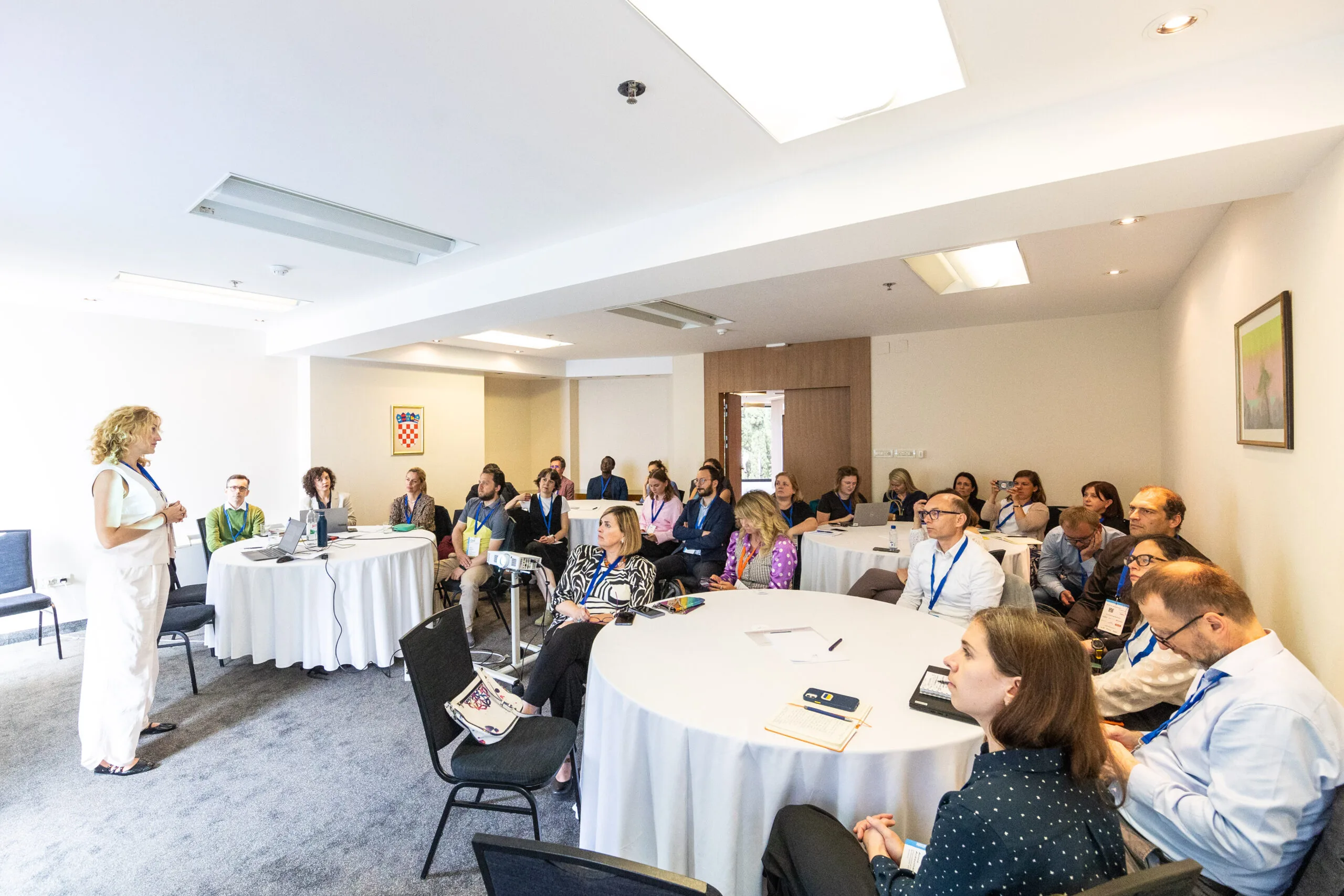
Parallel panel sessions are where most of the “magic” happens — and they were among the most popular parts of the C4E Forum 2025 programme.
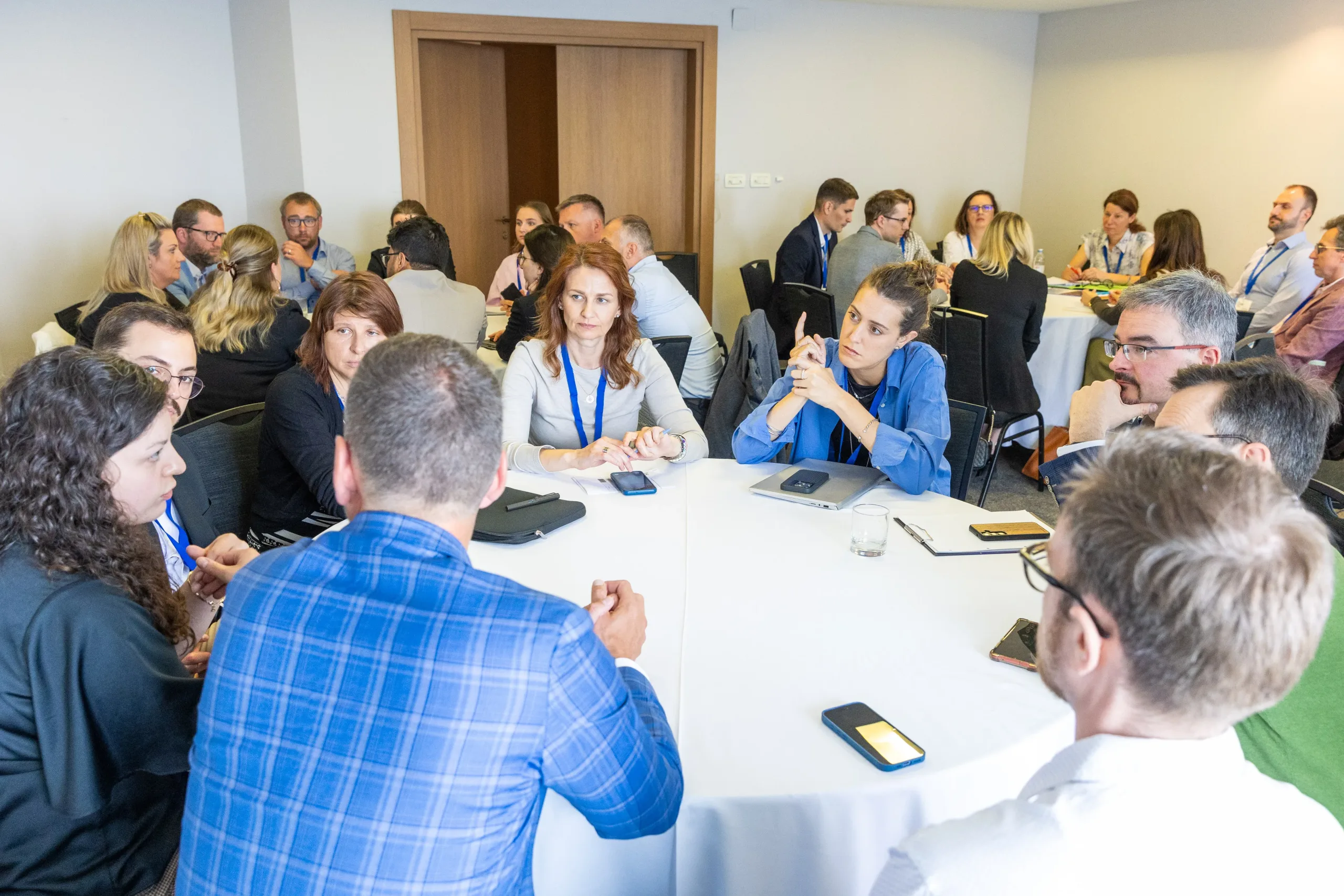
One of the many things that make the C4E Forum special is the close interaction between participants. Dedicated slots on both Wednesday and Thursday hosted 22 panel sessions in total, offering participants the chance to share their experience, explore new ideas, and gain insights for their work.
An interactive format
Panel sessions last 90 minutes and usually feature three short presentations (12 minutes each) followed by a Q&A and breakout discussions. At least half of each session is reserved for active audience participation, ensuring a lively and productive exchange of ideas. An experienced Panel Leader guides the discussion and supports the speakers, helping them prepare for their session with feedback and guidance.
The panel programme at a glance
Download the full outline of the panel sessions — titles, time slots and conference rooms on a single sheet.
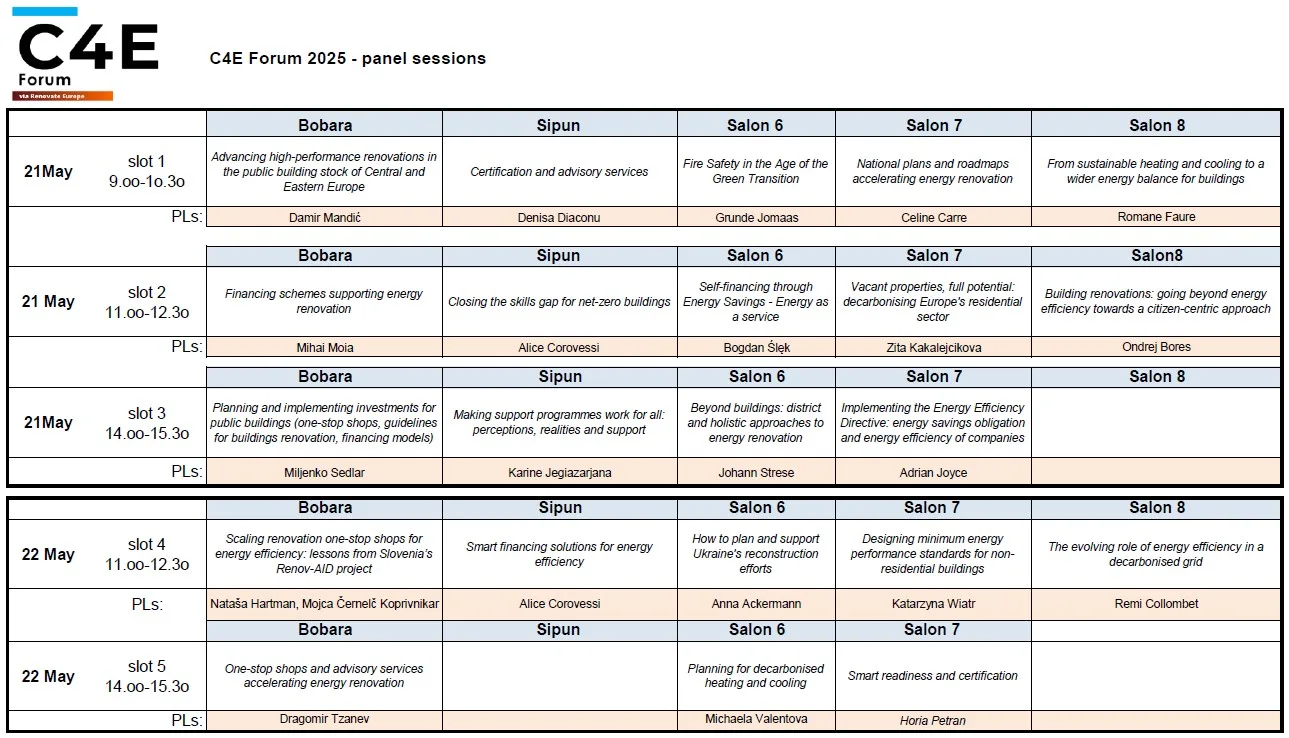
The panel programme, session by session
Five parallel panels ran in each time slot, across five conference rooms. Select any session to see its panel leader, speakers and description.
Wednesday 21 May · 9:00–10:30
1a · Fire safety in the age of the green transition
Conference room: Salon 6
Panel Leader – Grunde Jomaas, ERA Chair holder and Head of Department for Fire Safe Sustainable Built Environments FRISSBE at ZAG & Susanne Dyrbøl, ROCKWOOL
Format: 10 min presentations followed by an interactive debate.
Speakers:
- Prof. Grunde Jomaas – Setting the scene: How the green transition impacts fire safety
- Pau Garcia Audi, DG ENER, EU Commission – Ensuring fire safety in EPBD implementation
- Piotr Smardz – Lessons from recent fires in Poland. Fire safety expert, president of the regional branch of the Association of Fire Engineers and Technicians SITP, Co-owner of INBEPO, a specialist company for fire safety engineering design and consultancy
- Dr. Arh. Anca Voiculescu – How to safeguard fire safety when implementing the solar mandate in the EPBD – An architect’s perspective. Dr. Arh. Anca Voiculescu has contributed to the Fire Norms in Romania
- Marcela Kubu – Fire Safety considerations for buildings (new and renovation) in CZ and SK, Executive Director, Association of Mineral Insulation Manufacturers CZ & SK
The push for a greener built environment is transforming European buildings like never before. With the EPBD driving mandatory rooftop solar installations and a shift toward zero-emission buildings, our cities will soon be filled with PVs, EVs, batteries, and electrified infrastructure. However, with innovation comes new challenges — especially when it comes to fire safety, as all this equipment will increase the fire load and fire risk consequently. Current national fire codes in EU mainly see this equipment as a simple add on to existing buildings rather than as a new system with a completely changed fire safety level and fire performance.
Fires impact life safety, but they extend far beyond that; they can disrupt businesses, strain societies, and cause severe environmental damage, polluting soil, water and air. As we redesign buildings to meet climate goals, we must also rethink fire regulations to address these evolving risks. The EPBD offers a unique opportunity to integrate fire safety within a holistic approach to building renovations, ensuring national regulations keep pace with the rapid transformation of our building stock.
Are our fire safety frameworks fit for the future? How do we safeguard both people, environment and property while enabling innovation? How can we ensure that this transition of buildings is successfully performed? These are some of the questions we will be discussing on this panel that brings together key experts—from the EU Commission to fire safety specialists and architects—to explore solutions for a fire-safe green transition.
1b · Advancing high-performance renovations in the public building stock of Central and Eastern Europe
Conference room: Bobara
Presenters/Speakers:
- OUR-CEE project presentation: Elena-Alexandra Miron, Energy Policy Group
- REDESIGN project presentation: Matej Viljevac, Regional Energy Agency North
Panel discussion:
Moderator: Damir Mandić, Regional Energy Agency North
Panelists:
- Kamen Simeonov, Center for Energy Efficiency EnEffect
- Aura Oancea, Energy Policy Group
- Izabela Kuśnierz, The Association of Municipalities Polish Network “Energie Cités”
- Matej Viljevac, Regional Energy Agency North
Central and Eastern Europe (CEE) faces a double challenge: energy-inefficient buildings and slow renovation progress. Our two projects, OUR-CEE and REDESIGN, aim to tackle these issues head-on by transforming public buildings into leaders of deep renovation and energy efficiency. Firstly, the EUKI OUR-CEE project identifies why renovations often fall short, builds capacity in public institutions, and creates actionable roadmaps to upgrade and sustain these efforts—shaping the future of National Building Renovation Plans. Secondly, the EUKI REDESIGN project complements this by targeting the worst-performing public buildings, preparing CEE countries to adopt and comply with EU minimum energy performance standards (MEPS). Together, these efforts will empower local governments to drive the continuous improvement of the region’s building stock, setting a powerful example for sustainable transformation across Europe.
1c · National plans and roadmaps accelerating energy renovation
Conference room: Salon 7
Panel Leader: Celine Carre, Saint-Gobain, BELGIUM
Presentations:
- How to design and implement national building renovation plans, Ece Özer, TU Wien, AUSTRIA
- Drawing the link between national building renovation plans and social climate plans, Eva Brardinelli, Climate Action Network Europe (CAN Europe), ITALY
- Roadmaps to promote energy renovation in rural areas for vulnerable households, Kristina Eisfeld, Quentin Drouet, Klima-Bündnis e.V., GERMANY
How can national renovation strategies go beyond compliance and become catalysts for deep, inclusive energy transitions? This session dives into National Building Renovation Plans (NBRPs) and roadmaps that align ambition with social justice and regional needs. Ece Özer (TU Wien) will outline how to design and implement effective NBRPs under the revised EPBD. She will showcase findings from the EPBD.wise project that supports Member States on the NBRPs in the CEE and South Europe. Eva Brardinelli (CAN Europe) will explore the crucial link between NBRPs and Social Climate Plans to ensure no one is left behind in the Renovation Wave. Kristina Eisfeld and Quentin Drouet (Klima-Bündnis) will present results from RENOVERTY, a project that builds bottom-up roadmaps for renovating rural homes, focusing on vulnerable households. Together, these speakers will showcase how integrated planning, local engagement, and targeted support can drive a fair and ambitious path toward zero-emission buildings across Europe.
1d · Certification and advisory services
Conference room: Šipun
Panel Leader – Denisa Diaconu, BPIE, BELGIUM
Presentations:
- How to leverage advisory services for fair and effective renovations, towards a successful EPBD implementation, Volodomyr Vladyka/Hélène Sibileau, BPIE, BELGIUM
- How to make EPCs great again: thoughts from Poland, Jan Ruszkowski, Fala Renowacji Association, POLAND
- Improving energy efficiency of buildings in Kosovo and Albania, Ilona Illésné-Szecsi, Energiaklub, HUNGARY
- Economic feasibility of energy renovation of a building in Slovenia – software tool, Saša Galonja, Ministry of Natural Resources and Spatial Planning, SLOVENIA
Robust advisory services and reliable certification tools are essential for delivering quality renovations and empowering citizens in the energy transition. This session brings together fresh insights and hands-on experience from across Europe. Volodomyr Vladyka (BPIE) explores how advisory services can ensure fair and effective implementation of the revised EPBD. Jan Ruszkowski (Fala Renowacji) offers critical reflections on revamping Energy Performance Certificates (EPCs) in Poland to restore their trust and usefulness. Ilona Illésné-Szecsi (Energiaklub) shares lessons from advancing energy efficiency in Kosovo and Albania, while Saša Galonja (Ministry of Natural Resources and Spatial Planning, Slovenia) presents a practical software tool evaluating the economic feasibility of building renovations. Together, these experts reveal how better advice and data can boost uptake and impact of renovation measures across diverse national contexts.
1e · From sustainable heating and cooling to a wider energy balance for buildings
Conference room: Salon 8
Panel Leader – Romane Faure, EBE/REC, BELGIUM
Presentations:
- Harnessing solar gains and preventing overheating: impacts on energy balance and costs, Ondrej Bores, VELUX, Czechia
- Multiple benefits of heat pumps in delivering climate policy objectives, Gabriella Szalai, DAIKIN, HUNGARY
- Sustainable space cooling solutions: CoolLIFE tool and knowledge hub, Ardak Akhatova, e-think energy research, AUSTRIA
As the building sector races toward decarbonisation, balancing heating and cooling needs becomes a critical challenge—and opportunity. This session highlights how a whole-system view can unlock energy and cost savings while boosting comfort and climate resilience. Ondrej Bores (VELUX) presents the dual role of windows in harnessing solar gains and managing overheating through smart design. Gabriella Szalai (Daikin) explores how heat pumps simultaneously contribute to multiple EU climate objectives, from energy efficiency to air quality. Ardak Akhatova (e-think energy research) introduces the CoolLIFE tool and knowledge hub—practical resources that empower planners and policymakers to implement sustainable space cooling solutions based on real data. Together, these insights make a compelling case for an integrated approach to thermal comfort and energy balance in buildings across Europe.
Wednesday 21 May · 11:00–12:30
2a · Vacant properties, full potential: decarbonising Europe's residential sector
Conference room: Salon 7
Panel Leader: Zita Kakalejcikova, Habitat for Humanity, SLOVAKIA
Speakers:
- Sufficiency in the Building sector, Antoniya Novakova, EnEffect, BULGARIA
- Vacant building conversion in Polish policy discussions, Justyna Nakielska, HFH Poland
- Insights from the research “Mapping vacant properties in the context of the housing system in Croatia, Boris Zerjav, CROATIA
- Conversion of vacant properties into housing in practice in Warsaw, Justyna Glusman, POLAND
- Pau Garcia, DG ENER – TBC
Decarbonizing the building sector is critical to achieving EU climate goals, as it accounts for 35% of energy-related greenhouse gas emissions . With over 30 million homes across Europe sitting unoccupied , turning these vacant buildings into housing offers a transformative solution to reduce emissions, conserve resources, minimize construction waste, and advance energy efficiency. In fact, repurposing vacant properties can save up to 85% of embodied carbon emissions compared to constructing new buildings . Renovating and repurposing existing buildings not only addresses the environmental impact of the building sector in alignment with the EU’s sustainability and climate neutrality objectives but also provides a scalable approach to tackling the housing affordability crisis.
In this session, the climate benefits of repurposing vacant properties will be explored, the impact on the affordability crisis will be examined, and policymakers will share insights into the feasibility of this solution while discussing challenges and opportunities for scaling up. This is based on HFHI’s ESTHer project (Empty Spaces to Homes).
2b · Closing the skills gap for net-zero buildings
Conference room: Šipun
Panel Leader: Alice Corovessi, INZEB, GREECE
Presentations:
- Equipping one-stop shops with the right skills to solve the renovation puzzle, Dragomir Tzanev, EnEffect, BULGARIA
- Innovative training models for getting the construction sector ZEB ready, Horia Petran, INCD URBAN-INCERC / Pro-nZEB Cluster, ROMANIA
- Closing the skills gap: education, upskilling, and workforce development schemes, Bojan Milovacovic, University of Zagreb, Faculty of Civil Engineering, CROATIA
The construction sector in Europe is undergoing significant transformation, driven by the urgent need to enhance energy efficiency, reduce GHG emissions, and adopt more sustainable building practices. As part of this transformation, there is a growing demand for a skilled workforce equipped with the latest technological tools and methodologies. The recently developed BUILD UP Skills roadmaps, dedicated training courses piloted in nZEB Ready project and the development of innovative construction skills training materials with application of virtual and augmented reality (VR/AR) technologies, provided in the ongoing DiVIRTUE project, offer solutions to ensure that the construction workforce is “equipped” with the necessary skills and knowledge required to implement the Zero-Emission Buildings (ZEB).
2c · Self-financing through energy savings — energy as a service
Conference room: Salon 6
Panel Leader: Bogdan Ślęk, Signify, POLAND
Presentations:
- Introduction and Light as a Service business model, Bogdan Ślęk, Signify, POLAND
- Developing Integrated Package of Smart Energy Efficiency Services, Jiří Karásek, SEVEn, The Energy Efficiency Center, CZECHIA
- Energy Renovation of Ljubljana (EOL projects) through energy performance contracting, Petra Šeme, City of Ljubljana, SLOVENIA
Panel speakers:
– Jiří Karásek, SEVEn, The Energy Efficiency Center, CZECHIA
– Petra Šeme, City of Ljubljana, SLOVENIA
– Vesna Bukarica, Energy Institute Hrvoje Požar Zagreb, CROATIA
– Przemysław Gorgol, IPOPEMA Financial Advisory, POLAND
How can energy renovations be financed without upfront capital? This session explores how energy savings themselves can become a funding source through performance-based and service-oriented models. Jiří Karásek (SEVEn) will present the BungeEES project, which is developing integrated energy efficiency service packages combining demand response, distributed generation, and digital tools, with new approaches to smart contracts and consumer participation. Petra Šeme (City of Ljubljana) will share the city’s experience with energy performance contracting (EPC) through its EOL projects—demonstrating how municipalities can leverage private sector expertise and funding. Vesna Bukarica (Energy Institute Hrvoje Požar) will contribute with her expertise in forecasting costs, measuring results and practical selection of smart technologies and how they contribute to energy renovation and results. Przemysław Gorgol (IPOPEMA Financial Advisory) will add insights from the evolving market for energy services and financing instruments. Together, the speakers will show how “energy as a service” can unlock renovation potential while aligning technical innovation with financial viability.
2d · Financing schemes supporting energy renovation
Conference room: Bobara
Panel Leader – Mihai Moia, ROENEF, ROMANIA
Presentations:
- Success criteria for home renovation support schemes in Hungary: lessons learned on launching and running a new programme, Anikó Pálffy, MEHI, HUNGARY
- Slovakia’s single-family home renovation scheme: survey results and its future beyond 2026, Kristína Korcekova, B4F, SLOVAKIA
- Renovation support programmes in Croatia, Irena Križ Šelendić, Ministry of Physical Planning, Construction and State Assets, CROATIA
- Districts and city cooperation for energy retrofit program – the case of the Budapest Green Panel program, Ada Amon, Budapest Climate Agency, HUNGARY
What makes a renovation funding scheme not just operational—but impactful and lasting? This session showcases practical insights from Central and Eastern Europe on designing and improving financial support for energy renovations. Anikó Pálffy (MEHI) shares success factors and lessons from Hungary’s recent renovation programme rollout. Kristína Korcekova (Buildings for the Future) presents survey insights from Slovakia’s single-family home scheme and explores its future beyond 2026. Irena Križ Šelendić (Croatian Ministry) details Croatia’s national support programmes and how they serve a diverse building stock. Finally, Ada Amon (Budapest Climate Agency) illustrates how district-level and city-wide cooperation powers the Budapest Green Panel program. Together, these examples offer practical approaches to building financing mechanisms that are efficient, scalable, and responsive to local needs.
2e · Building renovations: going beyond energy efficiency towards a citizen-centric approach
Conference room: Salon 8
Panel Leader: Ondrej Bores, VELUX, CZECHIA
Presentations:
- Healthy Buildings Barometer (HBB) Framework : Essam Elnagar, BPIE
- Market perspectives:
- HBB key findings & learnings from CEE region: Gábor Kovács, VELUX
- Poland 2035: Decade after EPBD implementation, Jan Ruszkowski, Fala Renowacji
- Policy perspective: Short impulse statements by policymakers: TBC
- Zooming in: Breakout discussions in smaller groups
In this interactive session, we will explore the multiple benefits of building renovations, share best practices, and brainstorm together on how to maximize their impact across the CEE region. The renovation of buildings offers far-reaching benefits that go beyond energy savings. From creating healthier indoor environments to advancing sustainable construction practices and addressing whole-life carbon, these transformations contribute to better living conditions for people and a greener future. This is particularly important in the context of the ongoing national implementation of the Energy Performance of Buildings Directive (EPBD) as well as the European Commission’s focus on Affordable and Sustainable Housing in the current political mandate. The good news is that we have many tools already ready to be applied: The Healthy Buildings Barometer, launched by the Buildings Performance Institute Europe (BPIE) in partnership with VELUX has developed a framework for Healthy Buildings based on five dimensions: health, sustainability, people, design, resilience – some of which have been addressed in the EPBD revision.
Wednesday 21 May · 14:00–15:30
3a · Beyond buildings: district and holistic approaches to energy renovation
Conference room: Salon 6
Panel Leader: Johann Strese, Initiative Wohnungswirtschaft Osteuropa (IWO), GERMANY
Presentations:
- Green urban renewal: holistic approach to renovation of buildings and spaces, Ines Androić, Ministry of Physical Planning, Construction and State Assets, CROATIA
- An integrated approach for energy and seismic renovations, Denisa Diaconu, BPIE, BELGIUM
- Neighbourhood energy roadmaps to combat energy poverty in multi-family apartment buildings, Zuzana Matusova, Habitat for Humanity International, Europe and the Middle East, SLOVAKIA
This session explores how scaling from individual buildings to neighbourhoods and urban areas can deliver more resilient, inclusive, and impactful results. Ines Androić (Croatian Ministry) will introduce Croatia’s Green Urban Renewal Strategies—a foundation for the development of sustainable space with a focus on developing green infrastructure and integrating nature-based solutions, models for circular management of space and buildings. Denisa Diaconu (BPIE) will highlight how the revised EPBD creates opportunities to combine energy and seismic renovations into a unified process, ensuring safety and efficiency. Zuzana Matusova (Habitat for Humanity) will present Neighbourhood Energy Roadmaps from the ComActivate project, offering an approach to renovating multi-family buildings while addressing energy poverty and promoting sufficiency.
3b · Planning and implementing investments for public buildings
Conference room: Bobara
Panel Leader: Miljenko Sedlar, REGEA, Croatia
Presentations:
- Model for accelerating investments in energy renovation and reconstruction of public buildings in North-West Croatia with sustainable building methodology and guidelines, Marko Zlonoga, Head of the Buildings department, REGEA
- Climate proofing for resilient buildings, Miljenko Sedlar, Head of Climate Department, REGEA, CROATIA
- Innovative evaluation and financing of climate-neutral buildings in Central Europe, Hrvoje Maras, Chief Financial Officer, REGEA
The session will provide a holistic overview of how to set up regional investment programmes and structures for public authorities, which are needed to transition their building stock towards climate neutrality. The CROSS project will showcase an example of a unique one-stop shop in North-West Croatia, which was established to raise the capacities of regional governments for the preparation of a pipeline of bankable renovation projects. This pipeline is being prepared with state-of-the-art tools, sustainable building methodology, and guidelines jointly developed by an international MESTRI Central Europe project consortium. Tools for assessing financial and socioeconomic impacts will also be presented, including different innovative financing models from countries within Central Europe that could be applied to reach climate neutrality in buildings.
3c · Making support programmes work for all: perceptions, realities and support
Conference room: Šipun
Panel Leader: Karine Jegiazarjana, Initiative Wohnungswirtschaft Osteuropa (IWO), GERMANY
Presentations:
- Assessing the technical, social and ‘real-life’ aspects of energy improvements in worst performing buildings of vulnerable households, Zsuzsanna Koritár, Habitat for Humanity Hungary, HUNGARY
- Perception of energy renovation in multi-apartment buildings in five CEE countries, Miljenka Kuhar, Matija Eppert, Tomislav Cik, Društvo za oblikovanje održivog razvoja (DOOR)/Society for sustainable development design, CROATIA
- Energy efficiency contact points in municipalities, Václav Šebek, SEVEn, The Energy Efficiency Center, CZECHIA
This session will explore how support schemes can become more inclusive, accessible, and effective—especially for vulnerable households. Zsuzsanna Koritár (Habitat for Humanity) will present findings from recent field research on technical and social barriers in Hungary’s worst-performing buildings. Miljenka Kuhar, Matija Eppert, and Tomislav Cik (DOOR) will share comparative survey results from five CEE countries, highlighting how residents of multi-apartment buildings perceive energy renovation. Václav Šebek (SEVEn) will discuss the potential of local energy efficiency contact points as practical hubs to guide citizens and businesses through renovation processes.
3d · Implementing the Energy Efficiency Directive: energy savings obligation and energy efficiency of companies
Conference room: Salon 7
Panel Leader: Adrian Joyce, EBE/REC, BELGIUM
Presentations:
- Implementing energy savings obligation in the CEE region: latest developments and challenges, Samuel Thomas (+ Vesna Bukarica co-presenter), Regulatory Assistance Project (+ Energy Institute Hrvoje Požar as co-presenter), FRANCE/CROATIA
- Streamlining energy savings calculations, Jiří Karásek, SEVEn, The Energy Efficiency Center, CZECHIA
- Role of multiple benefits and corporate sustainability in the implementation of EED Article 11, Ivana Rogulj, Institute for European Energy and Climate Policy (IEECP), CROATIA
- Integration of non-energy benefits into energy audit practices to accelerate the uptake of recommended measures (KNOwNEBs), Tamás Csoknyai, Budapest University of Technology and Economics, HUNGARY
The updated Energy Efficiency Directive (EED) introduces more ambitious provisions for Member States and clearer expectations for companies. This session explores how Central and Eastern European countries are responding to these updated provisions—from policy updates to practical implementation tools.
For Article 8 in the EED:
Samuel Thomas (RAP) and Vesna Bukarica (EIHP) will present insights from the ENSMOV Plus project, highlighting recent shifts and ongoing challenges in meeting the energy savings obligation. Jiří Karásek (SEVEn) will discuss streamlined approaches to energy savings calculations and lessons from EU support initiatives like streamSAVE.
For Article 11 in the EED:
Ivana Rogulj (IEECP) will talk about the role of multiple benefits and corporate sustainability, and Tamás Csoknyai (Budapest University of Technology and Economics) will introduce findings from the KNOwNEBs project on integrating non-energy benefits into energy audits.
Thursday 22 May · 11:00–12:30
4a · How to plan and support Ukraine's reconstruction efforts
Conference room: Salon 6
Panel Leader: Anna Ackermann, International Institute for Sustainable Development, UKRAINE
The session will explore both the current planning landscape and the practical capacity needed for the green reconstruction and long-term renovation of Ukrainian buildings. It will begin with a presentation by BPIE, based on their latest analysis of Ukraine’s National Energy and Climate Plan (NECP), Long-Term Renovation Strategy (LTRS), and broader planning under the Ukraine Facility. This will lay the foundation for understanding where Ukraine stands today in terms of energy efficiency in buildings and its alignment with EU principles and the EPBD. Following this, we can transition into contributions and a discussion featuring key stakeholder perspectives on enabling a successful and sustainable reconstruction.
Speakers include:
- Anthony Doherty (Kingspan) – representing the construction industry’s capacity and investment outlook
- Iva Merheim-Eyre, Habitat for Humanity (Smarter4EU project) – providing insights from a funding and financial support perspective
- Svyatoslav Pavlyuk, Association of Energy Efficient Cities of Ukraine (pending travel authorisation) – offering a public sector view from within Ukraine
4b · Scaling renovation one-stop shops for energy efficiency: lessons from Slovenia's Renov-AID project
Conference room: Bobara
Panel Leader: Nataša Hartman, Mojca Černelč Koprivnikar, Prosperia, Slovenia
Presentations:
- Renov-AID overview, Ana Tisov, Institute for Innovation and Development of University of Ljubljana, SLOVENIA
- Eko sklad and financial instruments, Petra Jakob Merljak & Tjaša Bandelj, Eko sklad, SLOVENIA
- Municipal perspectives – City of Ljubljana (Petra Šeme, Milanka Ilić), City of Velenje (Anže Sovinc, Igor Kapš), SLOVENIA
The Renov-AID Project is a LIFE EU project and the Slovenian pilot initiative demonstrating how Renovation One-Stop Shops (OSS) can simplify, accelerate, and scale energy-efficient home renovations. By bringing together key national stakeholders—including supply and demand-side actors, construction sector representatives, financial institutions, and local municipalities—Renov-AID bridges the recast EPBD with practical implementation in Slovenia. Through collaboration with the Slovenian Eco public fund Eko sklad, the ENSVET energy advisors’ network, and pilot cities Kranj, Velenje, and Ljubljana, we’re creating integrated solutions that provide homeowners with access to streamlined services, financial support, and expert advice—all in one place. Our mission? To showcase an efficient public OSS model that other cities can adopt to meet ambitious energy efficiency and sustainability goals while driving real change at the local level.
4c · Smart financing solutions for energy efficiency
Conference room: Šipun
Panel Leader: Alice Corovessi, INZEB, GREECE
Presentations/Speakers:
- How to leverage public and private financing for energy renovations, Adrien Bullier, CINEA, BELGIUM
- Experience in developing blended finance mechanisms for energy efficiency investments, Aniko Dobi-Rozsa & Adrian Balaci, GESB, HUNGARY
- Horia Petran, INCD URBAN-INCERC / Pro-nZEB Cluster, ROMANIA
- Dragomir Tzanev, EnEffect, BULGARIA
Unlocking investment for a sustainable future: Join the SMAFIN Expanded Cross-Country Lab at the C4E Forum 2025 to explore how countries across and beyond the EU are scaling up energy efficiency financing. High-level speakers, national experts, and EU representatives will share real-world strategies, innovations, and lessons from successful models in buildings, SMEs, and the tertiary sector. With a focus on practical dialogue and replicable solutions, this in-person session will highlight enabling policies, cross-border insights, and the next steps to align national financing approaches with EU climate goals. Don’t miss this opportunity to connect, learn, and shape the future of energy efficiency finance in Europe and beyond.
4d · Designing minimum energy performance standards for non-residential buildings
Conference room: Salon 7
Panel Leader: Katarzyna Wiatr, Knauf Insulation, POLAND
Presentations:
- Opportunities and challenges of MEPS implementation in CEE countries, Andreas Mueller, e-think energy research, AUSTRIA
Panelists:
- Nathalie Marková, Ministry of Industry and Trade, CZECHIA
- Marta Babicz, National Fund for Environmental Protection and Water Management, POLAND
- Sasa Galonja, Ministry of Natural Resources and Spatial Planning, SLOVENIA
- Anca Ginavar, Ministry of Development, ROMANIA
EPBD (in its Article 9 and through Minimum Energy Performance Standards) effectively asks Member States to ensure that 16 % and 26 % worst performing non-residential buildings are renovated by 2030 and 2033, respectively. This is a major opportunity to boost energy efficiency and cut emissions, but also a substantial implementation challenge. Member States will need to map out their non-residential building stock and define threshold for the worst performing buildings. Furthermore, they will need to design the obligation to renovate: how obligated buildings are identified in real life, if and what support they receive to renovate, how compliance is checked at deadline and what happens in case of non-compliance. Finally, meeting the 16 and 26 % targets means scaling up or establishing renovation programs making use of e.g. next period of Cohesion Funding or ETS2 revenues and mobilizing private capital through dedicated instruments, including energy performance contracting. The session will provide in-depth and hands-on insight into the challenges of MEPS implementation in CEE countries and provide ample space to identify best practice to the much needed scale up of renovation of non-residential buildings.
4e · The evolving role of energy efficiency in a decarbonised grid
Conference room: Salon 8
Panel Leader: Remi Collombet, EBE/REC, BELGIUM
Presentations:
- New roles for energy efficiency in an electrified energy system, Samuel Thomas; Zsuzsanna Pató, Regulatory Assistance Project, France\Belgium
- Implementing Energy Efficiency First: pilot cases in Croatia, Poland and Greece, Vesna Bukarica, (Zsuzsanna Pato as co-author), Energy Institute Hrvoje Požar, (Regulatory Assistance Project as co-author), Croatia/Belgium
- Flattening the peak demand curve through efficient buildings, Martha Frysztacki / Dimitar Kolichev, OET / EURIMA, BELGIUM
As Europe’s energy system becomes more electrified, the role of energy efficiency is shifting—from reducing demand alone to enabling system flexibility, affordability, and resilience. This session will highlight how well-designed efficiency policies can ease the pressure on grids and help manage peak loads. Samuel Thomas and Zsuzsanna Pató (RAP) will explain how energy efficiency in buildings can support a more inclusive, cost-effective energy transition, particularly in the CEE region. Vesna Bukarica (EIHP), with Pató as co-author, will share insights from pilot cases in Croatia, Poland, and Greece on applying the Energy Efficiency First principle in real planning contexts. Martha Frysztacki (OET) and Dimitar Kolichev (EURIMA) will present open-source energy modelling results showing how efficient buildings can reduce peak electricity demand and lower system costs. Together, the speakers outline how energy efficiency is becoming central to grid decarbonisation strategies—and why this matters now more than ever.
Thursday 22 May · 14:00–15:30
5a · One-stop shops and advisory services accelerating energy renovation
Conference room: Bobara
Panel Leader: Dragomir Tzanev, EnEffect, BULGARIA
Presentations:
- How an advanced one-stop shop helps to tackle energy renovation of multifamily buildings in Vilnius, Lithuania, Lina Bubulyte&Egle Randyte, Atnaujinkime miestą (abbr. Amiestas), LITHUANIA
- The case of a commercial one-stop shop in the Czech Republic, Vítězslav Malý, Centrum pasivního domu, CZECHIA
- Paving the homeowners’ way towards energy retrofitting historical buildings in Estonia, Kadri Kallast, Anni Martin, Estonian Ministry of Culture, Estonian Ministry of Climate, ESTONIA
One-stop shops (OSS) are a key enabler for accelerating the energy renovation of buildings across Europe—providing technical, financial, and administrative support under one roof. This session will bring together diverse OSS models addressing renovation challenges in different contexts. Lina Bubulyte (Amiestas) will present a public OSS in Vilnius that supports residents of multifamily buildings through every step of the renovation journey. Vítězslav Malý (Centrum pasivního domu) will share the Czech experience of a commercial OSS targeting single-family homes, including tools like renovation calculators and Building Renovation Passports. Kadri Kallast and Anni Martin (Estonian Ministries of Culture and Climate) will introduce the LIFE heritageHOME project, which is pioneering integrated digital tools and tailored services to support energy retrofitting of historical buildings. These initiatives will show how well-designed OSSs can remove barriers, build trust, and increase the renovation rate—while adapting to local needs and building types.
5b · Smart readiness and certification
Conference room: Salon 7
Panel Leader: Horia Petran, INCD URBAN-INCERC, ROMANIA
Presentations:
- Enabling smart building upgrades: financing models and regional impact, Antoniya Novakova, Center for Energy Efficiency EnEffect, BULGARIA
- Real-world insights and lessons from the pilot phase of smart readiness indicator (SRI) assessment in Croatia, Ružica Jurjević, Laura Lepur, Marko Bišćan, Vesna Bukarica, Energy Institute Hrvoje Požar, CROATIA
- DGNB certification system as a booster for green and digital transition of the buildings, Snježana Turalija, GREENIKA, CROATIA (online – tbc)
As digitalisation reshapes the building sector, smart readiness and robust certification tools are becoming central to accelerating green and resilient renovation. This session will offer practical insights into how smart building upgrades and certification systems can support the energy transition. Antoniya Novakova (EnEffect) will present innovative financing models and interactive tools for integrating smart technologies in buildings across Central and Eastern Europe. Laura Lepur and team (EIHP) will share results from Croatia’s pilot assessment of the Smart Readiness Indicator (SRI), offering lessons for adapting EU methodologies to national contexts. Snježana Turalija (Greenika) will introduce the DGNB certification system as a way to align complex sustainability and digitalisation demands, easing decision-making for architects, investors, and developers. From pilot testing to practical tools, this session will explore how smart readiness and certification are shaping the future of building performance.
5c · Planning for decarbonised heating and cooling
Conference room: Salon 6
Panel Leader: Michaela Valentova, Czech Technical University in Prague/ECF, CZECHIA
Presentations:
1. Implementing the Energy Efficiency First Principle in CEE Regions’ Energy Plans, Jérémy Cléro, IEECP – Institute for European Energy and Climate Policy, ITALY
2. Transforming district heating of Central Europe into sustainable and efficient heating and cooling systems, Ivona Prar, EIHP, CROATIA
3. Transforming Šaleška Valley’s District Heating System for a Sustainable Future, Anze Sovinc, City of Velenje, SLOVENIA
District heating and cooling are the “below the surface” part of the decarbonisation iceberg, often overlooked but highly relevant. They offer a huge potential for effective energy and emissions savings, leading to stable, affordable, and accessible energy services. The decarbonisation options for (district) heating and cooling are global, but the specific solutions are regional and local, calling for strategic thinking and active involvement of multiple stakeholders.
In our session, we will address this “elephant in the room” of decarbonisation efforts through highly relevant and practice-focused interventions. We will also leave enough room for discussion and draw on the practical to-dos and next steps.